Ukweli kuhusu waasisi wa TANU na harakati za kupigania uhuru

Ukweli kuhusu waasisi wa TANU na harakati za kupigania uhuru

Status
Not open for further replies.
Jasusi: Kuna Jambo hulijui vipi ilikuwa hatima ya hawa marafiki wawili. Soma hapo chini:

Abdulwahid died in 1968 at a time when the country was torn in silent strife; there was tension between Muslims and the Christian dominated government in power. The unity of the country, something which Abdulwahid had fought for throughout his life, was being threatened. The unity of Muslims was on the brink of disintegration. There had been mass detention of Sheikhs under the Preventive Detention Act of 1962. Some of these Sheikhs were Abdulwahid's political allies when he was trying to set up TANU. Some of them supported Nyerere in those difficult early days of the struggle. Abdulwahid's fellow member of the TAA political subcommittee, Mufti Sheikh Hassan bin Amir, who was held in high esteem by all Muslims, had been arrested on Nyerere's orders and deported to Zanzibar, his country of origin; the reason given for his deportation was that Sheikh Hassan bin Amir was ‘plotting to overthrow the government'.

Sheikh Hassan bin Amir was among the few Muslim scholars who dared to stand against the government and to give his opinion on the government's negative stand on Islam. Before his death reports had been reaching him that there was a systematic campaign within TANU, conducted by its new Christian leadership, to de-Islamise the party. In the 1965 General Elections, TANU founder member Tewa Said Tewa lost his Kisarawe constituency to an unknown contestant, one H.A. Ramadhani Dollah. Bibi Titi Mohamed, the only woman who built TANU and campaigned for Nyerere single-handedly, also lost her Rufiji seat to one A.M. Mtanga. There were unconfirmed rumours of ballot rigging and a conspiracy against Tewa and Titi and certain names within the Party top leadership, including that of Nyerere were mentioned. The two were respectively, president and vice-president of the EAMWS. To this day Tewa claims that he did not lose the election. Election results were delayed for no apparent reason and were announced two days late.

Abdulwahid knew the consequences of this Muslim division. He had witnessed the power of Muslim unity during the struggle for independence. Abdulwahid also knew the force, fear and people behind the unholy alliance. He knew about the conspiracy and the personalities working behind the scenes against Muslim unity. Abdulwahid's former allies had come to fear that, after independence, Islam which had been the ideology of resistance against colonialism was becoming a threat to the future of Christianity in free Tanzania.

Before he passed away Abdulwahid was to have an audience with Nyerere. This encounter between Abdulwahid and Nyerere took place in the last months of 1968 amid the arrests and detention of sheikhs and prominent Muslims. The two were old friends. Probably if it were not for Abdulwahid's support of Nyerere the history of TANU and that of Nyerere would have taken a different course. This meeting was important to Abdulwahid because he somehow felt responsible for what was befalling Muslims, particularly those in Dar es Salaam. Reports of Muslims being picked up at night and sent away to be detained were reaching him almost every day. Abdulwahid could not pretend that he was not affected by those arrests. Some of those put under custody were people he had known since childhood and personally mobilised in 1950s in initiating his political career and building Nyerere's own power base in TANU.

Abdulwahid told Nyerere that he may have no connection with his victims when he signs detention orders. Those were people who Abdulwahid met either at the mosque or in the streets. He, as a person living among Muslims and the family of those victims, felt their anguish and grief. Abdulwahid told Nyerere that those people knew of his (Abdulwahid's) role in Nyerere's rise to power. They came to him begging him to intercede with Nyerere on their behalf. Abdulwahid told Nyerere that the detentions were wrong because those people did not have power to overthrow his government. In a sad tone Abdulwahid ended his address by telling Nyerere, " As I walk out of this room I want to believe that, you, Julius Nyerere, have not now turned against us." With those words Abdulwahid made his exit.
 
FM: Uchochezi si moja ya sifa zangu. Nakuwekea kiapnde hiki uone ukoloni ulivyokuwa ukitazamwa na Waislam na uone vipi dini hizi mbili zilivyoathiriwa na utawala wa Waingereza. Huu ni muhtasari tu:

Mwaka 1951 mgogoro wa ardhi ya Wameru ulipoanza tawi la TAA mjini Tabora lilikabili changamoto hiyo kupitia juhudi binafsi za Saadan Abdu Kandoro. Kandoro aliitisha mkutano wa matawi ya TAA ya Mwanza, Kigoma na Tabora kujadili suala hilo. Uongozi wa TAA Tabora, kwa kujihusisha katika mgogoro kama huu, ilikuja kuwa ngome ya upinzani dhidi ya ukoloni. Germano Pacha, katibu wa TAA katika Jimbo la Magharibi, alikuwa miongoni mwa wale wajumbe ambao tarehe 29 Oktoba, 1953 walikwenda Government House kuonana na Gavana Edward Twining ili kujadili ule waraka wa serikali, yaani Government Circular No. 5 uliopiga marufuku wafanyakazi serikalini kujishughulisha na siasa. Mwaka uliofuata TAA ilibadilishwa kuwa TANU na Pacha alikuwa miongoni mwa wanachama waasisi. Pacha alianza kuifanyia kampeni TANU mara tu aliporudi kutoka mkutano wa TAA ulioasisi TANU. Akiwa mhitimu wa Seminari ya Kipalapala ilikuwa rahisi sana kwake kupata kumbi za kanisani, Tabora vijijijni ambamo alifanya baadhi ya mikutano yake ya mwanzoni ya kampeni za TANU. Jambo hili lilizusha ugomvi dhidi ya Pacha. Jambo lile liliwaudhi viongozi Waislam katika TANU mjini Tabora. Wamishonari walijulikana kuwa makachero wa wakoloni na wapinzani wa Uislamu. Kwa hiyo uongozi wa Waislam mjini Tabora ukamsusa Pacha na kwa muda kwa ajili ya kufanya baadhi ya mikutano ya TANU katika kumbi za makanisa. Ususiaji huu ukaifanya TANU katika Jimbo la Magharibi kuzorota. TANU haikuweza kupamba moto Tabora kama ilivyotarajiwa. Moto wa siasa uliokuwa Tabora tangu mwaka 1945 ulionekana kufifia kwa kuzuka chama kipya cha siasa.

Mkuu, maneno yako ni ya kichochezi. Kwa mfano kukosekana koma katika sentensi yako ya kwanza kunaweza kumfanya msomaji adhani kuwa mgogoro wa Ardhi ya wameru ulianzia kwenye tawi la TAA Tabora. Imani hii itawekwa mizizi zaidi mtu akisoma jinsi ulivyowapokonya wakina Japhet Kirilo Japhet, katibu wa tawi la TAA Arusha. Kirilo Japhet huyu, mwana wa Japhet Ayo, aliyebatizwa 1913, alikuwa katibu pia wa Meru Citizens Union of Freemen. Huyu ndiye akishirikiana na mbermuda, Earle Seaton alienda Umoja wa Mataifa kupigania haki ya wameru. Ingawa kesi hiyo walishindwa lakini wakati akirudi, alikutana na Julius Nyerere London. Kwenye mkutano huo walikuwepo wakenya; Mbiyu Koinange, Fred Kubai, Munyua Waiyaki na Semakula Mulumba kutoka Uganda. Aliporudi aliendelea kuwasiliana na uongozi wa juu wa TAA, wakiwemo Saadani Kandoro na Julius Nyerere. Mwaka 1953 iliamuliwa kuwa Kirilo Japhet azunguke nchi nzima kuwafahamisha wananchi kuwa njia pekee za kupambana na udhalimu wa ukoloni ni kuungana bila kujali kabila na kudai uhuru wao. Katika safari yake Lake province aliongozana na Saadani Kandoro na Abbas Sykes. Mgogoro huo na simulizi za Kirilo Japhet ndizo zilizochangia kwa kiasi kikubwa kukubalika kwa TAA na baadae TANU kitaifa. Kwa bahati mbaya kwako, wameru wengi ni wakristu kama ilivyo wamanyema wengi waislamu! Ukweli huu ndiyo uliokufanya kutaka kuweka msisitizo kwa mchango wa wamanyema badala ya wameru ambao ndio walioathirika katika mgogoro huo.

Kwangu mimi, jitihada hizi ni za mchochezi ambaye hana haja ya kutafuta ukweli!

Amandla....
 
Before he passed away Abdulwahid was to have an audience with Nyerere. This encounter between Abdulwahid and Nyerere took place in the last months of 1968 amid the arrests and detention of sheikhs and prominent Muslims. The two were old friends. Probably if it were not for Abdulwahid's support of Nyerere the history of TANU and that of Nyerere would have taken a different course. This meeting was important to Abdulwahid because he somehow felt responsible for what was befalling Muslims, particularly those in Dar es Salaam. Reports of Muslims being picked up at night and sent away to be detained were reaching him almost every day. Abdulwahid could not pretend that he was not affected by those arrests. Some of those put under custody were people he had known since childhood and personally mobilised in 1950s in initiating his political career and building Nyerere's own power base in TANU.

Abdulwahid told Nyerere that he may have no connection with his victims when he signs detention orders. Those were people who Abdulwahid met either at the mosque or in the streets. He, as a person living among Muslims and the family of those victims, felt their anguish and grief. Abdulwahid told Nyerere that those people knew of his (Abdulwahid's) role in Nyerere's rise to power. They came to him begging him to intercede with Nyerere on their behalf. Abdulwahid told Nyerere that the detentions were wrong because those people did not have power to overthrow his government. In a sad tone Abdulwahid ended his address by telling Nyerere, " As I walk out of this room I want to believe that, you, Julius Nyerere, have not now turned against us." With those words Abdulwahid made his exit.
Kwenye mkutano huo walikuwepo wengine mpaka wakwambie maneno aliyoyasema Abdulwahid wakati anamuacha Nyerere? Kama hakukuweko na shahidi basi maneno haya uliyapata wapi wakati haukupata fursa ya kusoma diary yake? Kama ulisimuliwa na mtu ambaye hakuwepo basi tuambie ni nani ili tuweze kukuamini.

Amandla....
 
FM: Ahsante kwa swali lako. Insha Allah nitakupa kisa kizima. Katika kufanya utafiti kuna watu walikubali kuongea na mimi na kunipa habari zote kwa sharti kuwa majina yao hayatotajwa katika kitabu na kuna watu walinipa habari na walikubali niwataje majina yao katika kitabu. Taarifa hii inatokana na mazungumzo na watu wengi waliokuwa karibu na Abdulwahid Sykes mmojawapo akiwa Ahmed Rashad Ali kutokana na kuwekwa kizuizini kwa Maalim Maatar. Maalim Matar alikuwa mwalimu wa Al Jamiatul Islamiyya na rafiki yake marehemu Abdu. Maalim Maatar alikuwa mcha mungu na mtu ambaye hakupata hata siku moja kujihusisha na siasa kwa njia yoyote ile. Yeye alikuwa mwalimu wa Qur'an na mpenzi sana wa kumtaja Allah na kumsalia Bwana Mtume SAW wakati wote. Wakati wote alikuwa akitembea na tasbih yake mkononi kavaa kanzu, juba na kilemba. Watu hivi sasa wanamtakidi kuwa alikuwa walii yaani kipenzi cha Allah. Nakueleza haya kwa kuwa binafsi nikimjua Maalim Maatar toka udogo wangu. Kuwekwa kwake kizuizini kwa shutuma za kutaka kuipindua serikali ya Nyerere kuliwasikitisha na kuliwaliza watu wengi mmoja wapo akiwa Abdulwahid Sykes. Alipokufa Abdulwahid Sykes ni Maalim Maatar ndiye aliyeosha mwili wake kuitayarisha kuzikwa. Maalim Maatar alikuwa rafiki ya wote wawili Abdu Sykes na Ahmed Rashad Ali. Mpaka hapa nadhani panatosha. Kisa hiki cha Nyerere na Abduwahid walivyomaliziana ni maarufu sana kwa wazee wa Dar es Salaam hata wewe ukiwatafuta watakuhadithia. Na ni moja ya sababu zilizotaka kumfanya Nyerere asihudhurie mazishi ya Abdu kama si kwa Kawawa kumueleza Nyerere kuwa kama hatokwenda mazikoni watu wa Dar es Salaam watamuona ni mwizi wa fadhila kwa jinsi Abdu alivyompokea akiwa mgeni mjni na kumtia katika siasa na kumjulisha kwa watu na hatimaye kumpa uongozi wa TAA. Napenda kukutaarifu kuwa kila ninapoalikwa na Waislam ili nizungumze kuhusu historia yao na mchango wao katika kupigania uhuru wa Tanganyika kipande hiki huwa kinawatoa machozi watu wengi sana hasa wanawake. Ama kuhusu suala la mimi kuaminika hilo wala halinishughulishi. Kitabu hiki nilianza kwa "Bismillah Rahmani Rahim" yaani naanza kwa Jina la Mwenyezi Mungu. Ilikuwa kazi kubwa kwa publishers kunifanya niondoe mwanzo huo. Hata hivyo maneno hayo hayapo katika kitabu changu lakini ndani ya nafsi yangu yapo. Katika siku zake za mwisho kila Ijumaa Kleist alikuwa akienda nyumbani kwa Maalim Maatar kumchukua na kujanaye kuswali Msikiti wa Kitumbini. Mimi nikiwaona pale kila Ijumaa. Akiwa kizuizini Maalim Maatar alikuwa akisema kuwa Allah ndiye shahidi wake kama yeye alikaa kitako kupanga njama za kuipindua serikali ya Nyerere.
 
FM. Hapana kisa kizima nimekieleza kwa kirefu katika kitabu. Naona vibaya kukuambia kuwa kisome kitabu hayo yote ya Wameru utayakuta humo kwa kuwa hupendi kuambiwa hivyo na si ustaarabu kufanya jambo unalojua litamkera mwenzako.
 
FM: Ahsante kwa swali lako. Insha Allah nitakupa kisa kizima. Katika kufanya utafiti kuna watu walikubali kuongea na mimi na kunipa habari zote kwa sharti kuwa majina yao hayatotajwa katika kitabu na kuna watu walinipa habari na walikubali niwataje majina yao katika kitabu. Taarifa hii inatokana na mazungumzo na watu wengi waliokuwa karibu na Abdulwahid Sykes mmojawapo akiwa Ahmed Rashad Ali kutokana na kuwekwa kizuizini kwa Maalim Maatar. Maalim Matar alikuwa mwalimu wa Al Jamiatul Islamiyya na rafiki yake marehemu Abdu. Maalim Maatar alikuwa mcha mungu na mtu ambaye hakupata hata siku moja kujihusisha na siasa kwa njia yoyote ile. Yeye alikuwa mwalimu wa Qur'an na mpenzi sana wa kumtaja Allah na kumsalia Bwana Mtume SAW wakati wote. Wakati wote alikuwa akitembea na tasbih yake mkononi kavaa kanzu, juba na kilemba. Watu hivi sasa wanamtakidi kuwa alikuwa walii yaani kipenzi cha Allah. Nakueleza haya kwa kuwa binafsi nikimjua Maalim Maatar toka udogo wangu. Kuwekwa kwake kizuizini kwa shutuma za kutaka kuipindua serikali ya Nyerere kuliwasikitisha na kuliwaliza watu wengi mmoja wapo akiwa Abdulwahid Sykes. Alipokufa Abdulwahid Sykes ni Maalim Maatar ndiye aliyeosha mwili wake kuitayarisha kuzikwa. Maalim Maatar alikuwa rafiki ya wote wawili Abdu Sykes na Ahmed Rashad Ali. Mpaka hapa nadhani panatosha. Kisa hiki cha Nyerere na Abduwahid walivyomaliziana ni maarufu sana kwa wazee wa Dar es Salaam hata wewe ukiwatafuta watakuhadithia. Na ni moja ya sababu zilizotaka kumfanya Nyerere asihudhurie mazishi ya Abdu kama si kwa Kawawa kumueleza Nyerere kuwa kama hatokwenda mazikoni watu wa Dar es Salaam watamuona ni mwizi wa fadhila kwa jinsi Abdu alivyompokea akiwa mgeni mjni na kumtia katika siasa na kumjulisha kwa watu na hatimaye kumpa uongozi wa TAA. Napenda kukutaarifu kuwa kila ninapoalikwa na Waislam ili nizungumze kuhusu historia yao na mchango wao katika kupigania uhuru wa Tanganyika kipande hiki huwa kinawatoa machozi watu wengi sana hasa wanawake. Ama kuhusu suala la mimi kuaminika hilo wala halinishughulishi. Kitabu hiki nilianza kwa "Bismillah Rahmani Rahim" yaani naanza kwa Jina la Mwenyezi Mungu. Ilikuwa kazi kubwa kwa publishers kunifanya niondoe mwanzo huo. Hata hivyo maneno hayo hayapo katika kitabu changu lakini ndani ya nafsi yangu yapo. Katika siku zake za mwisho kila Ijumaa Kleist alikuwa akienda nyumbani kwa Maalim Maatar kumchukua na kujanaye kuswali Msikiti wa Kitumbini. Mimi nikiwaona pale kila Ijumaa. Akiwa kizuizini Maalim Maatar alikuwa akisema kuwa Allah ndiye shahidi wake kama yeye alikaa kitako kupanga njama za kuipindua serikali ya Nyerere.

Pamoja na kusikitikia yaliyompata Maalim Maatar, ukweli ni kuwa wengi tu walitiwa kizuizini bila kuwa na kosa lolote wakati wa Mwalimu Nyerere. Tofauti yangu na yako ni kuwa wewew unataka kutuaminisha kuwa Nyerere alifanya hivyo kwa waislamu peke yao kwa vile alikuwa na chuki na uislamu wakati ukweli ni kuwa Nyerere alikuwa hachagui ili mradi aamini kuwa taifa lake au siasa zake ziko hatarini hata kama alikuwa amekosea. Mimi binafsi nawajua si watanzania tu bali hata wageni walioswekwa ndani bila makosa yeyote.

Kuwa Maalim Maatar alikuwa ni mcha Mungu, na kuwa habari ilikuwa inafahamika kwa wazee wote wa mji hakufanyi kuwa habari yenyewe kuwa ni ya kweli maana mara nyingi habari inapoelezwa na wengine huwa inabadilika toka kwa mtu mmoja hadi mwingine. Mimi nakumbuka kuna wakati karibu jiji zima la Dar es Salaam kama si nchi lilishikwa na woga wa walichokiita "meno ya plastiki"! Watoto wengi bila hatia yote waling'olewa meno na waliojifanya wataalam na bila shaka kuna wengi waliodhurika, hata kupoteza maisha yao. Sasa unataka kuniambia kuwa kweli mtoto akitoka meno wakati ni mchanga, meno hayo ni ya "plastiki" na yametoka kwa shetani?

Amandla......
 
FM: Ahsante kwa hoja yako. Sikulazimishi uamini. Muhimu kwetu ni kuwa historia hiyo tumeihifadhi. Watakuja watafiti wengine watafanya utafiti na watu watasoma yale yaliyotokea.
 
Eid Mubaraka wana-ukumbi nakuwekeeani hiki kipande mkiangalie. Hapa nilikuwa ndiyo nahitimisha kukiandika kitabu nikitaraji watakaosoma nitakuwa nimewawekea kitu cha kuhangaisha fikra zao:

In Dar es Salaam at the Kitumbini Mosque a hawli (prayer of remembrance for a departed Muslim) is held each year in the month of October to remember Abdulwahid Kleist Sykes. It is more or less a family affair with only relatives in attendance. Apart from the obligatory duty of praying for the departed as is the custom in Islam, Abdulwahid is accorded this respect for other reasons. In his short lifetime he used to pray regularly at the mosque and it was from this mosque that Abdulwahid made his last journey to meet his Creator. Abdulwahid was an important personality in the Muslim community. He had for many years been active in Al Jamiatul Islamiyya fi Tanganyika (The Muslim Association). He had also been Secretary of the Tanganyika African Association (TAA) and later its President. Although historians so far have not acknowledged his political achievements, Abdulwahid was the brains behind the formation of the Tanganyika African National Union (TANU), the political party which united the people of Tanganyika for their independence struggle against the British.

Many of Abdulwahid's contemporaries are still living and pray at the same mosque. They cherish this yearly occasion. Most of these are TANU veterans of the 1950s. They are now old and for bitter reasons they have lost interest in the Party. Apart from a small circle of relatives (now comprising of his grandchildren), close friends and former TANU members , nobody in the Party which he founded in 1954 seems to remember him. Abdulwahid has been completely forgotten. His name is hardly associated with the Party or with the political history of Tanzania. Yet this person was the main driving force in Tanganyika's independence movement.

A team of party historians, commissioned by the Party-Chama Cha Mapinduzi (CCM) to research and write an official history of TANU, did not even mention Abdulwahid's name in the entire book. The dominant school of thought in the book is the assertion that before the emergence of Julius Nyerere in April 1953, when he was elected TAA President, the African Association leadership did not articulate any concrete political thought. This premise has denied many patriots a place of honour in the political history of Tanzania and also eroded the status of the Association as a political movement. Local historians and post-independence party bureaucrats do not want to credit the African Association with a political identity. Kambona referred to the African Association as a debating society:

"It is just a little over one year since the inception of the Tanganyika African National Union and during this period it has grown from strength to strength, sometimes in the teeth of great opposition. As you are well aware it superseded the former Tanganyika African Association which was little more than a debating society."

Ulotu has referred to the organisation as a welfare association. Others have referred to the Association as a social organisation: Nyerere (1966), Japhet and Seaton (1966), John Hatch (1976). In other places it is referred to as a semi-protest movement: Kaniki (1974), as a semi-political movement: Nyerere (1953). Julius Nyerere appearing in an oral hearing at the Trusteeship Council at the United Nations, New York, on 7 th March, 1955, shifted his position and referred to the Association as a semi-political movement:

"The Tanganyika African National Union is, in one sense, a new organisation, but in another it is an old organisation. It was taken over from what was formerly called the Tanganyika African Association, which was founded in 1929, largely as a social organisation. The Tanganyika African National Union, which took over from the African Association about ten months ago, is a new organisation in the sense that it is a political organisation, where as the former was semi-political."

Other scholars have reduced the association to the level of club: Mwenegoha (1976) writes: ‘In 1954, after 25 years of inertia, Nyerere remodelled TAA from a social club into a formidable political organisation called the Tanganyika African National Union.'

Abdulwahid as one of the main actors in the modern history of political parties in colonial Tanganyika referred to the association as a political party (1951). Among writers and scholars who have analysed the African Association, it is only Nyerere and Hatch who have shifted their positions.

Nyerere, writing to Edward Twining the Governor of Tanganyika on 10 th August, 1953, referred to TAA as a political party. Nyerere has for a very long time maintained this view which has appeared in all his subsequent writings and speeches on the African Association. But recently he qualified his earlier statements on the subject referring to the association as a ‘political party without a political constitution'. Hatch (1976) refers to the association in one place as a social organisation and as ‘a serious political party' in another.

John Kabudi has referred to the Association as a ‘private civil organisation of a nationalistic character'. It is worth noting that even the pioneers of the organisation are not referred to as politicians. Kaniki, for lack of an appropriate word with which to refer to the pioneers, gave them quotation marks:

"Nyerere, hitherto almost unknown to the majority of ‘politicians' in Tanganyika, was then schoolmaster at St. Francis' Secondary School, Pugu, near Dar es Salaam, and he had been elected Territorial President the previous year."

Iliffe (1968) indicated that the written history of TANU was incomplete and went further in his analysis of the association perceiving its direction and membership as being political.

Kandoro and Japhet, the two TANU founder members who came to prominence while Abdulwahid was TAA president in 1952 were the only pioneers who worked closely with him during the Meru Land Case. Kirilo's visit to Dar es Salaam and the engagement of Seaton to represent Meru Citizens' Union in the conflict was very much facilitated by the intervention of Abdulwahid and the TAA leadership. It was Abdulwahid who helped Kirilo obtain a passport in Dar es Salaam after he was denied one in Arusha. Kirilo and Seaton, as well as Kandoro, have written their colonial experience, but no where in the two works is Abdulwahid mentioned, even in passing. The two try to link the Meru Land Case with Nyerere although prior to 1954 Nyerere had not yet made any impact on the politics of Tanganyika. In fact when the Meru Land Case went before the Trusteeship Council of the United Nations in New York, Nyerere was at Edinburgh University in Scotland studying for a master's degree.

An exception to this omission of Abdulwahid is Judith Listowel (1965) who, although only in passing, mentioned Abdulwahid in her book as one of the leading TANU pioneers.

Of late there has been interest in Tanzania's political history and Abdulwahid's name has been coming up every now and then in journals, newspapers, international magazines, and books these publications vary in their perception of Abdulwahid. There are some which shed light on the centrality of Abdulwahid in the founding of the Party and in initiating Julius Nyerere into politics. In these publications Abdulwahid appears as a revolutionary. Tandon called Abdulwahid and other patriots like Chege Kibachia, Makhan Singh, Fred Kubai, James Kivu, I.K. Musazi, Erika Fiah and Gama Pinto as ‘veteran leaders of the struggle of the peoples of East Africa... whom our recent historians have forgotten'. There are also those who have dismissed him as being ‘petty bourgeois.'

Among the TANU founding members, it is only those from the headquarters who could give a correct account of the formation of the Party. These are: John Rupia, Dossa Aziz, Tewa Said Tewa, Julius Nyerere, Dome Budohi, Abdulwahid and Ally Sykes. The two Sykes brothers, Abdulwahid and Ally, have a family connection in the African Association, their father Kleist Sykes having been founder Secretary of the Association in 1929. The Sykes files make very interesting reading for any researcher in the political history of colonial Tanganyika. These records contain information on Nyerere's early political career and it is surprising that when Party historians were researching, these records, which have so much information about Nyerere, and the party itself, were not consulted. No member of the family, including Ally and Abbas Sykes, the two surviving members of the three Sykes brothers, were interviewed.

In the late 1960s, when John Iliffe from Cambridge University, then at the Department of History, University of Dar es Salaam, began his research on Tanzania's history he obtained a lot of information on the African Association from one of his students, Aisha Daisy Sykes, Abdulwahid's daughter. Although Daisy informed Iliffe that it was her father who provided her with additional primary information articulated in her history seminar papers on Tanzania, it is very strange that Iliffe, interested as he was in the modern history of Tanzania, did not bother to meet Abdulwahid.

Iliffe, however, realising the potential in the Sykes' records encouraged Daisy to write a biography of her grandfather, Kleist Sykes which she did. When Abdulwahid died in 1968, Daisy, encouraged by the success of her previous work, wanted to work on the biography of her late father. Daisy was fired by the passion to write after realising that history had been unfair to her father and it was time she put the record straight. Daisy had in her possession Abdulwahid's files and diaries. Iliffe, for reasons probably unknown to Daisy at that time, discouraged her from writing on the grounds that the timing was inappropriate, and that the subject should be given time. There was no doubt in Iliffe's mind that Abdulwahid was a reliable source of information on TANU and its history; and any work on his life history would have been a great contribution to the political history of Tanzania. Following Iliffe's negative response Abdulwahid's biography was never to be written by her daughter.

The history of nationalism in Tanzania has always been shrouded in mystery. In 1962 Ally Sykes tried to recollect in an article to Mambo Leo how TANU was founded. Responding to the article sent to him, the editor M.J. Sichwale wrote to Ally Sykes rejecting his work on the grounds that the author of the article was not conversant enough with the subject. One can only imagine Ally Sykes' frustration.

When TAA was transformed into TANU, the TAA pioneers, probably sensing the attitude of the latecomers who had risen with TANU, had for some time toyed with the idea of recording the history of the party. Mwalimu Kihere, a TAA pioneer from Tanga, had once suggested to Abdulwahid and Ally Sykes, Dossa Aziz and John Rupia that the history of Tanganyika's political development should be written and preserved in their own lifetime to avoid distortions and interpolations by new comers in the political arena. But the idea was not taken up seriously and therefore up to the time when Mwalimu Kihere, Abdulwahid and John Rupia, Stephen Mhando and Hassan Suleiman died none of the pioneers had lifted a pen to put words on to paper.

Hassan Suleiman lays the burden of not having a conclusive and correct history of Tanganyika's nationalism on historians whom he accuses of ignoring all other patriots and centering Tanganyika's history on Julius Nyerere. Before he passed away, Hassan Suleiman donated his personal papers to the Party Archives in Dodoma in a ceremony presided over by the then Secretary-General of the ruling Party, Rashid Mfaume Kawawa.

The first serious attempt to record the history of TANU was done by none other than Abdulwahid himself. When TANU captured state power from the British in 1961 and was in the first phase of consolidating itself as a mass party, it is said that Abdulwahid was asked by Julius Nyerere, then Prime Minister of the country, to record the history of the struggle of the Africans of Tanganyika against the British. This, in essence, was to be the history of TANU. To assist him in the research was the late Dr Wilbert Kleruu, recently returned from studies in the United States.

Abdulwahid occupied his former office at the TANU headquarters; the one which he had occupied in the 1950s when he was TAA President. Abdulwahid's personal files, dairies and his late father's papers dating back to the days of the formation of African Association in 1929 were made available to researchers for the first time as primary sources of information. Abdulwahid's version, analysis, presentation of facts and interpretation of forces at play which led to the rise of nationalism were, however, not acceptable to the TANU leadership. We shall see in the following pages reasons why Abdulwahid's version of history could not be allowed to flourish. Abdulwahid abandoned the assignment after being convinced that the new leadership in TANU was not really interested in documenting an authenticated history of Tanganyika but was interested in merely creating a personality cult for President Nyerere. Dr Kleruu went ahead with the research and completed the work. This manuscript remains unpublished, at least in its original form. The manuscript disappeared from Party archives and was published for the first time in 1971 under a different name after changes had been done by the ‘author' on the original manuscript to prevent detection by the Party. After the book was published, the Party silently tried to stop the second edition of the book from being published but failed. The work has now been published several times. The approach, style and analysis of the subject is not very much different from the book on TANU published in 1981 by the Party ideological college.

However there is an anomaly in the book which the ‘author' overlooked. The ‘author', so to speak, writing in the first person, states that he wrote the book in 1964. In that particular passage the ‘author' provides information from which by reading between the lines the reader gets an impression that the author is familiar and intimate with the Party members mentioned. But the ‘author', in providing the date of his work, forgot that in 1964 he was a young boy in his teens and could not have known those people in 1950s nor have the intellect to undertake such an academic pursuit. The question is now, who is the real author of that passage? With the information now known, this could not even be the pen of Dr Kleruu writing that passage because he, like the ‘author', was never part of that period. Only one person could have such information and mastery of issues of those times. This could only be Abdulwahid writing in 1964. The ‘author' had carelessly copied a passage from Abdulwahid's notes preserved in the TANU archives. And this was not done in 1964 either, but much later after his death.

From that time Abdulwahid avoided involving himself in any discussion about the subject, although before his death he accepted an invitation and talked to the Historical Association of Tanzania (HAT). It has not been possible to get information on the topic presented for discussion, but it is said that one of the questions from the audience to him was whether it was not true that, Julius Nyerere had turned round the Party beginning in 1954. To this Abdulwahid gave an analogy of the astronaut John Glenn, the first American to go into outer space. Abdulwahid threw the question back to his audience and asked, "Where should the credit go, to the American scientists who designed and built the rocket, or to John Glenn who piloted it?"

When Judith Listowel came to Tanganyika in 1962 to research for her book, The Making of Tanganyika, she wanted to interview Abdulwahid. However, knowing the controversy which had surrounded the first attempt to research the subject, Abdulwahid avoided her. When Listowel finally caught up with him, Abdulwahid remained reserved and did not give any meaningful details about his own political career or that of his father. However Listowel was able to get little information from Abdulwahid on the formation of TANU from which she wrote: Abdul Sykes, Ally's brother, said that they had to awaken the political consciousness of the people and form a political organization.'

From this encounter with Abdulwahid, Listowel wrote to Ally Sykes giving her impression of Abdulwahid. Listowel wrote: ‘I like your brother very much and only wish we could have a longer conversation.' Back in London Listowel wrote to Ally Sykes on several occasions seeking clarifications on many points of historical importance.

When Abdulwahid died the Ministry of Information issued a press release announcing that the President had attended the funeral of Abdulwahid Sykes. Surprisingly the press release gave few details of his government service, completely eclipsing his checkered political career. It was an Englishman, Brendon Grimshaw, the editor of Tanganyika Standard, who published a fitting obituary to Abdulwahid describing him as: ‘one of the architects of the independence movement and one of the men who helped launch President Nyerere on his political carrier...'

The obituary also paid glowing tribute to the family on its contribution to the political development of Tanganyika by mentioning that ‘much of the desire among Africans for a powerful political party in Tanzania came from the drive of the Sykes family' (Sunday News 20 October 1968). It is said that this recognition of Abdulwahid as one of the founding fathers of the nation became a focus of attack from certain members of the TANU leadership. They were overheard grumbling in the corridors of the TANU headquarters in Dar es Salaam that Ally and Abbas Sykes were trying to glorify their elder brother. At the time of Abdulwahid's death, Abbas Sykes was Counselor at the Tanzania High Commission in Canada and Ally Sykes had resigned from politics and government service and was a private businessman. Ally Sykes had unceremoniously been made to resign from government service for failing to abide by the leadership code which required senior government officials not to own property or be engaged in business.

This position was to assert itself years later when the Party was researching its history. A research assistant by the name of Hassan Upeka, who happened to be one of earliest recruits of TANU, having joined the party directly from school in 1956, presented to the research panel, notes of an interview he had with Abdulwahid many years back. The research assistant was bluntly told that the intended book had nothing to do with Abdulwahid.

In 1974 President Julius Nyerere granted the responsibility of recording the history of TANU to Kivukoni Ideological College. Kivukoni College was established in the tradition of Ruskin College of Britain. Kivukoni was and still is a training centre for propaganda and mass indoctrination for party cadres. Kivukoni, therefore, was unsuitable for any serious research work. In 1976, at the 16 th TANU conference, Nyerere again insisted on having an official history of the Party. Official histories always have failed in objectivity.


In 1985, President Nyerere, while conferring an honorary degree on Basil Davidson, challenged the University of Dar es Salaamto write a correct history of Tanzania. In 1988, while commemorating thirty years of the Tabora Declaration, Nyerere in reference to early TANU members and as a tribute to them Nyerere asked the Party to take stock of those who joined TANU between 1954 and 1958. Nyerere said: "That was the most trying period in the history of our Party and few people were courageous enough to join and work for the Party."

In supporting Nyerere for his recent call and taking up the challenge to record a correct history which he had for the first advanced in 1974 and again in 1985 the present author published an article in African Events in which Abdulwahid and other forgotten TANU pioneers received prominence. In that article the author did what no other scholar had done before. He mentioned the fact that Muslims were in the forefront during the struggle for independence. It was at that time taboo to associate Islam or Muslims with the independence movement. The author received sharp rebuke from a Party historian, Dr Mayanja Kiwanuka, a leading member of the panel which wrote the Party book Historia ya Chama Cha TANU 1954-1977, the official history of the Party. The Party historian had this to say:

"(the)... article...argues that although Muslims in Tanzania played a crucial role in the struggle for independence, there is a deliberate effort to downplay their contribution. Consequently, the entire article contains half-baked fairy tales to sustain his argument, more so by mentioning names of several TANU stalwarts who happened to be Muslims...The greatness of TANU, indeed that of its founder-leader, Mwalimu Nyerere, is that, in so short a time since its inception, it managed to weave together into a formidable, relatively homogenous nationalist movement, a people so ethnically, culturally and religiously diverse... Said's major goal is to sow seeds of discord, and at any price, truth to him is a matter to be ignored."

This was the reaction from Kiwanuka, who supervised the research on the official history of the party, reducing a research article to what he called a ‘fairy tale'. The author was also accused of lying. Kiwanuka, not deviating from the Party stand, emphasised ‘the greatness of the party and its founder-leader'. Kiwanuka was at that time the Assistant Secretary in the Department of Political Propaganda and Mass Mobilisation of the Chama Cha Mapinduzi. Kiwanuka had as an undergraduate student at University of Dar es Salaam, written on post-independence Muslim-Christian relations.

In response to the author's interpretation of Tanzania's political history which posits Islam as an ideology of resistance to colonial rule, Fr. Peter Smith, a Catholic priest and a resource person in Muslim-Christian relations, responded with two papers to counter the Muslim factor in the independence movement. In one of them he argues that:

"There are revisionist histories being attempted today which are trying to show these early movements in support of TANU as Islamic Movements. The truth is that Muslims were involved; so, too, were Christians-the movement was mainly nationalistic and the ethos, though not anti-religious, was decidedly secular."

Father Smith of the Roman Catholic Church and the Party seem to be of the same mind on this dissension. Both Kiwanuka and Fr Smith are expressing their own personal opinion, not facts. No one denies the fact that some Christians were there. Indeed Christian names appear in the dramatis personae of the play. But no one can deny the truth that they did not occupy centre stage. This work has given a descriptive analysis of the role of urban Muslims in the struggle for independence; their contribution in the founding of TANU; in membership drives and composition which took strong Muslim characteristics. Dar es Salaam Province TANU Elders Council under its chairman Sheikh Suleiman Takadir had 173 members who were all Muslims.

In response to Kiwanuka's criticism the author published a short biography of Abdulwahid to commemorate twenty years of his death. This was followed by a memorial by the family in the Party and Government papers. This was not to pass without incident. The editor of the Daily News, the government paper, rang up the family late in the night informing them that he would not publish Abdulwahid's memorial the following day until he got permission from Party headquarters in Dodoma. The reason given was that his life history touched important events and personalities in the history of the nation. But somehow the memorial was published in both the Party and government dailies the following morning. Two years earlier in 1986, after a silence of almost twenty-five years, Ally Sykes gave an interview to a British journalist, Paula Park. Park wrote a full page article on the family's political history. When the article was published Ally Sykes received telephone calls from both friends and business associates asking him if he was quoted correctly. Shortly after, Park was quietly asked by immigration officials to leave the country.

Since then the author has been questioned about the authenticity of the work and the stated achievements of Abdulwahid. Doubts emerged, in spite of the fact that the article carried adequate reference material from old local newspapers, published books, journals and colonial papers. Abdulwahid's biography understandably was not challenged by anyone, not even the Party historian. This reaction by the Party, of denying part of its own history, while at the same time indicating that it has not documented its past, makes the subject even more intriguing. The fact that the Party has researched into its own history with inconclusive results means more research by independent scholars needs to be done. The subject is still open for further research.

Is this omission a result of neglect or is it a premeditated and calculated decision by the present leadership of the Party which took control of politics in the last years of the struggle beginning at 1958 after the Tabora Conference? Why is Abdulwahid's contribution and that of other patriots suppressed? What do the perpetrators of this campaign want to achieve and in whose interest?

When one enters the headquarters of the Chama Cha Mapinduzi (CCM) in Dodoma one cannot fail to notice the famous enlarged photograph of the TANU founding members. This photograph shows Abdulwahid in dark glasses, standing to the left of Dossa Aziz; both of them in suit and tie. Abdulwahid stands staring at the camera. Former president Julius Kambarage Nyerere in shorts and stockings is sitting on the bench to the left of John Rupia. Standing just behind Nyerere Saadani Abdu Kandoro. This photograph is the only living memory the Party has of the late Abdulwahid. His name only appears on the general list of the TANU pioneers when there is need to mention the seventeen founder members.

Baada ya hayo hapo juu sasa nakusikilizeni wana-ukumbi mnasemaje tufunge mjadala au tuendelee?
 
Duuuh!!!!!! kazi ipo,huyu mzee wa mjini,anacheza hili chess kwa uvumbi,ubavu and what have you-ana force issues na ana mentality ya win at all costs.Oratory prowess ya namna hii ndio iliwa cost wajerumani,when Hitler bust on the scene- i do fear hii generation inayo anzapiga kura miaka hii,itapokutana na rantings za huyu jamaa-enzi za stalin huyu angeshakuwa banished to the gulags-kweli hii thread imetuumiza kichwa
 
Baada ya hayo hapo juu sasa nakusikilizeni wana-ukumbi mnasemaje tufunge mjadala au tuendelee?

Mkuu, kwenda ku-copy na ku-paste si kujibu hoja. Huo uongozi wa TAA uliomsaidia Kirilo Japhet ulikuwa na wakristu kibao. Nyerere alikutana na Kirilo uingereza wakati anarudi kutoka Marekani. Kusema kuwa mkakati wa kutumia mgogoro wa ardhi wa wameru ulitokana na juhudi za Kandoro na Sykes peke yao ni uongo mtupu! Hawa walisindikizana nae, lakini hawakuwa peke yao! Na walifanya hivyo si kwa sbabu walitaka kumslimisha Kirilo bali kutokana na uzalendo wao. Wewe ndiye unaingiza mambo ya udini latika matendo yao! Huo ni upotoshaji wa historia na uchochezi.

Amandla.......
 
FUNDI MCHUNDO kasema:
......Hakuna kiongozi wa dhehebu la wasunni anayeweza kuwa na nguvu sawa na kadinali kwa wakatoliki. Hakuna shehe au imam yeyote anayeweza kumnyang'anya uislamu muislamu wakati Pengo akiamua kuwa haustahili kujiita mkatoliki basi uwezekano mkubwa ni kuwa utatengwa na kanisa lake. Hapa ndipo unapokosea, structure ya wakatoliki ni tofauti kabisa na structure ya waislamu. Askofu Mkuu wa wakatoliki wakati ule alikuwa na nguvu juu ya wakatoliki wote nchini (na padiri yeyote, kokote alikokuwa aliwajibika kwake)lakini siamini kuwa Sheikh Hassan bin Ameir alikuwa na uwezo wa kumuamrisha shehe wa kamsikiti Ujiji!

MOHAMMED SAID akajibu:
......Open politics and mass mobilisation to agitate for independence in Tanganyika began
with the formation of TANU in 1954 with Julius Nyerere, a Roman Catholic as the leader. While at the top TANU had a Christian president, Muslims, however, dominated the movement in leadership and membership composition. At the party headquarters in Dar es Salaam there was what was known as the ‘TANU Elders Council' (Baraza la Wazee) a polit – bureau of sorts constituting of 173 members all of them Muslims. While the Elders Council supported Nyerere this was not the case with other members in the party. A small faction of radical Muslims rose to oppose Nyerere's leadership for no other reason but for being a Christian. This created an internal crisis not between Muslims and Christians but among Muslims themselves. This was a serious issue which could have derailed the movement before it even took off. A meeting was therefore called in 1955 to clarify the status of Christianity in TANU. It was at this meeting that Sheikh Hassan bin Ameir impressed upon the people of Tanganyika on the importance of secularism in TANU to preserve national unity. This meeting was held in a house in Pemba Street and its resolution was supported by Sheikh Nurdin Hussein from Lindi and Sheikh Abdallah Chaurembo of Dar es Salaam who was a student of Sheikh Hassan bin Ameir. This meeting coined the name ‘Yuda' which was to be the label of any member of TANU who discriminated his fellow African because of his faith
UCHAMBUZI WA AMI:
Ni kweli kabisa Pengo hawezi kuwa sawa na sheikh Hassan bin Ameir.Pengo hana uzalendo kama wa sheikh Hassan bin Ameir.Wakati mwenzake sheikh Hassan alipopata tetesi kwamba kuna watu wanampinga Nyerere na kwamba uhuru ungechelewa kwa utengano aliitisha kikao na kuvunja sintofahamu hiyo miongoni mwa waislamu.
Kwa upande wake Pengo alipopata tetesi kuwa waziri wa Fedha;Mustafa Nkullo alikuwa awasilishe mswada wa kufuta misamaha ya kodi kwa taasisi za kidini kwa faida ya watanzania wote.Huyu jamaa alitumia fursa ya hafla alipokutana na Kikwete kumtisha kuwa ana jeshi la wapiga kura ambalo angelitumia kuinyima CCM kura.
Kweli kardinali Pengo alitumia jeshi lake katika bunge kushinikiza mpaka mswada ukafutwa.Inasemekana kuwa jeshi lake linafanya kazi kichinichini kumpinga Kikwete kwenye uchaguzi mkuu wa mwaka 2010.Huyu hawezi kuwa sawa kabisa na sheikh Hassan bin Ameir.
 
Mnachekesha sana nyie. habari hii inazungumzia wakati wa Uhuru kisha mnamweka Kardinali Pengo ndani kama vile huyu alishiriki ktk maamuzi yeyote ya TAA au TANU. Sioni mahusiano yoyote ya Kardinali na siasa za Tanganyika.. Kikubwa zaidi Mohammed Said ameeleza wazi hapa kwamba:-

Open politics and mass mobilisation to agitate for independence in Tanganyika began with the formation of TANU in 1954 with Julius Nyerere, a Roman Catholic as the leader. While at the top TANU had a Christian president, Muslims, however, dominated the movement in leadership and membership composition. At the party headquarters in Dar es Salaam there was what was known as the 'TANU Elders Council' (Baraza la Wazee) a polit – bureau of sorts constituting of 173 members all of them Muslims. While the Elders Council supported Nyerere this was not the case with other members in the party. A small faction of radical Muslims rose to oppose Nyerere's leadership for no other reason but for being a Christian.

Mwenye macho haambiwi tazama...
Chama kimejaa waislaam na baadhi yao wanasimama na kumpinga Nyerere kwa sababu ni Mkristu!!..
Huyu huyu Nyerere alozungukwa na Waislaam ndiye tena anaonekana kuwa chimbuko la neno serikali pindi hoja ya serikali kutoelewana na Waislaam japokuwa serikali nzima imejaa waislaam. Hao waislaam waliokuwa ndani ya chama hawakuwa Waislaam tena au?
 
tatizo la mchondo hoja zako ziko more general na sio specific. hutoi maelezo ya kina kuhusu hoja unazotetea, upo sana more generla. said yeye hukuonyesha specifc, hutaja hata mikutano na siku na saa na mahala ilipofanyika. hutaja watu kwa majina na jinsi walivyokutana. hutoa hata maelezo ya picha ya watu wahusika. lkn wewe upo majibu ya general zaidi . kitu ambacho kinakunyima hoja makini


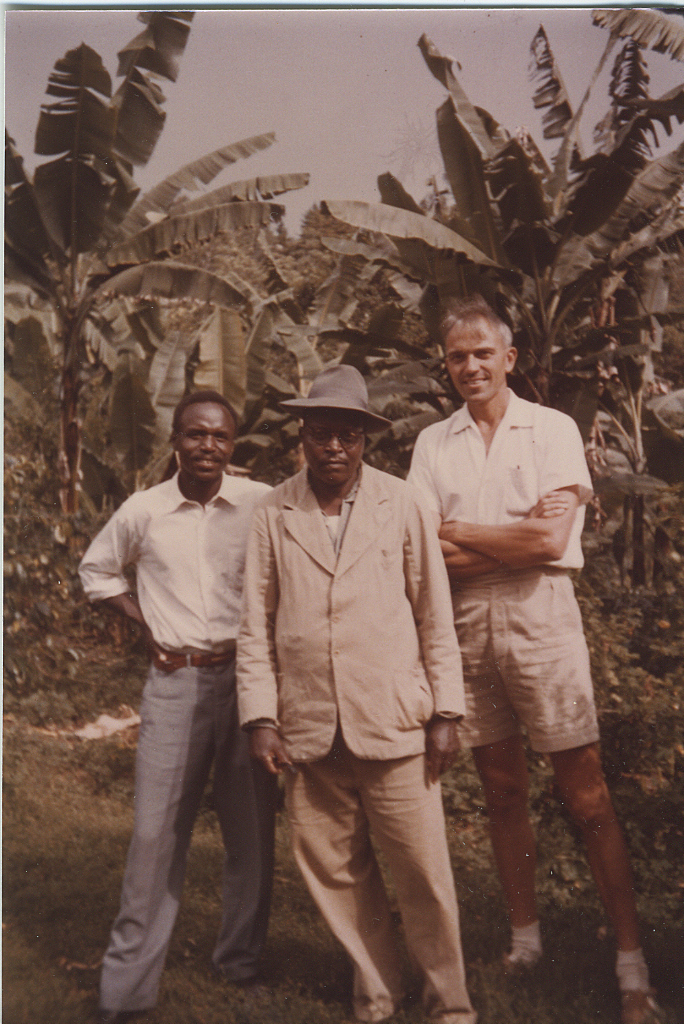
Yaya, unataka specifics? Kwanza, huyu hapa ndiyo Kirilo Japhet akiwa na baba yake Japhet Ayo na Anton Nelson.

b00988-p05857.jpg


Baba yake yake Kirilo Japhet, alibatizwa mwaka 1913, na alikuwa mweka hazina wa kanisa lake na rais wa Meru Native Coffee Planters Association. Kirilo Japhet alisoma mpaka darasa la nane na alijiunga na Marangu Teachers Training College. Hata hivyo hakumaliza kwa sababu, walimu wake wakijerumani walitimuliwa kutokana na vita kuu ya pili. Kirilo Japhet hakukata tamaa, alijiendeleza na baadae kusomea na kuhitimu masomo ya mganga msaidizi (Medical Assistant). Baada ya kuhitimu aliajiriwa katika hospitali ya misheni Nkoaranga. Mwaka 1948 aliacha kazi hiyo ili afanye kazi full-time ya ukatibu Meru Citizens Freemen Union. Kesi ya ardhi ya wameru ilitokana kwa wameru kunyang'anywa kwa nguvu ardhi yao na kuhamishwa kutoka Eangare Nanyuki kupelekwa Kingori.

Tarehe 9 Juni 1952, Trusteeship Council ya Umoja wa Mataifa ilikubali kusikiliza kesi ya mgogoro wa ardhi ya wameru. Wameru wakamteua Earle Seaton, wakili mweusi kutoka Bermuda aliyekuwa akifanya kazi Moshi na Kirilo Japhet kuwawakilisha. Kesi ilianza kusikilizwa New York tarehe 30 Juni. ambapo Earle Seaton alikuwa peke yake kutokana na Kirilo kuwekewa mizegwe na serikali ya kikoloni. Kutokana na maelezo yangu ya awali utatambua kuwa tofauti na picha ambayo Mohamed Said anataka kuitoa, Kirilo Japhet alikuwa mtu mwenye elimu ya kutosha na uwezo wa kipesa. Hakuwa mtu wa kutegemea fadhila kutoka kwa wakina Sykes, Kandoro au hata Nyerere. Yeye alikuwa mwenzao, mzalendo kama walivyokuwa wao. Pamoja na mizengwe ya wakoloni, Kirilo aliwasili New York tarehe 17 Julai 1953 kwa ushirikiano na viongozi wenzie wa TAA.

Baada ya awamu hii ya kesi kuisha, Earle Seaton na Kirilo Japhet walirudi nyumbani kwa kupitia London. Earle Seaton, alirudi mapema Moshi lakini Japhet Kirilo alibaki akifanya mikutano na wazalendo kutoka Afrika Mashiriki waliokuwa London wakati ule. Wazalendo hao walikuwa pamoja na Julius Nyerere, Mbiyu Koinange na wengine ambao nimeisha wataja awali. Kutokana na hii, mtu hauwezi kusema kuwa Nyerere alikaa pembeni kwenye ishu nzima. Pamoja na kuwa mbali, alihusika kikamilifu kupanga mikakati ya kuhakikisha kuwa watanganyika wanafahamishwa yaliyowasibu wameru. Kutaka kutuzuga kuwa wamanyema peke yao ndiyo waliotoa msukumo kwenye tafrani hii, kama ambavyo Mohamed Said anataka kutuaminisha ni uongo mtupu. Mgogoo wa ardhi wa wameru haukuwagusa na kuwahusisha wameru peke yao, bali watanganyka wote na wazalendo wengine kutoka nchi jirani. Wote hawa wanastahili kuenziwa, sio wakina Sykes na Saadani kandoro peke yao.

Amandla.........


.
 
Mnachekesha sana nyie. habari hii inazungumzia wakati wa Uhuru kisha mnamweka Kardinali Pengo ndani kama vile huyu alishiriki ktk maamuzi yeyote ya TAA au TANU. Sioni mahusiano yoyote ya Kardinali na siasa za Tanganyika.. Kikubwa zaidi Mohammed Said ameeleza wazi hapa kwamba:-

Open politics and mass mobilisation to agitate for independence in Tanganyika began with the formation of TANU in 1954 with Julius Nyerere, a Roman Catholic as the leader. While at the top TANU had a Christian president, Muslims, however, dominated the movement in leadership and membership composition. At the party headquarters in Dar es Salaam there was what was known as the 'TANU Elders Council' (Baraza la Wazee) a polit – bureau of sorts constituting of 173 members all of them Muslims. While the Elders Council supported Nyerere this was not the case with other members in the party. A small faction of radical Muslims rose to oppose Nyerere's leadership for no other reason but for being a Christian.

Mwenye macho haambiwi tazama...
Chama kimejaa waislaam na baadhi yao wanasimama na kumpinga Nyerere kwa sababu ni Mkristu!!..
Huyu huyu Nyerere alozungukwa na Waislaam ndiye tena anaonekana kuwa chimbuko la neno serikali pindi hoja ya serikali kutoelewana na Waislaam japokuwa serikali nzima imejaa waislaam. Hao waislaam waliokuwa ndani ya chama hawakuwa Waislaam tena au?

Hivi hilo Baraza la Wazee wa TANU lingekuwa lote ni wakristu watupu hawa jamaa wangesemaje? Wakati wao wanawalaumu wakatoliki kujiingiza kwenye sias hawaoni tatizo kuwa na Baraza muhimu kama hili bila mkristu hata mmoja!

Amandla......
 
Mohammed Said(post no 515):
Kwa bahati mbaya au nzuri Nyerere nae hakuwakumbusha au kuwaeleza kuwa TANU nimeikuta nilipokuja Dar es Salaam 1952. Hapa ndipo nikaona iko haja ya kuandika kitabu na kueleza kisa kizima cha historia ya kupigania uhuru wa Tanganyika.

Correct view
[B said:
Jasusi[/B];1072921]Mohammed,
Just a point of order. Nyerere hakuikuta TANU Dar-es-Salaam mwaka 1952 kama TANU ilianzishwa 1954.

Mkandara(post no 516):
Mohamed Said atanielewa vizuri nilichokuwa nikisisitiza toka huko nyuma kwani haya yote sikuyasoma mahala isipokuwa niliambiwa na mtu wa Uhakika, kiongozi wa dini ambaye maisha yake alishindwa kuelewa Unafiki wa Waislaam inapofikia issues zinazowahusu Waislaam.....Ndio wa kwanza kubomoa kisha hutafuta mchawi.


Mohammed Said(post no 527)
In a sad tone Abdulwahid ended his address by telling Nyerere, " As I walk out of this room I want to believe that, you, Julius Nyerere, have not now turned against us." With those words Abdulwahid made his exit.
My view
Huyu Mohammed Said hakuwa anumelewa Nyerere,NOBODY, REPEAT NOBODY ever snubbed Nyerere and lived to tale the tale.Tafuta na historia ya Giriki aliyechapwa viboko 12. Mohammed Said anatuletea hadithi za Abunuasi, hadithi za kuwahadithia watoto.

Mohammed Said(Post 530)
Kitabu hiki nilianza kwa "Bismillah Rahmani Rahim" yaani naanza kwa Jina la Mwenyezi Mungu. Ilikuwa kazi kubwa kwa publishers kunifanya niondoe mwanzo huo. Hata hivyo maneno hayo hayapo katika kitabu changu lakini ndani ya nafsi yangu yapo.
My view
Thats the whole point jamaa anatuletea long widing tales za mihadhara ya kidini which half of Tanzanians dont subscribe.My take isMohammed Said is being funded by religous zealots and fundamentalists to create a situation for chaos to reign.Like I said MS is the soft face, the hard face is to follow.

Mohammed Said(post 535)
In Dar es Salaam at the Kitumbini Mosque a hawli (prayer of remembrance for a departed Muslim) is held each year in the month of October to remember Abdulwahid Kleist Sykes.........
Many of Abdulwahid's contemporaries are still living and pray at the same mosque. They cherish this yearly occasion. Most of these are TANU veterans of the 1950s. They are now old and for bitter reasons they have lost interest in the Party.
My view
Like Chuma and Susi waManyema waliobeba mwili wa David Livingstone toka Kigoma hadi Bagamoyo, na wewe wafanya hivyo kwa the Sykes and co. with great compassion but with nothing else intellectually
Mkuu Mohammed Said is living in a world of religous fantansy, of course leaning heavily into his madrassa incartations and training and unfortunate roting, he is trying to explain away our sacred history to suit his own training and beliefs.
He will definately fail

Unfortunately these winding stories will go on, and on, and on, and on
 
LG: Ahsante sana kwa mchambuo wako wa baadhi ya yale niliyosema katika ukumbi. Nakushuru kwa wema huu kwani mchango wako ndiyo unaofanya ubongo wangu ukawaza na kuandika tena na tena kama mwenyewe ulivyosema...on and on and on. Umenikumbusha kisa cha Mahdi na Higgs katika vita vya Khartoum katika miaka ya mwisho ya 1880 kule Jazzeera, Sudan. Mahdi akipigana vita vya Jihad dhdi ya majeshi ya Waingereza aliwaandama jangwani hadi alipoliteketeza jeshi lote la wakoloni likiwa na askari 10,000. Waingereza wakamtuma Gordon na yeye akauawa Khartoum siku ya Ijumaa kama kesho. Unanikumbusha tena siku nilipokamatwa uwanja wa ndege wa kimataifa Dar es Salaam nikishutumiwa kuwa mimi ni mvushaji madawa ya kulevya. Maofisa walionitia mbaroni wakadai kuwa walikuwa wakinifuatilia kwa muda mrefu baada ya kupata taarifa za kuaminika. Kwani niliamini masikio yangu? Niliwaambia nadhani ni majina yamefanana. Mohamed huyu si wa mambo hayo. Wakatoa pasi yangu ya kusafiria nikaulizwa." Kwani hii si pasi yako?" "Naam ndiyo mimi kabisa kwenye hiyo picha." Nikawauliza nyie mkipata taarifa hamfanyi utafiti? "Tunafanya." Jibu likatoka. "Mmejiridhisha kuwa mimi ni muuza madawa ya kulevya?" Wakajibu ndiyo. Nikafanyiwa upekuzi wa mizigo yangu. Hamna kitu. Mahojiano katika ofisi za makachero uwanja wa ndege ukaanza. Kila swali likawa linapata jibu lake. Nani kakualika Iran. Nikajibu Wizara ya Mambo ya Nje ya Iran. Walikujuaje? Niaksema hata mimi sijui lakini wao si wa kwanza kunialika napata mialiko duniani kote kuhudhuria mikutano na huwa siwaulizi mmenijuaje...and on and on and...usiku unayoyoma. Swali lililonifurahisha ni lile,"Ah! Na wewe Mswahili wa Kariakoo nawe umesoma?" Alieniuliza zamani alikuwa mchezaji wa Simba. Sikujibu swali hilo ila nikamwambia, "Mimi nakujua vizuri sana wewe. Wewe si ulikuwa ukicheza Simba Sports Club?" Mwisho nikawaambia mna haki ya kuninyanyasa kwani laiti ningelitoka Vatican msingethubutu kunigusa. Hapo bwana walilowa kweli. Nikawaambia nyie hamna lolote. Mimi Dar es Salaam maarufu kama chumvi mngepita Kariakoo tu mkauliza habari zangu wangekuambieni kuwa kwa hili la cocaine Mohamed Said tunamjua toka utoto wake hajapata kuwemo. Mohamed Said mtu wa vitabu toka utoto. Tuko Mnazi Mmoja tanangoja kucheza mpira mechi au mazoezi yeye keshavaa jezi viatu kila kitu kainamia kitabu. Ndiyo maana unamuona kapata miwani.
 
FM: Mbona hilo la kuwaenzi mashujaa wetu nimelisema? Ahsante sana kwa picha. Nilkwenda nyumbani kwa Mzee Japhet Kirilo IUsa River wakati nafanya utafiti tena alonipeleka alikuwa Abduwahid Ally Sykes hatukumkuta alikuwa kenda Nairobi.
 
Kabonde: Ahsante kwa ushauri. Ulosema ndilo lililokuwa katika kitabu changu. Kwa hapa nafasi haitatosha ni kitabu cha karibu kuraza 400.
 
Status
Not open for further replies.
Back
Top Bottom