UTAPELI WA FOREX: Francisco Magnetics adaiwa kuhama nchi, anadaiwa pesa nyingi. Polisi wamsaka!

UTAPELI WA FOREX: Francisco Magnetics adaiwa kuhama nchi, anadaiwa pesa nyingi. Polisi wamsaka!

Kuna watu kitu kimoja wanashindwa kuelewa....

Forex ni sort of gambling hence its unpredictable na haina uhakika (hapa hakuna long term guarantee ya kutengeneza pesa husasan kwa day trader wa kawaida upo against institutions, banks n.k. zenye automatic softwares ambazo zipo already programmed to act in any way possible in micro seconds kwenye any signal...)

Selling information Books na Systems is guaranteed money haina risks wengi so called winners wana vitabu na systems wanazouza kwahio ni easy money in the Bank... na ili kuvutia watu unakuta wana-lifestlye kubwa (its recruiting business)

Gambling with other peoples money is win win.., no risk (nina uhakika jamaa angekuwa mjanja hata angesema kuna 99% chance of winning kwa bahati mbaya akiliwa huwezi kumshika) atasema hio ni one percent has happened...., na kama aliguarantee winnings hapo ndio mwanzo wa Utapeli.....


Kwa kuondoka nawaacha na hii extract...


How Hedge Funds makes their Money....

Hedge fund makes money by charging a Management Fee and a Performance Fee. While these fees differ by fund, they typically run 2% and 20% of assets under management.

Management Fees: This fee is calculated as a percentage of assets under management. Typically this equates to 2% but can range from 1% to 4% depending on the fund. These fees are generally paid monthly or quarterly and help pay overhead and daily expenses of running the hedge fund.

Performance Fees: This fee is calculated as a percentage of the funds profits. This is an incentive fee: if the fund makes money they will get paid, if not they won’t. This incentive fee motives the fund to generate excess returns. These fees are generally used to pay employee bonuses and reward a hard working staff.

A high water mark helps to protect investors in a scenario where the fund starts to lose money. This is a loss carry foward provision that will only be revered if the fund makes back those losses. Assuming a Hedge Fund is $100 million charges standard 2/20% fees and generates 10% annual returns, how much money will the fund make? The fund would return $4 million in annual fees: Management fee of $2 million plus a $2 million Performance fee ($100mn x 10% x 20%).

Easy Money with no Risk..., (Yaani Risk yote ni ya Mwenye pesa)
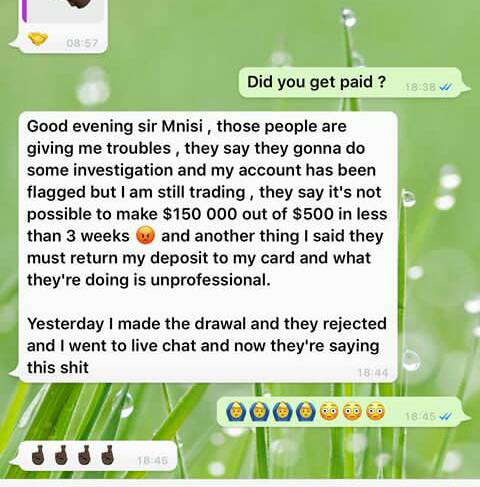
Endelea kuongea shits ... Huko south Africa mtu katoa dola 500 mpaka 150,000 ndani ya wiki chini ya tatu ....


Nimesoma andiko laki hakuna cha maana unachosema. Eti unasema Forex iko programmed ... Yaani currency ya nchi iko programmed hahahaha hiki kitu ndio nimesikia kwako ... Hakuna hela duniani ina move kwa kuwa programmed labda hela ya mbinguni ... Ingekuwa m hivyo tungeiprogram hela yetu ya shilling isiendelee kushuka ...


Ulivyoandika MTU akipitia juu juu unawezadhani kuna la maana ila ukikaa chini na kutafakari ulichoandika unagundua kuna magap mengi ...


IMG_20190511_174329.jpg
 
forex ni biashara poa sana kama umeipa muda na nafasi ya kutosha inafaa ukianza kupata pesa ya kuridhisha kidg sio mbaya ukafanya investment zingine pia huku ikiendelea kuwa mzigoni kwenye. chati kama kawaida .
 
Endelea kuongea shits ... Huko south Africa mtu katoa dola 500 mpaka 150,000 ndani ya wiki chini ya tatu ....


Nimesoma andiko laki hakuna cha maana unachosema. Eti unasema Forex iko programmed ... Yaani currency ya nchi iko programmed hahahaha hiki kitu ndio nimesikia kwako ... Hakuna hela duniani ina move kwa kuwa programmed labda hela ya mbinguni ... Ingekuwa m hivyo tungeiprogram hela yetu ya shilling isiendelee kushuka ...


Ulivyoandika MTU akipitia juu juu unawezadhani kuna la maana ila ukikaa chini na kutafakari ulichoandika unagundua kuna magap mengi ...


View attachment 1094320

Aisee kweli usilolijua ni kama usiku wa giza.... kidogo niamua kukuacha nisipoteze muda wangu ila ngoja nitoe elimu ya bure kwako...

Moja: Nimesema Forex wewe day trader unayeshinda na computer na kuangalia hizo signals pia Banks na Institutions zina Computers na Softwares ambazo ziko programmed ku-detect signals tena in micro-seconds , kwa day trader its a high risk business in long term..., ILA

Mbili:
Wajanja badala ya kutumia muda mwingi kucheza na signal kuna njia nyepesi ambayo haina risks..., kuuza sytems zao, vitabu, semina na njia nzuri zaidi ni Hedge Funds Managers ambao wanatumia pesa za watu kuwa-investia wakishinda wanapata profiti wote wakishindwa mwenye pesa ndio anapata hasara..

Tatu: Nani kasema watu hawapati pesa ? hata Ponzi scheme kuna wanaokula na wanaoliwa.., na hii haibadilishi this is a high risk business.., pia kuna watu wana currency za kutosha wakiamua wanaweza hata kuyumbisha nchi ngoja nikupe kisa kilichoitokea England kwenye Black Wednesday... In Short kama unaona uvivu kusoma ni kwamba speculators walijua mwisho wa siku England itanyanyua mikono hivyo wakawa wanashort sell the pound...,


George Soros became one of the most famous currency traders in the world, thanks to his timely and brave bet against the Bank of England in 1992 on what became known as Black Wednesday. With costs of around £3.3 billion, Britain's central bank was unable to defend itself from an attack in the currency markets, and Mr. Soros made an estimated $1 billion in profit as a result.

Black Wednesday's Underlying Causes
When Britain joined the ERM, the rate was set to 2.95 Deutsche Marks per Pound Sterling with a 6 percent permissible move in either direction. The problem was that the country's inflation rate was three times that of Germany's, interest rates were at 15 percent, and the country's economic boom was far into a period of unsustainable growth, which set the stage for a bust period.

Currency traders took note of these underlying problems and began short selling the Pound Sterling. That is, they were borrowing and immediately converting Pound Sterling into a foreign currency with the agreement to re-convert them in the future. George Soros was one of these bearish currency traders, amassing a short position of more than $10 billion worth of Pound Sterling.


Black Wednesday and Its Aftermath
The UK's prime minister and cabinet members authorized the spending of billions in Pounds Sterling as an attempt to contain the short selling by speculators. Moreover, the British government announced that it would raise its interest rates from 10 percent to 15 percent to try and attract currency traders looking for greater yield on their currency holdings.


Unfortunately, currency speculators didn't believe the government would make good on these promises and continued shorting the Pound Sterling. After an emergency meeting among top officials, the country was ultimately forced to withdraw from the ERM, to let the market revalue its currency to more appropriate, lower levels.


The country was arguably thrown into a recession afterward, with many British citizens referring to the ERM as the "Eternal Recession Machine." While the government lost a lot of money, some politicians are glad the ERM disaster occurred, since it paved the way for a more conservative government to enter the fold and revive the economy.


Lessons from Black Wednesday
Black Wednesday teaches a number of important lessons to both currency traders and governments, including some lessons that may surprise readers. For instance, statistical data suggests that the British economy was growing faster in the ERM than published figures suggest, and the resulting recession may have instead been due to the aftermath of the Lawson boom.


Lessons for governments might include:
  • Don't dictate interest rates: The ERM interest rates were set for Germany when they should have been set by Europe for Europe.
  • Pick your fights against speculators: Taking extreme measures to counteract decisive market action often becomes a futile and expensive endeavor.

Lessons for currency traders could include:
  • Nothing's impossible: The departure of Britain from the ERM was unthinkable to many during the crisis, but even governments make big mistakes.
  • Be ready for extreme measures: Britain's decision to raise interest rates from 2 percent to 5 percent in a single day demonstrates potential government resolve.
 
Endelea kuongea shits ... Huko south Africa mtu katoa dola 500 mpaka 150,000 ndani ya wiki chini ya tatu ....
IMG-20190511-174329.jpg

Dahhh mzee nimejaribu kusoma hii chat nimegundua kuna utapeli wa kuifanya forex ionekane rahisi ili anaeuliza swali ashawishike kuweka mpunga wake wahuni wamnyonyoe, aisee $500( tshs kuwa $150,000 ndani ya wiki 3 hii ni betting kazbisa ila inawezekana

au mnasameaje kina

 
Aisee kweli usilolijua ni kama usiku wa giza.... kidogo niamua kukuacha nisipoteze muda wangu ila ngoja nitoe elimu ya bure kwako...

Moja: Nimesema Forex wewe day trader unayeshinda na computer na kuangalia hizo signals pia Banks na Institutions zina Computers na Softwares ambazo ziko programmed ku-detect signals tena in micro-seconds , kwa day trader its a high risk business in long term..., ILA

Mbili:
Wajanja badala ya kutumia muda mwingi kucheza na signal kuna njia nyepesi ambayo haina risks..., kuuza sytems zao, vitabu, semina na njia nzuri zaidi ni Hedge Funds Managers ambao wanatumia pesa za watu kuwa-investia wakishinda wanapata profiti wote wakishindwa mwenye pesa ndio anapata hasara..

Tatu: Nani kasema watu hawapati pesa ? hata Ponzi scheme kuna wanaokula na wanaoliwa.., na hii haibadilishi this is a high risk business.., pia kuna watu wana currency za kutosha wakiamua wanaweza hata kuyumbisha nchi ngoja nikupe kisa kilichoitokea England kwenye Black Wednesday... In Short kama unaona uvivu kusoma ni kwamba speculators walijua mwisho wa siku England itanyanyua mikono hivyo wakawa wanashort sell the pound...,


George Soros became one of the most famous currency traders in the world, thanks to his timely and brave bet against the Bank of England in 1992 on what became known as Black Wednesday. With costs of around £3.3 billion, Britain's central bank was unable to defend itself from an attack in the currency markets, and Mr. Soros made an estimated $1 billion in profit as a result.

Black Wednesday's Underlying Causes
When Britain joined the ERM, the rate was set to 2.95 Deutsche Marks per Pound Sterling with a 6 percent permissible move in either direction. The problem was that the country's inflation rate was three times that of Germany's, interest rates were at 15 percent, and the country's economic boom was far into a period of unsustainable growth, which set the stage for a bust period.

Currency traders took note of these underlying problems and began short selling the Pound Sterling. That is, they were borrowing and immediately converting Pound Sterling into a foreign currency with the agreement to re-convert them in the future. George Soros was one of these bearish currency traders, amassing a short position of more than $10 billion worth of Pound Sterling.


Black Wednesday and Its Aftermath
The UK's prime minister and cabinet members authorized the spending of billions in Pounds Sterling as an attempt to contain the short selling by speculators. Moreover, the British government announced that it would raise its interest rates from 10 percent to 15 percent to try and attract currency traders looking for greater yield on their currency holdings.


Unfortunately, currency speculators didn't believe the government would make good on these promises and continued shorting the Pound Sterling. After an emergency meeting among top officials, the country was ultimately forced to withdraw from the ERM, to let the market revalue its currency to more appropriate, lower levels.


The country was arguably thrown into a recession afterward, with many British citizens referring to the ERM as the "Eternal Recession Machine." While the government lost a lot of money, some politicians are glad the ERM disaster occurred, since it paved the way for a more conservative government to enter the fold and revive the economy.


Lessons from Black Wednesday
Black Wednesday teaches a number of important lessons to both currency traders and governments, including some lessons that may surprise readers. For instance, statistical data suggests that the British economy was growing faster in the ERM than published figures suggest, and the resulting recession may have instead been due to the aftermath of the Lawson boom.


Lessons for governments might include:
  • Don't dictate interest rates: The ERM interest rates were set for Germany when they should have been set by Europe for Europe.
  • Pick your fights against speculators: Taking extreme measures to counteract decisive market action often becomes a futile and expensive endeavor.

Lessons for currency traders could include:
  • Nothing's impossible: The departure of Britain from the ERM was unthinkable to many during the crisis, but even governments make big mistakes.
  • Be ready for extreme measures: Britain's decision to raise interest rates from 2 percent to 5 percent in a single day demonstrates potential government resolve.
Point no. 2 unawalenga High Frequency Traders ambao kwenye forex hawana impact yeyote.

HFT wao ni largest market markers and brokers in industry kama CITADEL, JPMorgan, Morgan Stanley, Goldman Sachs n.k

Wanatumia Algo kwenye stock market ambapo inawawezesha kupata better and cheap price waje kuuza kwa other indtitutional investors kama Hedge Funds. Most of HFT are brokers in these exchanges.

Wanatumia the same infrastructure na exchanges ili iwe rahisi wao kuwa wa kwanza kuingia sokoni in a nanoseconds. Speed matters to them.

Kwenye forex wanatumia Position Trading Strategy ambayo ni kind of trading that is best suited for the super-patient, witty and long-sighted traders, those who have a real feel for the markets. Their primary goal is to benefit from the dominant trends rather than from short-term market fluctuations.

Haina maana kutumia Algo kwenye forex kwasababu kama trend ni upward, every trader will get any entry na wote mkapata faida based on risk management.
 
High Frequency Traders ni tofauti na unachotaka kumaanisha.
Nachotaka kumaanisha ni kipi ? kumbuka vyote hivyo unavyofanya vya kucheki signal vinaweza kuwa automated na kufanywa na computer in microseconds....
Understanding the Impact of High Frequency Trading in Forex

Each day, billions of monetary units are exchanged on the foreign exchange currency market. FX trading is used to determine currency exchange rates across the world. While people have been trading currencies for thousands of years, modern technology has changed the way that many banks and individual investors do business. The following guide explores how high frequency trading (HFT) has impacted FX trading.

It can be extremely challenging to earn a profit when trading currency. In many cases, investors can lose significant sums of money. Exchange rates can be impacted by a variety of factors. This can include economic conditions, politics, weather, shipping conditions, piracy, technology advances and more.

Many investors use tools that enable trading through technical analysis. Technical analysis looks at how historical exchange rates can impact future exchange rates. In some cases, certain patterns can predict future price movements. Using specialized algorithms, computer programs can be used to forecast the direction of a currency movement.

In addition, computers can be used to automatically trade currency. While lots of early trading programs would execute only a few trades a day, modern programs are designed to complete a significantly larger number of trades. In some cases, programs can execute millions of unique trades every day.

Many HFT programs are installed in specialized data centres located near an exchange. Since the speed of execution is limited by the speed of light, many programmers and investors try to minimize the amount of time it takes for an order to be executed. This is possible by minimizing the amount of time it takes data to travel between a data farm and an exchange.

Most HFT programs are designed to profit from very small price differences in a currency. In many cases, a program will make a profit of only a few cents per trade. However, millions of these types of trades every day can yield a significant profit.

There are several significant risks when running a HFT program. While many of the world's best programmers work in HFT, it's possible for there to be many potential problems. For example, trade execution errors and delays can cause price instability in an exchange rate.

For example, the stock market experienced a flash crash in 2010. During this flash crash, automated HFT trading tools sold large quantities of stock. In seconds, many of the world's top stocks dropped significantly in value. This caused large financial losses around the globe.
 
Point no. 2 unawalenga High Frequency Traders ambao kwenye forex hawana impact yeyote.

HFT wao ni largest market markers and brokers in industry kama CITADEL, JPMorgan, Morgan Stanley, Goldman Sachs n.k

Wanatumia Algo kwenye stock market ambapo inawawezesha kupata better and cheap price waje kuuza kwa other indtitutional investors kama Hedge Funds. Most of HFT are brokers in these exchanges.

Wanatumia the same infrastructure na exchanges ili iwe rahisi wao kuwa wa kwanza kuingia sokoni in a nanoseconds. Speed matters to them.

Kwenye forex wanatumia Position Trading Strategy ambayo ni kind of trading that is best suited for the super-patient, witty and long-sighted traders, those who have a real feel for the markets. Their primary goal is to benefit from the dominant trends rather than from short-term market fluctuations.

Haina maana kutumia Algo kwenye forex kwasababu kama trend ni upward, every trader will get any entry na wote mkapata faida based on risk management.
Point No. 2 yangu ilikuwa hivi....

Mbili: Wajanja badala ya kutumia muda mwingi kucheza na signal kuna njia nyepesi ambayo haina risks..., kuuza sytems zao, vitabu, semina na njia nzuri zaidi ni Hedge Funds Managers ambao wanatumia pesa za watu kuwa-investia wakishinda wanapata profiti wote wakishindwa mwenye pesa ndio anapata hasara.. kwahio swali ni... can hedge funds trade in forex ? The Answer is Yes ....

There are said to be more than 10,000 hedge funds now in operation around the world, many of which are beginning to look towards forex as a means of chasing volatility and higher gains. Historically, forex markets have been less appealing to hedge funds and proprietary trading groups, as the number of instruments is small and not well-suited to investors wanting diversified portfolios. However, fast forward to the present day and pooled funds and hedge funds are now the second-biggest players in the forex markets.

Ila turudi what was the aim and point of my post..., hizi zote ni endeavors ambazo risk ni ya mwenye pesa na sio manager wa pesa au muuza vitabu na system (muuza vitabu, system, learning classes anauza information no chance of loosing money); Hedge funds anamage pesa za watu in this case unampa pesa yeye ndio ananunua na kuuza forex, akiliwa pesa yako imeliwa, akila nyote mmekula.., virtually no risks involved...
 
Aisee kweli usilolijua ni kama usiku wa giza.... kidogo niamua kukuacha nisipoteze muda wangu ila ngoja nitoe elimu ya bure kwako...

Moja: Nimesema Forex wewe day trader unayeshinda na computer na kuangalia hizo signals pia Banks na Institutions zina Computers na Softwares ambazo ziko programmed ku-detect signals tena in micro-seconds , kwa day trader its a high risk business in long term..., ILA

Mbili:
Wajanja badala ya kutumia muda mwingi kucheza na signal kuna njia nyepesi ambayo haina risks..., kuuza sytems zao, vitabu, semina na njia nzuri zaidi ni Hedge Funds Managers ambao wanatumia pesa za watu kuwa-investia wakishinda wanapata profiti wote wakishindwa mwenye pesa ndio anapata hasara..

Tatu: Nani kasema watu hawapati pesa ? hata Ponzi scheme kuna wanaokula na wanaoliwa.., na hii haibadilishi this is a high risk business.., pia kuna watu wana currency za kutosha wakiamua wanaweza hata kuyumbisha nchi ngoja nikupe kisa kilichoitokea England kwenye Black Wednesday... In Short kama unaona uvivu kusoma ni kwamba speculators walijua mwisho wa siku England itanyanyua mikono hivyo wakawa wanashort sell the pound...,


George Soros became one of the most famous currency traders in the world, thanks to his timely and brave bet against the Bank of England in 1992 on what became known as Black Wednesday. With costs of around £3.3 billion, Britain's central bank was unable to defend itself from an attack in the currency markets, and Mr. Soros made an estimated $1 billion in profit as a result.

Black Wednesday's Underlying Causes
When Britain joined the ERM, the rate was set to 2.95 Deutsche Marks per Pound Sterling with a 6 percent permissible move in either direction. The problem was that the country's inflation rate was three times that of Germany's, interest rates were at 15 percent, and the country's economic boom was far into a period of unsustainable growth, which set the stage for a bust period.

Currency traders took note of these underlying problems and began short selling the Pound Sterling. That is, they were borrowing and immediately converting Pound Sterling into a foreign currency with the agreement to re-convert them in the future. George Soros was one of these bearish currency traders, amassing a short position of more than $10 billion worth of Pound Sterling.


Black Wednesday and Its Aftermath
The UK's prime minister and cabinet members authorized the spending of billions in Pounds Sterling as an attempt to contain the short selling by speculators. Moreover, the British government announced that it would raise its interest rates from 10 percent to 15 percent to try and attract currency traders looking for greater yield on their currency holdings.


Unfortunately, currency speculators didn't believe the government would make good on these promises and continued shorting the Pound Sterling. After an emergency meeting among top officials, the country was ultimately forced to withdraw from the ERM, to let the market revalue its currency to more appropriate, lower levels.


The country was arguably thrown into a recession afterward, with many British citizens referring to the ERM as the "Eternal Recession Machine." While the government lost a lot of money, some politicians are glad the ERM disaster occurred, since it paved the way for a more conservative government to enter the fold and revive the economy.


Lessons from Black Wednesday
Black Wednesday teaches a number of important lessons to both currency traders and governments, including some lessons that may surprise readers. For instance, statistical data suggests that the British economy was growing faster in the ERM than published figures suggest, and the resulting recession may have instead been due to the aftermath of the Lawson boom.


Lessons for governments might include:
  • Don't dictate interest rates: The ERM interest rates were set for Germany when they should have been set by Europe for Europe.
  • Pick your fights against speculators: Taking extreme measures to counteract decisive market action often becomes a futile and expensive endeavor.

Lessons for currency traders could include:
  • Nothing's impossible: The departure of Britain from the ERM was unthinkable to many during the crisis, but even governments make big mistakes.
  • Be ready for extreme measures: Britain's decision to raise interest rates from 2 percent to 5 percent in a single day demonstrates potential government resolve.
Nasema tena MTU akikuona unaongea kwa haraka haraka unaonekana unaongea point ila akikaa kwa umakini kuchunguza ukichoandika umeandika pumba tu ...


Sikiliza nikwambie International Monetary Fund (IMF) shirika la fedha duniani limeweka sheria zake kwa liquidity providers na Brokers katika kufanya movement za soko.. Nakubaliana na wewe huwa kuna kuyumbisha soko lakini uyumbishaji ambao uko kinyume na sheria na taratibu za IMF ni kinyume na sheria na kuna adhabu kubwa...


Kila pair ina ADR ya kufanya movement kwa siku au hujui ??? Kama kama ingekuwa watu wako free kuyumbisha soko ingekuwa hatari ... Labda kama hujui hata hao brokers wanasimamiwa na Regulators ambao kazi yao ni kusimamia hizo manipulations kwa brokers...


Majuzi hapa Exness nafanya huo ujinga , alirudisha Pesa zote. So acha UONGO. Sema uongo wako unaonekana mtamu kwasababu umeandika kiingereza.


We jamaa sijui kama unaelewa unachokizungumza, hiyo news ya GBP mbona ni hela kwa traders ??? Hiyo news inasema uingereza itaongeza interest rate kutoka 10 mpaka 15 ili kuattract investors!!!!! . kwa taarifa yako hii ni taarifa njema kwa traders ndio huitwa "Fundamental Analysis " ... Kipi kibaya hapo .. Au kwa akili yako hivyo ndio kumanipulate soko ???


3. Nani kusema hii sio risk business. Ndio maana kuna disclaimer before you join the journey ..


Halafu acha kulinganisha taaluma za watu "International financial Market " na huo upuuzi wako wa ponzi. Hiyo mifano kawatolee hao wanaohudhuria madarasa ya Forex ya wiki 1..
 
Nachotaka kumaanisha ni kipi ? kumbuka vyote hivyo unavyofanya vya kucheki signal vinaweza kuwa automated na kufanywa na computer in microseconds....
Understanding the Impact of High Frequency Trading in Forex

Each day, billions of monetary units are exchanged on the foreign exchange currency market. FX trading is used to determine currency exchange rates across the world. While people have been trading currencies for thousands of years, modern technology has changed the way that many banks and individual investors do business. The following guide explores how high frequency trading (HFT) has impacted FX trading.

It can be extremely challenging to earn a profit when trading currency. In many cases, investors can lose significant sums of money. Exchange rates can be impacted by a variety of factors. This can include economic conditions, politics, weather, shipping conditions, piracy, technology advances and more.

Many investors use tools that enable trading through technical analysis. Technical analysis looks at how historical exchange rates can impact future exchange rates. In some cases, certain patterns can predict future price movements. Using specialized algorithms, computer programs can be used to forecast the direction of a currency movement.

In addition, computers can be used to automatically trade currency. While lots of early trading programs would execute only a few trades a day, modern programs are designed to complete a significantly larger number of trades. In some cases, programs can execute millions of unique trades every day.

Many HFT programs are installed in specialized data centres located near an exchange. Since the speed of execution is limited by the speed of light, many programmers and investors try to minimize the amount of time it takes for an order to be executed. This is possible by minimizing the amount of time it takes data to travel between a data farm and an exchange.

Most HFT programs are designed to profit from very small price differences in a currency. In many cases, a program will make a profit of only a few cents per trade. However, millions of these types of trades every day can yield a significant profit.

There are several significant risks when running a HFT program. While many of the world's best programmers work in HFT, it's possible for there to be many potential problems. For example, trade execution errors and delays can cause price instability in an exchange rate.

For example, the stock market experienced a flash crash in 2010. During this flash crash, automated HFT trading tools sold large quantities of stock. In seconds, many of the world's top stocks dropped significantly in value. This caused large financial losses around the globe.
Hayo mavitabu unayocopy na kupaste tumeshayasoma saaaana hakuna jipya.


Find Better Entry .. Go With Super Trend.. Lazima utusue. Full Stop
 
SIRI YA FOREX NI KUSOMA NA KUWA NA MTAJI HAKUNA ZAIDI YA HILO

KUNUNUA SIGNALS NI UJINGA WA KUWANGO CHA LAMI....HUJASOMEA UDOCTOR UNATAKA ULIPWE MSHAHARA WA DOCTOR KWA MTU ALIESOMEA UDOCTOR.
WA TZ TUACHE SLOPE,SLOPE NI EXPENSIVE SANA.
 
Nasema tena MTU akikuona unaongea kwa haraka haraka unaonekana unaongea point ila akikaa kwa umakini kuchunguza ukichoandika umeandika pumba tu ...


Sikiliza nikwambie International Monetary Fund (IMF) shirika la fedha duniani limeweka sheria zake kwa liquidity providers na Brokers katika kufanya movement za soko.. Nakubaliana na wewe huwa kuna kuyumbisha soko lakini uyumbishaji ambao uko kinyume na sheria na taratibu za IMF ni kinyume na sheria na kuna adhabu kubwa...


Kila pair ina ADR ya kufanya movement kwa siku au hujui ??? Kama kama ingekuwa watu wako free kuyumbisha soko ingekuwa hatari ... Labda kama hujui hata hao brokers wanasimamiwa na Regulators ambao kazi yao ni kusimamia hizo manipulations kwa brokers...


Majuzi hapa Exness nafanya huo ujinga , alirudisha Pesa zote. So acha UONGO. Sema uongo wako unaonekana mtamu kwasababu umeandika kiingereza.


We jamaa sijui kama unaelewa unachokizungumza, hiyo news ya GBP mbona ni hela kwa traders ??? Hiyo news inasema uingereza itaongeza interest rate kutoka 10 mpaka 15 ili kuattract investors!!!!! . kwa taarifa yako hii ni taarifa njema kwa traders ndio huitwa "Fundamental Analysis " ... Kipi kibaya hapo .. Au kwa akili yako hivyo ndio kumanipulate soko ???


3. Nani kusema hii sio risk business. Ndio maana kuna disclaimer before you join the journey ..


Halafu acha kulinganisha taaluma za watu "International financial Market " na huo upuuzi wako wa ponzi. Hiyo mifano kawatolee hao wanaohudhuria madarasa ya Forex ya wiki 1..
Tatizo la kukariri na kutokujua fundamentals ya kitu unachokifanya...

Kwanini forex inapanda na kushuka ? IMF ndio inapanga ? Au ni nini kinachotokea.. ? Leo England Ikitokea vita pound itashuka au itapanda ? kwa taarifa yako forex inapanda na kushuka kutokana na wanunuzi na wauzaji.., na wanunuzi na wauzaji wanafanya wanayofanya kutokana na matukio iwe politically, environmentally au sudden movement of money wauzaji wengi au wanunuzi wengi... Sasa kilichotokea UK Black Wednesday ni kwamba England ilijaribu kutokuishusha currency yake na kuongeza Interest rate ili pesa yao isiendelee kushuka ila short selling iliyofanywa na Traders hususan Traders wakubwa kama Soros ndio kuendelea shortselling ilibidi UK Ku-surrender..

Mkuu badala ya kuongea vitu vague na personal attacks ongelea hoja ni wapi sipo sawa na wapi nimedanganya mifano yako uliyotoa sijui wapi wanapata pesa (nani kasema hawapati ?), na issue ya kupanga na kushusha forex (nani kasema mtu anapanga ?) nilichosema hii ni risky business na mtu mwenye ahueni ni mwenye more information na tools ( na wajanja zaidi ni wauza systems na vitabu) as well as wanaotumia pesa za watu na sio zao kwenye hili game
 
Hayo mavitabu unayocopy na kupaste tumeshayasoma saaaana hakuna jipya.


Find Better Entry .. Go With Super Trend.. Lazima utusue. Full Stop
Inaonyesha hujawahi kusoma wala hausomi nilichoandika.., nimeongelea computer softwares na program ambazo zinafanya hicho unachokisema (better entry ) within a nano second (wewe unasema nimesema soko linakuwa programmed) na for your information hiyo extract nimemuwekea mdau kuhusu High Frequency Trading in Forex..., sasa wewe unayedhani kwamba hakuna jipya kwenye dunia hii na ukishasoma saana umemaliza hauna tofauti na Mbuni anayefunika kichwa chake mchangani akidhani haonekani...,
 
Back
Top Bottom