Hamishia mambo ya dini jukwaa husika, kama huna hoja za kisayansi si lazima kuchangia.Wewe hujui sababu na nini maana ya Damu ya Mwana wa Mungu kumwagika pale msalabani. Hivyo sishangai kuita mtu mchafu. Sauli ima Paulo alikuwa mchafu na ziko imani zinamuita alikuwa Jahili.
Damu ya Mwana kondoo wa Mungu (YESU KRISTO )'Mungu'aliye uvaa mwili wa uwanadamu ili hatimaye huo mwili umwage damu ya kafara ya ukombozi wa mwanadamu aliye chafuliwa na dhambi ilimtakasa jabali huyu wa Kiroho. Hao uwaitao wachafu wameoshwa na Damu ya Bwana Yesu.
Wachafu ni wapi? Ni wale wanaomwaga damu za njiwa, kuku, mbusi, kondoo, watu, nk kuinajizi ardhi ya nchi, huku wakijua fika hakuna damu nyingine ya utakaso baada ya ile ya Yesu Kristo kumwagika pale Msalabani calvary. Utakaso wa dhambi utaupata tu pale utakapo mkubali/ mpoke Bwana Yesu, ukatubu dhambi zako, na ukabatizwa kwa Jina la Baba na Mwana na la Roho Mtakatifu kwa maji, na kwa Roho na Moto.
#COVID19 Dkt. Mollel: Chanjo ya Corona ni salama, ndio maana Rais Samia baada ya kuchanja akaenda Lugalo kuendelea na majukumu yake
Our Community
Regional Communities
Navigation
Install the app
How to install the app on iOS
Follow along with the video below to see how to install our site as a web app on your home screen.
Note: This feature may not be available in some browsers.
More options
Style variation
You are using an out of date browser. It may not display this or other websites correctly.
You should upgrade or use an alternative browser.
You should upgrade or use an alternative browser.
#COVID19 Dkt. Mollel: Chanjo ya Corona ni salama, ndio maana Rais Samia baada ya kuchanja akaenda Lugalo kuendelea na majukumu yake
- Thread starter johnthebaptist
- Start date

The Monk
Platinum Member
- Oct 12, 2012
- 20,242
- 45,930
Kwa taarifa yako uhalali wa umma una maana kuliko hiyo katiba. Maana hata kama ni katiba bado hawaifuati kihivyo, labda kwa vifungu vinavyowabeba. Eti inatoa mawaziri, hivi mkuu unaona kuwa waziri ni kitu cha maana sana nini? Mawaziri wenyewe ndio hao wakati wa magufuli walikuwa wanasema chanjo za corona zina madhara, lakini hivi sasa chini ya Samia wanaongoza kuchanja, na kuhimiza watu wachanjwe maana chanjo ni salama!
Hadi sasa sijajua unataka kuongelea kitu gani mkuu. Tokea awali nimesema, hawa mawaziri na viongozi wetu kuna baadhi ya vitu wakinyamaza ni bora zaidi kuliko kuendelea kujidhalilisha kwa kukosa misimamo na kupotosha watu.
Katiba iliyopo ina mapungufu mengi tu, lakini ndio hiyo inayotumika, hao jamaa wanaitwa mawaziri kwa katiba hii hii iliyopo.
Mara nyingi nasema, mambo yasipobadilika, hata tukipata katiba mpya inaweza isitusaidie sana au kuleta mabadiliko wanayoyataka watu. Ikiwa iliyopo wanaivunja, kitu gani kitawalazimisha kuifuata hiyo mpya?


Tindo
JF-Expert Member
- Sep 28, 2011
- 63,730
- 111,542
Hadi sasa sijajua unataka kuongelea kitu gani mkuu. Tokea awali nimesema, hawa mawaziri na viongozi wetu kuna baadhi ya vitu wakinyamaza ni bora zaidi kuliko kuendelea kujidhalilisha kwa kukosa misimamo na kupotosha watu.
Katiba iliyopo ina mapungufu mengi tu, lakini ndio hiyo inayotumika, hao jamaa wanaitwa mawaziri kwa katiba hii hii iliyopo.
Mara nyingi nasema, mambo yasipobadilika, hata tukipata katiba mpya inaweza isitusaidie sana au kuleta mabadiliko wanayoyataka watu. Ikiwa iliyopo wanaivunja, kitu gani kitawalazimisha kuifuata hiyo mpya?
Hiyo katiba yenye mapungufu ndio hiyo hatuitaki kutokana na huu uhuni unaoendelea hivi sasa. Hatuna muda wa kuiheshimu, maana hata inaowabeba hawaiheshimu. Sisi tunataka hiyo mpya, kisha wasipoiheshimu tutatafuta njia nyingine ya kupambana kwenye mazingira hayo.
The Monk
Platinum Member
- Oct 12, 2012
- 20,242
- 45,930
Hiyo katiba yenye mapungufu ndio hiyo hatuitaki kutokana na huu uhuni unaoendelea hivi sasa. Hatuna muda wa kuiheshimu, maana hata inaowabeba hawaiheshimu. Sisi tunataka hiyo mpya, kisha wasipoiheshimu tutatafuta njia nyingine ya kupambana kwenye mazingira hayo.
Mkuu, kama unafikiri unaweza kupambana, anza sasa.

macho_mdiliko
Platinum Member
- Mar 10, 2008
- 25,191
- 48,765
Tatizo kubwa ni hawa wanasiasa uchwara kama huyu kilaza kutoa maelezo yasiyo na mantiki. Kwa nini hawaacha watu wenye elimu na uwezo wa kueleza mambo wakafanya hizyo kazi? Magufuli aliharibu sana hii nchi kwa kulazimisha watu wa hovyo kama huyu kupata ubunge na kupewa vyeo. Hii wizara ya Afya imeoza kwani mawaziri wake ni ma-clown ambayo hajielewi.Ili suala la chanjo mbona linawapa tabu sana viongozi wa juu , tumieni watu wa afya ambao wapo mpaka vijijini kuelimisha watu
Tz hakuna chanjo haijawai kuwekewa maneno, nakumbuka wakati inaanza chanjo ya pcv13, rota, maneno yalikua mengi , ila watoto wetu wanadungwa , na hazina shida,
Sasa KILA wakati mwapiga mapambio nyie mpaka mnashutua watu kwamba why viongozi wanashabikia chanjo hivi
Tindo
JF-Expert Member
- Sep 28, 2011
- 63,730
- 111,542
Mkuu, kama unafikiri unaweza kupambana, anza sasa.
Naona kwako unajua mapambano ni kushika silaha pekee yake. Sishangai maana hii ndio akili pekee mliyo nayo.
macho_mdiliko
Platinum Member
- Mar 10, 2008
- 25,191
- 48,765
Ni kweli kabisa. Huyu na yule mwanamke ndiyo yalikuwa ma-clown, mazumbukuku ya kutembeza tangawizi huku yakiponda chanjo leo yanageuka kuwa mataalam ya eti kueleimisha watu. Ila rais Samia ndiyo wa kulaumiwa kwa kuwaacha watu kama hawa wakati anajua ujuha waliofanya.Inaleta tafrani kwa wananchi.
Watu hawahawa walisimama na JPM,leo wamebadili gia angani.
Wanachanganya watu na inaonyesha jinsi gani wanawachezea wananchi.
Sent using Jamii Forums mobile app

Saint Anne
JF-Expert Member
- Aug 19, 2018
- 76,039
- 230,142
Na yeye si alikuwa kwenye kundi hilohilo.Ni kweli kabisa. Huyu na yule mwanamke ndiyo yalikuwa ma-clown, mazumbukuku ya kutembeza tangawizi huku yakiponda chanjo leo yanageuka kuwa mataalam ya eti kueleimisha watu. Ila rais Samia ndiyo wa kulaumiwa kwa kuwaacha watu kama hawa wakati anajua ujuha waliofanya.
Kwani yeye ni mgeni?
Sent using Jamii Forums mobile app
macho_mdiliko
Platinum Member
- Mar 10, 2008
- 25,191
- 48,765
Ni hapo ''chacha''. Tanzania tuna hasara. Huyo aliye-suggest tuwe na makamu anayechukuwa nafasi ya urais automatic iwapo rais atashindwa kuendelea kutawala kwa sababu yoyote ile hakutilia maanani mazingira ya nchi yetu na watu wake.
The Monk
Platinum Member
- Oct 12, 2012
- 20,242
- 45,930
Naona kwako unajua mapambano ni kushika silaha pekee yake. Sishangai maana hii ndio akili pekee mliyo nayo.
You are right Sir!

Consultant
JF-Expert Member
- Jun 15, 2008
- 11,503
- 20,892
Hivi huyu Mollel ni Medical Doctor aliyewahi kupractice kweli? Hana tofauti na kina Dr. Majimachafu wa huko kijijini Sumbawanga
No wonder Dr. Gwajima anaonekama genious maana sio kwa hoja mufilisi namna hii
No wonder Dr. Gwajima anaonekama genious maana sio kwa hoja mufilisi namna hii

Saint Anne
JF-Expert Member
- Aug 19, 2018
- 76,039
- 230,142
Ni daktari wa meno.Hivi huyu Mollel ni Medical Doctor aliyewahi kupractice kweli? Hata tofauti na kina Dr. Majimachafu wa huko kijijini Sumbawanga
No wonder Dr. Gwajima anaonekama genious maana sio kwa hoja mufilisi namna hii
Sent using Jamii Forums mobile app
Naibu Waziri wa afya Dkt. Mollel amesema chanjo ya Corona ni salama ndio maana Rais Samia mara tu baada ya kuchanjwa aliweza kuendelea na shughuli zake kama kawaida.
Mollel amesema Rais Samia alitoka Ikulu baada ya kuchanjwa na kwenda Lugalo Hospital ambako alifanya ukaguzi na kufungua mradi wa afya kisha akahutubia.
Chanzo: Channel Ten
Attachments
Shehullohi
JF-Expert Member
- Jul 21, 2020
- 3,753
- 3,685
Hamishia mambo ya dini jukwaa husika, kama huna hoja za kisayansi si lazima kuchangia.
Hamishia!


Mathanzua
JF-Expert Member
- Jan 4, 2017
- 17,251
- 22,929
Hatutaki maneno matupu,we want scientific data and information.Naibu Waziri wa afya Dkt. Mollel amesema chanjo ya Corona ni salama ndio maana Rais Samia mara tu baada ya kuchanjwa aliweza kuendelea na shughuli zake kama kawaida.
Mollel amesema Rais Samia alitoka Ikulu baada ya kuchanjwa na kwenda Lugalo Hospital ambako alifanya ukaguzi na kufungua mradi wa afya kisha akahutubia.
Chanzo: Channel Ten
Naibu Waziri wa afya Dkt. Mollel amesema chanjo ya Corona ni salama ndio maana Rais Samia mara tu baada ya kuchanjwa aliweza kuendelea na shughuli zake kama kawaida.
Mollel amesema Rais Samia alitoka Ikulu baada ya kuchanjwa na kwenda Lugalo Hospital ambako alifanya ukaguzi na kufungua mradi wa afya kisha akahutubia.
Chanzo: Channel Ten
Covid: What do we know about China's coronavirus vaccines?
Published13 JulyShare
Related Topics
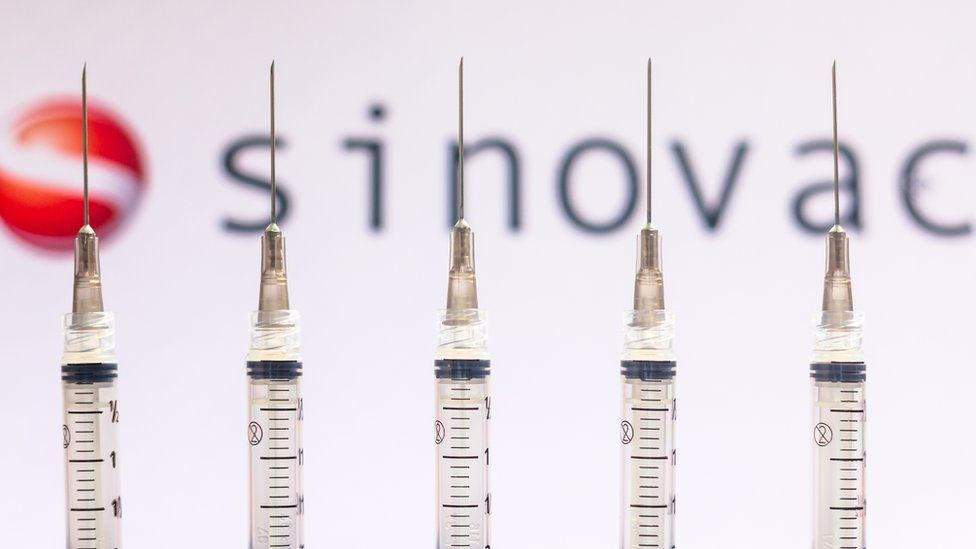
image captionSinovac is a Beijing-based pharmaceutical company
Chinese vaccine producers Sinovac and Sinopharm have signed on to global vaccine sharing scheme Covax, which aims to distribute vaccines to poorer countries.
The Global Alliance for Vaccines and Immunization (Gavi) said it would make 110 million doses of the vaccines available as part of the scheme.
Covax has agreements with the manufacturers of 11 vaccines and plans to provide 2 billion doses across the world by early 2022.
Both Sinopharm and Sinovac, which have been approved by the World Health Organization (WHO) for emergency use, are already being used in China and dozens of countries around the world.
ADVERTISEMENT
But what do we know about China's vaccines and how do they compare to those being developed elsewhere?
media captionHow will the new Pfizer vaccine work?
How does the Sinovac vaccine work?
The Beijing-based biopharmaceutical company Sinovac is behind the CoronaVac, an inactivated vaccine.It works by using killed viral particles to expose the body's immune system to the virus without risking a serious disease response.
By comparison the Moderna and Pfizer vaccines are mRNA vaccines. This means part of the coronavirus' genetic code is injected into the body, triggering the body to begin making viral proteins, but not the whole virus, which is enough to train the immune system to attack.
"CoronaVac is a more traditional method [of vaccine] that is successfully used in many well known vaccines like rabies," Associate Prof Luo Dahai of the Nanyang Technological University told the BBC.
On paper, one of Sinovac's main advantages is that it can be stored in a standard refrigerator at 2-8 degrees Celsius, like the Oxford vaccine, which is made from a genetically engineered virus that causes the common cold in chimpanzees.
In contrast Moderna's vaccine needs to be stored at -20C and Pfizer's vaccine at -70C.
It means that both Sinovac and the Oxford-AstraZeneca vaccine are a lot more useful to developing countries which may not have the facilities to store large amounts of vaccine at such low temperatures.