mike2k
JF-Expert Member
- May 12, 2016
- 1,571
- 3,448
Leo tarehe 12/7/2022 ni siku muhimu sana kwa wapenzi wa space exploration.
Furaha hii inachangiwa na NASA wakishirikiana na agencies wengine kuweza kutoa rasmi picha na tafiti za kwanza kabisa kutoka katika darubini 🔭 ya JWST.
Kabla ya kuendelea ningependa kushare na wewe msemo huu kuwa ili civilization yoyote iweze ku survive ina wajibu wa kuwekeza kwenye space exploration.
Kwa kulijua hilo kazi hii ya kipekee ya NASA imekuja na majibu ya kuvutia na kuweza kuisaidia tasnia ya Astronomy.
Picha za kwanza za JWST zilizotoka ni
SMACS 0723

Hii ni picha ya kwanza kabisa ambayo inaonyesha eneo la mbali zaidi kabisa kuweza kuonekana na binadamu.
Picha hii inaitwa Web first deep field.
Katika picha hii unaweza kuona maelfu ya galaxy yakiwa umbali wa 4.5 billion light years away. Yaani tunaona leo hizo galaxy jinsi zilivyokuwa miaka billion 4.5 iliyopita.
Camera iliyotumika kupata hii picha inaitwa Web near infrared camera.
The NASA/ESA/CSA James Webb Space Telescope has produced the deepest and sharpest infrared image of the distant Universe to date. Known as Webb’s First Deep Field, this image of galaxy cluster SMACS 0723 is overflowing with detail.
SMACS 0723: Webb has delivered the deepest and sharpest infrared image of the distant universe so far – and in only 12.5 hours. For a person standing on Earth looking up, the field of view for this new image, a color composite of multiple exposures each about two hours long, is approximately the size of a grain of sand held at arm’s length.
This deep field uses a lensing galaxy cluster to find some of the most distant galaxies ever detected. This image only scratches the surface of Webb’s capabilities in studying deep fields and tracing galaxies back to the beginning of cosmic time.
Picha hii na taarifa zote zinazokisanywa zinaenda kutusaidia kutupa majibu ya maswali kuhusu mwanzo wa ulimwengu huu. Namna galaxy zilivyokuwa formed etc.
Early Universe
WASP-96b (spectrum):

A transmission spectrum made from a single observation using Webb’s Near-Infrared Imager and Slitless Spectrograph (NIRISS) reveals atmospheric characteristics of the hot gas giant exoplanet WASP-96 b. ILLUSTRATION: NASA, ESA, CSA, STScI.
James Web Space Telescope imetuletea details za hii exoplanet na imetuonyesha kuwa anga lake lina H20 yaani lina maji. Hii tafiti inataka kutupa majibu kuwa kuna uwezekano wa uhai katika exoplanet hii?
Tafiti za mwanzo hatukuweza kuona mawingu na aina ya anga hewa la exoplanet hii lakini sasa tumeweza kuona na kujifunza zaidi kuhusu exoplanet hii iliyoko umbali wa zaidi ya 1000 light years away.
James web Telescope inaenda kutafiti uwepo wa sayari zenye sifa kama dunia yetu. Na kazi ya kwanza ndo hiyo imeanza.
Southern Ring Nebula:

This side-by-side comparison shows observations of the Southern Ring Nebula in near-infrared light, at left, and mid-infrared light, at right, from NASA’s Webb Telescope. IMAGE: NASA, ESA, CSA, STScI
JWST Imetupa nafasi ya kuweza kuona namna ambavyo nyota zinavyokufa polepole.
Southern Ring Nebula:
This planetary nebula, an expanding cloud of gas that surrounds a dying star, is approximately 2,000 light years away. Here, Webb’s powerful infrared eyes bring a second dying star into full view for the first time. From birth to death as a planetary nebula, Webb can explore the expelling shells of dust and gas of aging stars that may one day become a new star or planet.
Webb: Southern Ring Nebula comes into full view – Astronomy Now
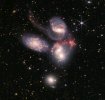
Stephan’s Quintet:

Hili ni kundi la galaxy 5 kuwahi kuonekana na sayansi ya bindamu. Webb imetusaidia kuweza kuliona karibu na kutupa nafasi ya kujifunza. Kupitia Stephans Quintet tutaweza kujifunza namna interaction ya galaxies inavyokuwa na ilileta impact gani cosmically kwenye formaton of early universe.
Webb’s view of this compact group of galaxies, located in the constellation Pegasus, pierced through the shroud of dust surrounding the center of one galaxy, to reveal the velocity and composition of the gas near its supermassive black hole. Now, scientists can get a rare look, in unprecedented detail, at how interacting galaxies are triggering star formation in each other and how the gas in these galaxies is being disturbed.
Pembeni ya Stephan’s Quintet WEBBS imeweza kutuonesha uwepo wa black hole yenye mass ya 24 million equivalent to our sun mass.
Carina Nebula: Webb’s look at the ‘Cosmic Cliffs’ in the Carina Nebula unveils the earliest, rapid phases of star formation that were previously hidden. Looking at this star-forming region in the southern constellation Carina, as well as others like it, Webb can see newly forming stars and study the gas and dust that made them.

Carina Nebula hapa ndipo ambapo nyota huumbwa. Webbs imeweza kutupatia picha kutoka katika eneo hili umbali wa miaka 7200 ya speed ya mwanga.
Kupitia ujifunzaji wa eneo hili tutaweza kufahamu namna ambavyo nyota zinavyokuwa formed.
Mada nyingine zilizoandaliwa na mwandishi mimi ni
James Web Telescope: Darubini kali kwa ajili ya kutazama anga la mbali yaondoka rasmi duniani | JamiiForums James Web Telescope: Darubini kali kwa ajili ya kutazama anga la mbali yaondoka rasmi duniani
 www.jamiiforums.com
Furaha hii inachangiwa na NASA wakishirikiana na agencies wengine kuweza kutoa rasmi picha na tafiti za kwanza kabisa kutoka katika darubini 🔭 ya JWST.
Kabla ya kuendelea ningependa kushare na wewe msemo huu kuwa ili civilization yoyote iweze ku survive ina wajibu wa kuwekeza kwenye space exploration.
Kwa kulijua hilo kazi hii ya kipekee ya NASA imekuja na majibu ya kuvutia na kuweza kuisaidia tasnia ya Astronomy.
Picha za kwanza za JWST zilizotoka ni
SMACS 0723
Hii ni picha ya kwanza kabisa ambayo inaonyesha eneo la mbali zaidi kabisa kuweza kuonekana na binadamu.
Picha hii inaitwa Web first deep field.
Katika picha hii unaweza kuona maelfu ya galaxy yakiwa umbali wa 4.5 billion light years away. Yaani tunaona leo hizo galaxy jinsi zilivyokuwa miaka billion 4.5 iliyopita.
Camera iliyotumika kupata hii picha inaitwa Web near infrared camera.
The NASA/ESA/CSA James Webb Space Telescope has produced the deepest and sharpest infrared image of the distant Universe to date. Known as Webb’s First Deep Field, this image of galaxy cluster SMACS 0723 is overflowing with detail.
SMACS 0723: Webb has delivered the deepest and sharpest infrared image of the distant universe so far – and in only 12.5 hours. For a person standing on Earth looking up, the field of view for this new image, a color composite of multiple exposures each about two hours long, is approximately the size of a grain of sand held at arm’s length.
This deep field uses a lensing galaxy cluster to find some of the most distant galaxies ever detected. This image only scratches the surface of Webb’s capabilities in studying deep fields and tracing galaxies back to the beginning of cosmic time.
Picha hii na taarifa zote zinazokisanywa zinaenda kutusaidia kutupa majibu ya maswali kuhusu mwanzo wa ulimwengu huu. Namna galaxy zilivyokuwa formed etc.
Early Universe
WASP-96b (spectrum):
A transmission spectrum made from a single observation using Webb’s Near-Infrared Imager and Slitless Spectrograph (NIRISS) reveals atmospheric characteristics of the hot gas giant exoplanet WASP-96 b. ILLUSTRATION: NASA, ESA, CSA, STScI.
James Web Space Telescope imetuletea details za hii exoplanet na imetuonyesha kuwa anga lake lina H20 yaani lina maji. Hii tafiti inataka kutupa majibu kuwa kuna uwezekano wa uhai katika exoplanet hii?
Tafiti za mwanzo hatukuweza kuona mawingu na aina ya anga hewa la exoplanet hii lakini sasa tumeweza kuona na kujifunza zaidi kuhusu exoplanet hii iliyoko umbali wa zaidi ya 1000 light years away.
James web Telescope inaenda kutafiti uwepo wa sayari zenye sifa kama dunia yetu. Na kazi ya kwanza ndo hiyo imeanza.
Southern Ring Nebula:
This side-by-side comparison shows observations of the Southern Ring Nebula in near-infrared light, at left, and mid-infrared light, at right, from NASA’s Webb Telescope. IMAGE: NASA, ESA, CSA, STScI
JWST Imetupa nafasi ya kuweza kuona namna ambavyo nyota zinavyokufa polepole.
Southern Ring Nebula:
This planetary nebula, an expanding cloud of gas that surrounds a dying star, is approximately 2,000 light years away. Here, Webb’s powerful infrared eyes bring a second dying star into full view for the first time. From birth to death as a planetary nebula, Webb can explore the expelling shells of dust and gas of aging stars that may one day become a new star or planet.
Webb: Southern Ring Nebula comes into full view – Astronomy Now
Stephan’s Quintet:
Hili ni kundi la galaxy 5 kuwahi kuonekana na sayansi ya bindamu. Webb imetusaidia kuweza kuliona karibu na kutupa nafasi ya kujifunza. Kupitia Stephans Quintet tutaweza kujifunza namna interaction ya galaxies inavyokuwa na ilileta impact gani cosmically kwenye formaton of early universe.
Webb’s view of this compact group of galaxies, located in the constellation Pegasus, pierced through the shroud of dust surrounding the center of one galaxy, to reveal the velocity and composition of the gas near its supermassive black hole. Now, scientists can get a rare look, in unprecedented detail, at how interacting galaxies are triggering star formation in each other and how the gas in these galaxies is being disturbed.
Pembeni ya Stephan’s Quintet WEBBS imeweza kutuonesha uwepo wa black hole yenye mass ya 24 million equivalent to our sun mass.
Carina Nebula: Webb’s look at the ‘Cosmic Cliffs’ in the Carina Nebula unveils the earliest, rapid phases of star formation that were previously hidden. Looking at this star-forming region in the southern constellation Carina, as well as others like it, Webb can see newly forming stars and study the gas and dust that made them.
Carina Nebula hapa ndipo ambapo nyota huumbwa. Webbs imeweza kutupatia picha kutoka katika eneo hili umbali wa miaka 7200 ya speed ya mwanga.
Kupitia ujifunzaji wa eneo hili tutaweza kufahamu namna ambavyo nyota zinavyokuwa formed.
Mada nyingine zilizoandaliwa na mwandishi mimi ni
James Web Telescope: Darubini kali kwa ajili ya kutazama anga la mbali yaondoka rasmi duniani | JamiiForums James Web Telescope: Darubini kali kwa ajili ya kutazama anga la mbali yaondoka rasmi duniani
The galactic habitable zone: Lifahamu eneo katika galaxy yetu linalo support uhai
The Galactic habitable zone au Goldlocks zone ni eneo karibu na nyota (sunli-like) ambapo hakuna joto sana na sio baridi sana kwa maji kuweza kuwepo kwenye uso wa sayari zinazozunguka. Fikiria ikiwa Dunia ingelikuwa mahali ambapo Pluto ipo. Jua lingeonekana kwa shida sana (karibu saizi ya apple...