Rostam Aziz -Ni kundi la wanasiasa mafisadi wanaojiita wawekezaji

Rostam Aziz -Ni kundi la wanasiasa mafisadi wanaojiita wawekezaji

Kuna vitu there is nothing you can do on the untouchables!, kama JPM amekwenda na maji, kapuku mimi ni nani?, unazimwa tuu kama mshumaa!.
Better be safer than sorry!.
P
Kama huwezi kuoambana at least susa, kaa kimya au wapuuze.

Punguzeni njaaaa kaliii
 
Huo ndiyo ukweli wenyewe, say ya sasa ni pesa!, inaongea pesa!, kama huna pesa, huna say jinyamazie, ndio maana nashauri vijana tafuta pesa!.

Siwakatishi tamaa, mimi ndio nawasaidia kwa kuwaambia ukweli, pesa ndio kila kitu!, usicheze kabisa na mtu mwenye pesa, sasa hivi utageuka historia!. Take time kumsikiliza Banza Stone
View: https://www.youtube.com/watch?v=SYhfMWnBy5I

Kila zama na zama zake, zama zangu za kuitumia kalamu yangu kama kalamu, enzi zile za zama za utu, nimeitumia, sasa tuko zama za pesa, naendelea kuitumia kalamu yangu kuwashauri vijana kutafuta pesa ili kuiishi hii zama ya pesa.

No siwakatishi tamaa, ndio nawaambia ukweli vijana watafute pesa, pesa ndio kila kitu, kaa mbali na mtu mwenye pesa, mwenye pesa sio mwenzio!.

Kila zama na zama zake, wakati wa zama zangu I was something, sasa zama zangu zimepita, nimabaki kuwa mshauri, nisome gazeti la Mwananchi kila Jumatano na Nipashe kila Jumapili, na kila Jumapili usiku, niangalie kipindi changu cha KMT, ambacho kinasaidia watu bure kupitia Channel Kipindi cha TV, Kutoa Elimu ya Katiba, Sheria, Haki, na Wajibu. Kuwaelimisha Watanzania Wajue Haki zao na Kutimiza Wajibu Wao View: https://youtu.be/ZJIKhnZCf04?si=uSiW3_dfU58l3B-V
Kwa vijana ambao wako tayari kuacha ujinga wa kusema sema, kupayuka payuka na kuacha kushinda vijiweni, na badala yake kutafuta pesa, karibuni mitaa hii

NB. Usikose gazeti la Mwananchi la leo!.
P

Mtu na pesa ! Duh Nimemkumbuka Ngosha Banza Stone ! R.I.p
 
Kwanza nikupongeze Mkuu Kija, Kijakazi , japo wewe ni KE, but ni miongoni mwa KE wachache who can think, most KE they dont think, they feel!, big up sana kwako, unajinga na kina WOS Woman of substance, Doctor Mama Amon na Meneja Wa Makampuni , just to mention but few!. Kama unadhani ni alijichanganya mwenyewe, endelea kudhani hivyo, ukweli ni kuwa hakujichanganya, alichanganywa!.

Sisi Wazalendo tupo na tulijitolea kumsaidia, alipogusa maslahi ya mabeberu kwa kupitisha sheria mpya ya rasilimali za taifa, tuliwauliza watu humu, Zita Act Retroactively? Tutavunja Mikataba Yote Iliyopo? Can we Stand? Do we have the Guts?

Kisha tukawapa angalizo US/EU Walimtoa Saadam, Ghadafi na Mugabe? Je, wanapanga kumtoa Rais Magufuli madarakani? Watanzania wazalendo tutakubali?

Kisha tukajitolea kuwatonya wale watu wake ili wamlinde, Security alert kwa Serikali yetu: Tuwe makini sana na Marekani, kuna kitu kinapangwa halafu wajifanye walionya kabla. Je, wanapanga kutu-Libya?, masikini mtu wetu, kumbe hao hao unaowatonya wamsaidie, ndio hao hao...

Hivi ilitakiwa watu wetu wamsaidie mtu wetu, akina sisi tukawasisitiza sana watu wake wamsaidie, Wasaidizi wa Rais, Please Msaidieni Rais Wetu Kwenye Public . Msimuachie Kila Kitu Peke Yake! .

Tulijitahidi sana kumshauri lazima atembee kupata exposure, hata kama tatizo ni lingua, aende na atumie lugha yetu adhimi ya Kiswahili, wakalimani si wapo! Hivi Maandamano Yanaogopwa Hivi? Ningekuwa Mimi, Ningewaruhusu na Ulinzi Ningewapa na Kuwakaribisha Ikulu!.

There is no way mtu asiye wao akaruhusiwa kuwa mpangaji kwenye ile nyumba yetu!, nakuhakikishia mtu wetu wa 2030 tayari yupo, namjua ila simtaji Trends Reading: Japo Rais wa 2030 Namjua, Simtaji ili Kumlinda!. Be The First to Know Good News Kawe-2030, MB.ni Mwanamke!, Kawe Itapaa kwa Maendeleo! yule jamaa akionekana ni tishio kwa mtu wetu, nakuhakikishia, hachukui raund!.

Dunia ya sasa ni dunia ya pesa, money takls!.
Pesa ndio kila kitu!.
P

bado unazunguka tu, kilichomuondoa ni corona, period hayo mengine yote ni nyongeza tu, angefix corona siajabu angestaafu mwaka jana 10/2025, corona ilimuoandoa Trump first term ije kuwa yeye wa third world? isitoshe waliopinga corona woote walikuwa-dealt with na globalist wa mwisho alikuwa rajoelina wa madagaska, globalist revenges hata kama ni 100 years itapita lkn wataku-revenge tu au unafikiri kwa nini haiti imekuwa punished mpaka leo hii? soma historia ya haiti globalist is revenging on them vizazi hadi vizazi ...
 
Acha kutanguliza hisia tuwekee ushahidi wa hicho unachokisema
 
The Share Purchase Agreement provides for a nominal cash price of US$10.00 for the PAEM shares, which is in addition to the other covenants, warranties, representations and obligations of the Purchasers under the agreement and the strategic and commercial benefits that would accrue to Orca by exiting its Tanzanian business.

Kikokotoo cha dili chafafanuliwa kwa kina ni hisa hisa ngapi wanunuzi wakubwa wawili wamepata na bei nzima US$ 10 inaonekana ndogo kwa price tag lakini ina mambo mengi imebeba
1776242101636.jpeg


EXPLAINER (Kikokotoo):

Orca Energy Is Selling Its Tanzanian Gas Business for USD 10. The Price Is Not the Story. The Reasons It Is Leaving Are.​

Monday, April 13, 2026
Orca Energy Is Selling Its Tanzanian Gas Business for USD 10. The Price Is Not the Story. The Reasons It Is Leaving Are.

Reading time: 12 min read
Oil & Gas

Listen0:00 / 15:02
Ready
-1.0x+
English Australia (en_AU)English United Kingdom (en_GB)English India (en_IN)English Nigeria (en_NG)

On April 13, 2026, Orca Energy Group Inc., the Canadian company that has operated the Songo Songo gas field in Tanzania since the project's inception, announced it has entered into a definitive Share Purchase Agreement to sell its entire Tanzanian business to Taifa Gas Tanzania Limited and Amber Energy Investment L.L.C-FZ for a nominal price of exactly USD 10.00, not USD 10 million, not USD 10 billion, but ten US dollars, which is the price of a meal and the formal valuation that Orca's board has placed on an asset that opened Tanzania's natural gas era, powers gas-fired electricity generation across Dar es Salaam, and introduced industrial gas supply to the manufacturing sector that Tanzania's Vision 2050 depends on to reach 40 percent of GDP.

The nominal price is structured for legal reasons related to the liability position of the assets being transferred, and the commercial story is not the number itself but the reasoning behind it, specifically why a company that has operated a producing gas field at the foundation of Tanzania's energy system for more than two decades has concluded that retaining that business would cost more than walking away from it.

What the Transaction Actually Is

Understanding the structure of the deal precisely is necessary before the analytical argument about what it means can be made without distortion, because the USD 10 nominal price invites misreading that the actual transaction structure corrects.

Orca Energy, listed on the TSX Venture Exchange under ORC.A and ORC.B, holds its Tanzanian operations through PanAfrican Energy Tanzania Limited, which operates through a Mauritian holding company called PAEM, and under the Share Purchase Agreement, Taifa Gas Tanzania Limited, chaired by Rostam Aziz, one of Tanzania's most prominent industrialists, will acquire 49 percent of PAEM while Amber Energy Investment L.L.C-FZ, a UAE-registered entity, will acquire the controlling 51 percent stake.

Orca's board has stated explicitly why the nominal price reflects a genuine rather than a discounted commercial assessment of the asset's value, identifying four specific conditions that together eliminate the residual value that a producing gas field would normally carry: all geological data and information are the property of the Government of Tanzania, all fixed assets owned by PanAfrican Energy Tanzania become the property of the Tanzania Petroleum Development Corporation upon expiry or termination of the Songo Songo licence, the fair market value of the remaining moveable assets is nominal, and the contingent tax and other Tanzanian liabilities that PanAfrican Energy Tanzania carries are significant enough to consume whatever positive value the operational rights might otherwise represent.

Orca is not selling the gas in the ground, which it does not own, but rather the production sharing agreement position, the operational rights, and the full package of contractual obligations and liabilities that come with them, and the USD 10 price is the market's honest assessment, articulated through the board's fiduciary judgement, of what those rights are worth when netted against those liabilities.

Orca retains specific economic entitlements in the period between signing and closing, including the right to receive 50 percent of certain extraordinary income realised in that window and the ability to cause subsidiaries to repay inter-company amounts and declare dividends before the transaction completes, but following closing Orca will have no further interest or obligation in any favourable or adverse outcomes associated with the Songo Songo licence extension, the ongoing production sharing agreement, or the arbitrations with the Government of Tanzania that have been running for an extended and unresolved period.

Why Orca Is Leaving: The Board's Own Words

The board's transaction rationale statement is the primary analytical document in this story, and reading it carefully reveals a precise enumeration of the specific conditions that have made exit the rational choice for a company that has been involved with Songo Songo through, in David Ross's words, its inception, negotiation, execution and development, representing a relationship with Tanzania's gas sector that spans the entire modern history of that sector's existence.

The first driver the board identifies is ongoing disputes and claims with the Government of Tanzania whose timing and outcome are described as years away and uncertain, which is the language of a company that has concluded that the arbitration and dispute resolution processes it is engaged in are sufficiently protracted and sufficiently unpredictable that their potential outcomes cannot be incorporated into a credible business plan.

The second is the uncertainty surrounding the extension of the Songo Songo development licence and production sharing agreement, which governs the fundamental legal basis on which Orca has the right to operate the field at all, and whose extension discussions the board describes as ongoing but with significant uncertainty on the outcome and terms.

The third is potentially material capital expenditure and development-related obligations whose scale and timing are uncertain enough that planning around them is not possible with the financial discipline that a publicly listed company owes its shareholders.

The fourth, and the one with the most direct regulatory environment implication for Tanzania's broader investment narrative, is contingent tax liabilities significant enough that retaining the business would require Orca to maintain significant cash balances indefinitely against obligations whose crystallisation date and amount are both unknown.

Each of these drivers individually would represent a serious risk management challenge for any company operating a major energy asset. The combination of all four, applied to a single producing asset that represents 100 percent of Orca's operating business, has produced the board's conclusion that preserving cash for shareholder distributions and exiting cleanly is preferable to the alternative of maintaining large capital reserves against uncertain future commitments whose resolution may require years of additional arbitration, litigation, and regulatory engagement...

READ MORE :

Source : Orca Energy Is Selling Its Tanzanian Gas Business for USD 10. The Price Is Not the Story. The Reasons It Is Leaving Are.
 
Kikokotoo cha dili chafafanuliwa kwa kina ni hisa hisa ngapi wanunuzi wakubwa wawili wamepata na bei nzima US$ 10 inaonekana ndogo kwa price tag lakini ina mambo mengi imebeba
View attachment 3573016

EXPLAINER (Kikokotoo)

Orca Energy Is Selling Its Tanzanian Gas Business for USD 10. The Price Is Not the Story. The Reasons It Is Leaving Are.​

Monday, April 13, 2026
Orca Energy Is Selling Its Tanzanian Gas Business for USD 10. The Price Is Not the Story. The Reasons It Is Leaving Are.

Reading time: 12 min read
Oil & Gas

Listen0:00 / 15:02
Ready
-1.0x+
English Australia (en_AU)English United Kingdom (en_GB)English India (en_IN)English Nigeria (en_NG)

On April 13, 2026, Orca Energy Group Inc., the Canadian company that has operated the Songo Songo gas field in Tanzania since the project's inception, announced it has entered into a definitive Share Purchase Agreement to sell its entire Tanzanian business to Taifa Gas Tanzania Limited and Amber Energy Investment L.L.C-FZ for a nominal price of exactly USD 10.00, not USD 10 million, not USD 10 billion, but ten US dollars, which is the price of a meal and the formal valuation that Orca's board has placed on an asset that opened Tanzania's natural gas era, powers gas-fired electricity generation across Dar es Salaam, and introduced industrial gas supply to the manufacturing sector that Tanzania's Vision 2050 depends on to reach 40 percent of GDP.

The nominal price is structured for legal reasons related to the liability position of the assets being transferred, and the commercial story is not the number itself but the reasoning behind it, specifically why a company that has operated a producing gas field at the foundation of Tanzania's energy system for more than two decades has concluded that retaining that business would cost more than walking away from it.

What the Transaction Actually Is

Understanding the structure of the deal precisely is necessary before the analytical argument about what it means can be made without distortion, because the USD 10 nominal price invites misreading that the actual transaction structure corrects.

Orca Energy, listed on the TSX Venture Exchange under ORC.A and ORC.B, holds its Tanzanian operations through PanAfrican Energy Tanzania Limited, which operates through a Mauritian holding company called PAEM, and under the Share Purchase Agreement, Taifa Gas Tanzania Limited, chaired by Rostam Aziz, one of Tanzania's most prominent industrialists, will acquire 49 percent of PAEM while Amber Energy Investment L.L.C-FZ, a UAE-registered entity, will acquire the controlling 51 percent stake.

Orca's board has stated explicitly why the nominal price reflects a genuine rather than a discounted commercial assessment of the asset's value, identifying four specific conditions that together eliminate the residual value that a producing gas field would normally carry: all geological data and information are the property of the Government of Tanzania, all fixed assets owned by PanAfrican Energy Tanzania become the property of the Tanzania Petroleum Development Corporation upon expiry or termination of the Songo Songo licence, the fair market value of the remaining moveable assets is nominal, and the contingent tax and other Tanzanian liabilities that PanAfrican Energy Tanzania carries are significant enough to consume whatever positive value the operational rights might otherwise represent.

Orca is not selling the gas in the ground, which it does not own, but rather the production sharing agreement position, the operational rights, and the full package of contractual obligations and liabilities that come with them, and the USD 10 price is the market's honest assessment, articulated through the board's fiduciary judgement, of what those rights are worth when netted against those liabilities.

Orca retains specific economic entitlements in the period between signing and closing, including the right to receive 50 percent of certain extraordinary income realised in that window and the ability to cause subsidiaries to repay inter-company amounts and declare dividends before the transaction completes, but following closing Orca will have no further interest or obligation in any favourable or adverse outcomes associated with the Songo Songo licence extension, the ongoing production sharing agreement, or the arbitrations with the Government of Tanzania that have been running for an extended and unresolved period.

Why Orca Is Leaving: The Board's Own Words

The board's transaction rationale statement is the primary analytical document in this story, and reading it carefully reveals a precise enumeration of the specific conditions that have made exit the rational choice for a company that has been involved with Songo Songo through, in David Ross's words, its inception, negotiation, execution and development, representing a relationship with Tanzania's gas sector that spans the entire modern history of that sector's existence.

The first driver the board identifies is ongoing disputes and claims with the Government of Tanzania whose timing and outcome are described as years away and uncertain, which is the language of a company that has concluded that the arbitration and dispute resolution processes it is engaged in are sufficiently protracted and sufficiently unpredictable that their potential outcomes cannot be incorporated into a credible business plan. The second is the uncertainty surrounding the extension of the Songo Songo development licence and production sharing agreement, which governs the fundamental legal basis on which Orca has the right to operate the field at all, and whose extension discussions the board describes as ongoing but with significant uncertainty on the outcome and terms. The third is potentially material capital expenditure and development-related obligations whose scale and timing are uncertain enough that planning around them is not possible with the financial discipline that a publicly listed company owes its shareholders. The fourth, and the one with the most direct regulatory environment implication for Tanzania's broader investment narrative, is contingent tax liabilities significant enough that retaining the business would require Orca to maintain significant cash balances indefinitely against obligations whose crystallisation date and amount are both unknown.

Each of these drivers individually would represent a serious risk management challenge for any company operating a major energy asset. The combination of all four, applied to a single producing asset that represents 100 percent of Orca's operating business, has produced the....

READ MORE :

Source : Orca Energy Is Selling Its Tanzanian Gas Business for USD 10. The Price Is Not the Story. The Reasons It Is Leaving Are.
Eeee bhana eeee
 
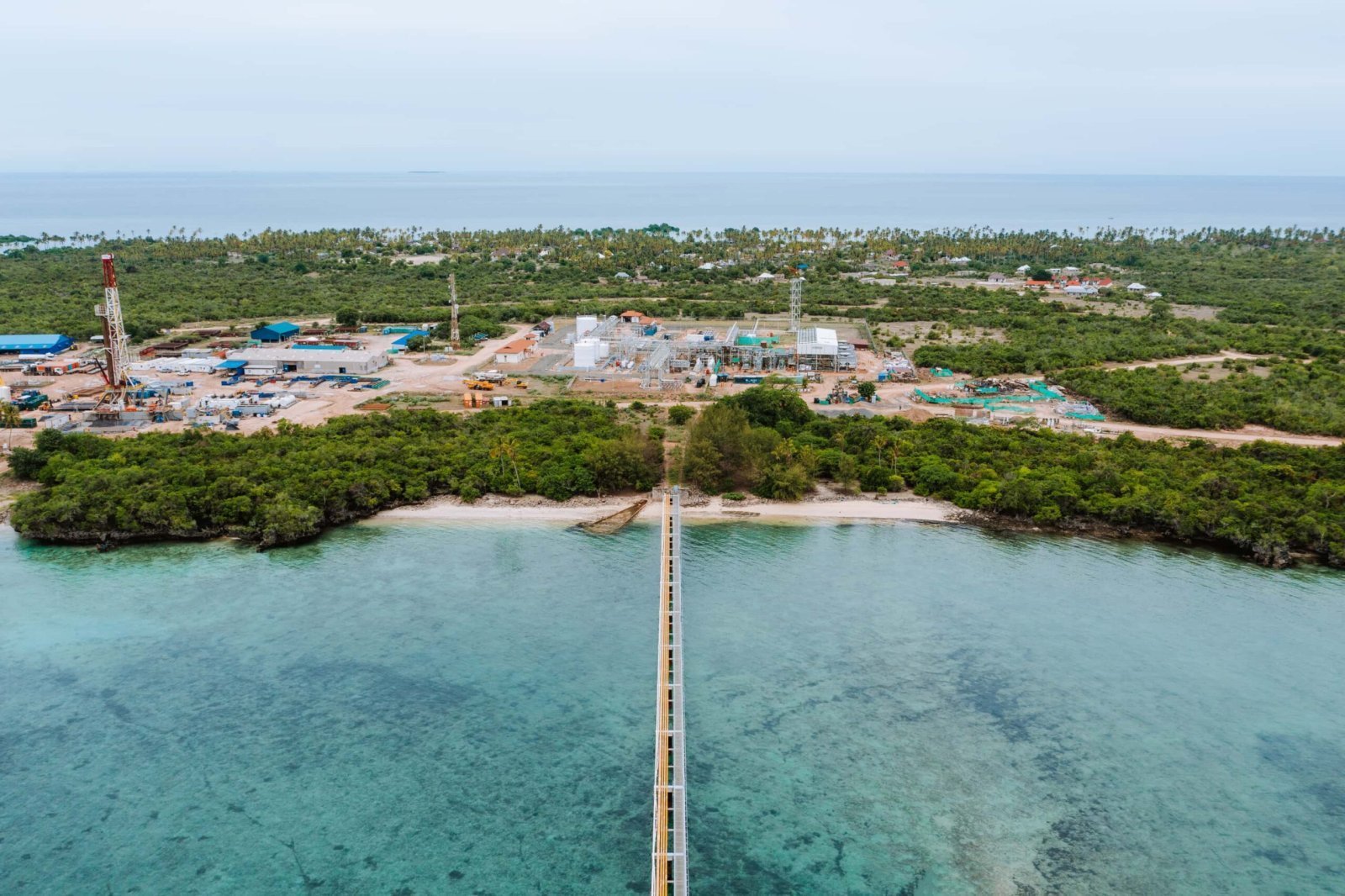
PICHA KUBWA PANA MAZINGIRA YA UWEKEZAJI TANZANIA, KUFUATIA DILI HILI NA TAARIFA KWA UMMA NA ULIMWENGU KUTOKA ORCA


What Songo Songo Is and Why This Transaction Is Consequential


The Songo Songo gas field is not a peripheral project in Tanzania's energy system but rather its foundation, the infrastructure that has powered gas-fired electricity generation across Dar es Salaam since commercial production commenced in 2004 and has supplied the industrial gas that Tanzania's manufacturing sector depends on for its energy cost competitiveness, meaning that the regulatory and operational uncertainty that drove Orca to exit is uncertainty embedded in the very base of the energy system that Tanzania's industrialisation agenda requires to function reliably. The field was discovered thirty years before commercial production began, meaning Tanzania knew for three decades what it held, and the development that finally converted that knowledge into operational energy supply was the project that Orca built and operated, training in the process, as Ross acknowledged, a highly skilled Tanzanian workforce and broader domestic capability in the sector that now represents some of the most technically sophisticated energy sector human capital in the country.

The CAG 2024/25 report, which Uchumi360 documented in its April series, found that the upstream petroleum regulator relied entirely on company-provided data for its reserve estimates for Songo Songo and the Mnazi Bay gas field between 2022 and 2024, accepting the operating companies' figures without independent technical verification, which the CAG identified as a risk of systematic overstatement or understatement with direct implications for national energy planning, investment decisions, and fiscal revenue projections. If Orca, the operator with the deepest operational knowledge of the Songo Songo reservoir, has been the source of the data on which Tanzania's gas reserve estimates for that field are based, then the transition to Taifa and Amber as new operators introduces a data continuity and technical verification challenge that TPDC and the Ministry of Energy will need to manage with specific institutional attention during the transition period, because the institutional knowledge of the field's geological character, production history, and reservoir behaviour is currently held primarily within the organisation that is about to leave.

Taifa and What Tanzanian Ownership Means in Practice

Rostam Aziz's framing of the Taifa acquisition in terms of economic sovereignty and national benefit is analytically accurate in its essential claim, because greater Tanzanian ownership of the foundational infrastructure of the country's energy system is structurally preferable to continued foreign ownership when the operational capacity to manage that infrastructure responsibly exists within the acquiring entity, and Taifa's established presence in Tanzania's LPG importation, storage, distribution, and export market gives it the energy sector operational experience that provides a credible foundation for managing a larger gas production asset, even though the technical complexity of managing a gas production field and pipeline system is substantially greater than the LPG distribution operations that constitute Taifa's existing track record.

The 51 percent controlling stake held by Amber Energy Investment, the UAE-registered entity whose specific ownership structure, capital base, and operational experience are not detailed in the transaction announcement beyond its registered geography, introduces an international partner whose commercial judgment will shape the operational decisions at the PAEM level in ways that the 49 percent Taifa stake cannot override, meaning that the transaction's description as a move toward Tanzanian ownership is accurate at the level of Taifa's minority stake but needs to be qualified by the acknowledgement that the majority of the economic interest and operational control passes to a UAE entity about whose specific energy sector capabilities and long-term commitment to Tanzania the public announcement provides limited information. The UAE energy sector has been one of the most active investors in African energy infrastructure over the past five years, consistent with Uchumi360's documentation of Gulf capital's growing regional presence, and Amber's involvement may represent exactly the combination of international capital and operational expertise that the Songo Songo asset's next phase requires, but the public record available at the time of announcement does not allow that assessment to be made with confidence.

The Investment Environment Signal That Cannot Be Ignored

Beyond the specific transaction mechanics, the Orca exit from Songo Songo is a signal about Tanzania's investment environment for extractive sector projects that the government cannot afford to treat as an isolated commercial event in the context of Vision 2050's energy ambition and its dependence on private investment at a scale that current domestic capital markets cannot supply independently. Tanzania's natural gas resource endowment, which Uchumi360 has documented at 57 trillion cubic feet of reserves for the LNG project in Lindi Region alone, is one of the most significant energy assets in Sub-Saharan Africa, and the LNG project's final investment decision, which has been repeatedly deferred, depends on international energy companies whose capital commitment requirements run into the tens of billions of dollars making a multi-decade decision to deploy that capital in Tanzania based on their assessment of the regulatory environment's reliability, the fiscal terms' predictability, and the government's track record of honouring contractual commitments with private investors through the full lifecycle of a major energy project.

Orca's exit from Songo Songo, with a board statement that explicitly identifies licence extension uncertainty, unresolved arbitrations of indeterminate duration, and contingent tax liabilities significant enough to make the business value-destructive rather than value-generating, is the kind of transaction that LNG project partners read carefully when they are assessing whether Tanzania's investment environment has reached the threshold of reliability that a commitment of that scale requires, not because a single exit from a single producing field is determinative in itself, but because the specific reasons for that exit, articulated in a public filing by a board meeting its fiduciary obligations to shareholders, provide a precise and credible account of the regulatory and fiscal conditions that international energy investors experience in Tanzania rather than the conditions that investment forum presentations describe.

The Tiseza-TRA conflict that Uchumi360 documented in the MKUMBI II analysis, in which Tiseza's investment incentive packages are subsequently contested by TRA through retrospective tax assessments, is the structural pattern of which Orca's contingent tax liability problem appears to be an energy sector expression, and the resolution of that structural pattern is not simply a matter of improving the business environment for small and medium enterprises, as MKUMBI II's 246 reform actions are primarily designed to do, but of creating the contract reliability and fiscal predictability that major capital commitments across a multi-decade horizon require from a different level of institutional quality than the SME regulatory friction reforms address.

What Aziz Said and What the Government Must Now Do

Rostam Aziz, in the same statement announcing Taifa's acquisition of Songo Songo, called explicitly on the Government of Tanzania to develop clear, practical frameworks that promote investment, support viable projects, and strengthen local capacity alongside long-term investment partners, which is precisely the institutional quality argument that Uchumi360 has been making across its March and April 2026 coverage in different analytical contexts and which Aziz, as one of Tanzania's most experienced private sector actors and now the co-owner of the country's foundational gas asset, is making from the inside of a transaction that was made necessary partly by the absence of those frameworks in the context of the asset he is acquiring.

The government's response to this transaction will be observed by the energy investment community with specific attention to two questions whose answers will carry more weight for Tanzania's LNG investment environment than any number of roadshows or promotional documents. The first is whether the licence extension and arbitration processes that Orca's board has described as years away and uncertain can be resolved with the Taifa-Amber ownership structure in a timeframe and on terms that demonstrate that Tanzania's gas sector contract framework is capable of providing the predictability that investment requires, because if the same uncertainties that drove Orca out persist under new ownership, the signal to future investors is that the problem is the framework rather than the operator. The second is whether TPDC's strengthened role in the Songo Songo asset following the transition is accompanied by the regulatory capacity and technical independence that the CAG identified as absent in the upstream petroleum regulator's current operation, because an asset whose reserve data is self-reported by the operator and whose regulatory oversight lacks independent verification capability is an asset whose long-term production performance and revenue generation are less reliable than they need to be to serve as the credible foundation for Tanzania's domestic gas supply ambitions.

The Bottom Line

Orca Energy is selling the Songo Songo gas business for USD 10 because its board, meeting its legal obligations to shareholders with the full information available to the management of a company that has spent decades operating in Tanzania's regulatory environment, has determined that the contingent liabilities, the unresolved disputes, the licence extension uncertainty, and the fiscal environment collectively make retaining the business value-destructive, and the transition of that asset to Taifa and Amber is simultaneously the correct outcome for Tanzanian energy sovereignty and a precise public documentation of the conditions that currently deter the class of international energy investors whose multi-decade capital commitments Tanzania's LNG ambitions and Vision 2050 energy targets require.

Taifa's arrival at Songo Songo is the beginning of Tanzania's next energy chapter, and whether that chapter attracts the additional investment the gas sector requires or whether the conditions that drove Orca out persist long enough to deter the investors the LNG project needs will be determined not by investment forum declarations but by the specific regulatory, fiscal, and contractual reforms that the government implements in the period between now and the LNG project's next investment decision window, which is the period when the signal sent by this transaction either hardens into a pattern or is reversed by evidence that the framework has changed.
Source : Orca Energy Is Selling Its Tanzanian Gas Business for USD 10. The Price Is Not the Story. The Reasons It Is Leaving Are.
 
PICHA KUBWA PANA MAZINGIRA YA UWEKEZAJI TANZANIA, KUFUATIA DILI HILI NA TAARIFA KWA UMMA NA ULIMWENGU KUTOKA ORCA


What Songo Songo Is and Why This Transaction Is Consequential


The Songo Songo gas field is not a peripheral project in Tanzania's energy system but rather its foundation, the infrastructure that has powered gas-fired electricity generation across Dar es Salaam since commercial production commenced in 2004 and has supplied the industrial gas that Tanzania's manufacturing sector depends on for its energy cost competitiveness, meaning that the regulatory and operational uncertainty that drove Orca to exit is uncertainty embedded in the very base of the energy system that Tanzania's industrialisation agenda requires to function reliably. The field was discovered thirty years before commercial production began, meaning Tanzania knew for three decades what it held, and the development that finally converted that knowledge into operational energy supply was the project that Orca built and operated, training in the process, as Ross acknowledged, a highly skilled Tanzanian workforce and broader domestic capability in the sector that now represents some of the most technically sophisticated energy sector human capital in the country.

The CAG 2024/25 report, which Uchumi360 documented in its April series, found that the upstream petroleum regulator relied entirely on company-provided data for its reserve estimates for Songo Songo and the Mnazi Bay gas field between 2022 and 2024, accepting the operating companies' figures without independent technical verification, which the CAG identified as a risk of systematic overstatement or understatement with direct implications for national energy planning, investment decisions, and fiscal revenue projections. If Orca, the operator with the deepest operational knowledge of the Songo Songo reservoir, has been the source of the data on which Tanzania's gas reserve estimates for that field are based, then the transition to Taifa and Amber as new operators introduces a data continuity and technical verification challenge that TPDC and the Ministry of Energy will need to manage with specific institutional attention during the transition period, because the institutional knowledge of the field's geological character, production history, and reservoir behaviour is currently held primarily within the organisation that is about to leave.

Taifa and What Tanzanian Ownership Means in Practice

Rostam Aziz's framing of the Taifa acquisition in terms of economic sovereignty and national benefit is analytically accurate in its essential claim, because greater Tanzanian ownership of the foundational infrastructure of the country's energy system is structurally preferable to continued foreign ownership when the operational capacity to manage that infrastructure responsibly exists within the acquiring entity, and Taifa's established presence in Tanzania's LPG importation, storage, distribution, and export market gives it the energy sector operational experience that provides a credible foundation for managing a larger gas production asset, even though the technical complexity of managing a gas production field and pipeline system is substantially greater than the LPG distribution operations that constitute Taifa's existing track record.

The 51 percent controlling stake held by Amber Energy Investment, the UAE-registered entity whose specific ownership structure, capital base, and operational experience are not detailed in the transaction announcement beyond its registered geography, introduces an international partner whose commercial judgment will shape the operational decisions at the PAEM level in ways that the 49 percent Taifa stake cannot override, meaning that the transaction's description as a move toward Tanzanian ownership is accurate at the level of Taifa's minority stake but needs to be qualified by the acknowledgement that the majority of the economic interest and operational control passes to a UAE entity about whose specific energy sector capabilities and long-term commitment to Tanzania the public announcement provides limited information. The UAE energy sector has been one of the most active investors in African energy infrastructure over the past five years, consistent with Uchumi360's documentation of Gulf capital's growing regional presence, and Amber's involvement may represent exactly the combination of international capital and operational expertise that the Songo Songo asset's next phase requires, but the public record available at the time of announcement does not allow that assessment to be made with confidence.

The Investment Environment Signal That Cannot Be Ignored

Beyond the specific transaction mechanics, the Orca exit from Songo Songo is a signal about Tanzania's investment environment for extractive sector projects that the government cannot afford to treat as an isolated commercial event in the context of Vision 2050's energy ambition and its dependence on private investment at a scale that current domestic capital markets cannot supply independently. Tanzania's natural gas resource endowment, which Uchumi360 has documented at 57 trillion cubic feet of reserves for the LNG project in Lindi Region alone, is one of the most significant energy assets in Sub-Saharan Africa, and the LNG project's final investment decision, which has been repeatedly deferred, depends on international energy companies whose capital commitment requirements run into the tens of billions of dollars making a multi-decade decision to deploy that capital in Tanzania based on their assessment of the regulatory environment's reliability, the fiscal terms' predictability, and the government's track record of honouring contractual commitments with private investors through the full lifecycle of a major energy project.

Orca's exit from Songo Songo, with a board statement that explicitly identifies licence extension uncertainty, unresolved arbitrations of indeterminate duration, and contingent tax liabilities significant enough to make the business value-destructive rather than value-generating, is the kind of transaction that LNG project partners read carefully when they are assessing whether Tanzania's investment environment has reached the threshold of reliability that a commitment of that scale requires, not because a single exit from a single producing field is determinative in itself, but because the specific reasons for that exit, articulated in a public filing by a board meeting its fiduciary obligations to shareholders, provide a precise and credible account of the regulatory and fiscal conditions that international energy investors experience in Tanzania rather than the conditions that investment forum presentations describe.

The Tiseza-TRA conflict that Uchumi360 documented in the MKUMBI II analysis, in which Tiseza's investment incentive packages are subsequently contested by TRA through retrospective tax assessments, is the structural pattern of which Orca's contingent tax liability problem appears to be an energy sector expression, and the resolution of that structural pattern is not simply a matter of improving the business environment for small and medium enterprises, as MKUMBI II's 246 reform actions are primarily designed to do, but of creating the contract reliability and fiscal predictability that major capital commitments across a multi-decade horizon require from a different level of institutional quality than the SME regulatory friction reforms address.

What Aziz Said and What the Government Must Now Do

Rostam Aziz, in the same statement announcing Taifa's acquisition of Songo Songo, called explicitly on the Government of Tanzania to develop clear, practical frameworks that promote investment, support viable projects, and strengthen local capacity alongside long-term investment partners, which is precisely the institutional quality argument that Uchumi360 has been making across its March and April 2026 coverage in different analytical contexts and which Aziz, as one of Tanzania's most experienced private sector actors and now the co-owner of the country's foundational gas asset, is making from the inside of a transaction that was made necessary partly by the absence of those frameworks in the context of the asset he is acquiring.

The government's response to this transaction will be observed by the energy investment community with specific attention to two questions whose answers will carry more weight for Tanzania's LNG investment environment than any number of roadshows or promotional documents. The first is whether the licence extension and arbitration processes that Orca's board has described as years away and uncertain can be resolved with the Taifa-Amber ownership structure in a timeframe and on terms that demonstrate that Tanzania's gas sector contract framework is capable of providing the predictability that investment requires, because if the same uncertainties that drove Orca out persist under new ownership, the signal to future investors is that the problem is the framework rather than the operator. The second is whether TPDC's strengthened role in the Songo Songo asset following the transition is accompanied by the regulatory capacity and technical independence that the CAG identified as absent in the upstream petroleum regulator's current operation, because an asset whose reserve data is self-reported by the operator and whose regulatory oversight lacks independent verification capability is an asset whose long-term production performance and revenue generation are less reliable than they need to be to serve as the credible foundation for Tanzania's domestic gas supply ambitions.

The Bottom Line

Orca Energy is selling the Songo Songo gas business for USD 10 because its board, meeting its legal obligations to shareholders with the full information available to the management of a company that has spent decades operating in Tanzania's regulatory environment, has determined that the contingent liabilities, the unresolved disputes, the licence extension uncertainty, and the fiscal environment collectively make retaining the business value-destructive, and the transition of that asset to Taifa and Amber is simultaneously the correct outcome for Tanzanian energy sovereignty and a precise public documentation of the conditions that currently deter the class of international energy investors whose multi-decade capital commitments Tanzania's LNG ambitions and Vision 2050 energy targets require. Taifa's arrival at Songo Songo is the beginning of Tanzania's next energy chapter, and whether that chapter attracts the additional investment the gas sector requires or whether the conditions that drove Orca out persist long enough to deter the investors the LNG project needs will be determined not by investment forum declarations but by the specific regulatory, fiscal, and contractual reforms that the government implements in the period between now and the LNG project's next investment decision window, which is the period when the signal sent by this transaction either hardens into a pattern or is reversed by evidence that the framework has changed.
Source : Orca Energy Is Selling Its Tanzanian Gas Business for USD 10. The Price Is Not the Story. The Reasons It Is Leaving Are.
Daaah
 
Mambo mtambuka mazito ya M029 2025

Tanzania: Political Chaos vs. The $42 Billion LNG Project | Investor Alert​


View: https://m.youtube.com/watch?v=FtGLJXf14hM
energy giant.🚀 WHAT YOU WILL LEARN:
✅ The Truth About the Chaos: What actually happened during the elections and why the youth are frustrated.
✅ The $42 Billion LNG Deal: Updates on the massive Shell & Equinor energy project that could double the country's GDP.
✅ Critical Minerals: Why Tanzania is becoming key to the global EV battery supply chain (Graphite & Nickel).
✅ Infrastructure Boom: How the SGR Railway and Port upgrades are unlocking the region.
✅ Is it Safe? A realistic look at political risk vs. economic reward for 2025.
 
bado unazunguka tu, kilichomuondoa ni corona, period hayo mengine yote ni nyongeza tu, angefix corona siajabu angestaafu mwaka jana 10/2025, corona ilimuoandoa Trump first term ije kuwa yeye wa third world? isitoshe waliopinga corona woote walikuwa-dealt with na globalist wa mwisho alikuwa rajoelina wa madagaska, globalist revenges hata kama ni 100 years itapita lkn wataku-revenge tu au unafikiri kwa nini haiti imekuwa punished mpaka leo hii? soma historia ya haiti globalist is revenging on them vizazi hadi vizazi ...
Sio moyo 😄😄
 
Kwanza nikupongeze Mkuu Kija, Kijakazi , japo wewe ni KE, but ni miongoni mwa KE wachache who can think, most KE they dont think, they feel!, big up sana kwako, unajinga na kina WOS Woman of substance, Doctor Mama Amon na Meneja Wa Makampuni , just to mention but few!. Kama unadhani ni alijichanganya mwenyewe, endelea kudhani hivyo, ukweli ni kuwa hakujichanganya, alichanganywa!.

Sisi Wazalendo tupo na tulijitolea kumsaidia, alipogusa maslahi ya mabeberu kwa kupitisha sheria mpya ya rasilimali za taifa, tuliwauliza watu humu, Zita Act Retroactively? Tutavunja Mikataba Yote Iliyopo? Can we Stand? Do we have the Guts?

Kisha tukawapa angalizo US/EU Walimtoa Saadam, Ghadafi na Mugabe? Je, wanapanga kumtoa Rais Magufuli madarakani? Watanzania wazalendo tutakubali?

Kisha tukajitolea kuwatonya wale watu wake ili wamlinde, Security alert kwa Serikali yetu: Tuwe makini sana na Marekani, kuna kitu kinapangwa halafu wajifanye walionya kabla. Je, wanapanga kutu-Libya?, masikini mtu wetu, kumbe hao hao unaowatonya wamsaidie, ndio hao hao...

Hivi ilitakiwa watu wetu wamsaidie mtu wetu, akina sisi tukawasisitiza sana watu wake wamsaidie, Wasaidizi wa Rais, Please Msaidieni Rais Wetu Kwenye Public . Msimuachie Kila Kitu Peke Yake! .

Tulijitahidi sana kumshauri lazima atembee kupata exposure, hata kama tatizo ni lingua, aende na atumie lugha yetu adhimi ya Kiswahili, wakalimani si wapo! Hivi Maandamano Yanaogopwa Hivi? Ningekuwa Mimi, Ningewaruhusu na Ulinzi Ningewapa na Kuwakaribisha Ikulu!.

There is no way mtu asiye wao akaruhusiwa kuwa mpangaji kwenye ile nyumba yetu!, nakuhakikishia mtu wetu wa 2030 tayari yupo, namjua ila simtaji Trends Reading: Japo Rais wa 2030 Namjua, Simtaji ili Kumlinda!. Be The First to Know Good News Kawe-2030, MB.ni Mwanamke!, Kawe Itapaa kwa Maendeleo! yule jamaa akionekana ni tishio kwa mtu wetu, nakuhakikishia, hachukui raund!.

Dunia ya sasa ni dunia ya pesa, money takls!.
Pesa ndio kila kitu!.
P
Sasa mbona huyo blaza wako alitumia nguvu kubwa kupambana na Chadema badala ya hao kina.....?
 
Pole Pole alishasema, Mengi alishasema, tukisema sana tunaambiwa tuna akili za kimasikini, kifo cha Yusuf Manji kina mengi kuanzia salamander hadi pale Tigo.
 
Back
Top Bottom