The celebrity
JF-Expert Member
- Jul 9, 2020
- 1,972
- 559
Tatizo lako ni uwezo mdogo wa kuelewa mambo na sijui nakusaidiaje😀.wakati kiuhalisia unaona wazi kwamba ingekua nchi ambazo zipo karibu na Equator kama unavyodai na kwamba Nchi hizo zina face jua directly,.then hakuna namna nchi hizo zipate usiku since milele na milele zimelielekea Jua.
Unaelewa nikisema earth rotation kweli ww?
Rotation ndio inasabisha day and night sehem zote za Dunia. Ni nn hapo huelewi?
Ninaposema kwenye equator Kunakuwa na direct sun, namaanisha during day, nchi zilizo karibu na equator zinapata direct sun, kutokana na umbo la Dunia kilivyo. Haimaniishi kwamba haitokei usiku no!! Usiku unatokea Kwa sabab ya rotation. Sijui unaelewa lakn?
Sasa hapo 👆👆 imagine Dunia irotate yaan upande wa herufi "a" uende ulipo upande wa herufi "b" na herufi "b" uje ulipo upande wa herufi "a" huoni kuwa upande wa herufi "a" utakuwa usiku na upande wa herufi "b" utakuwa mchana?
Sasa sijui neno kuwa nchi zilizokaribu na equator zinapata direct sun we ukajua kuwa nilimaanisha kuwa zinapata Jua muda wote😀😀.
Ngoja nikusaidie kutofautisha👇👇
Near-equator countries receive more direct sunlight throughout the year because the equator receives the most direct sunlight due to the Earth's tilt.
This means these countries experience more consistent daylight hours and relatively less variation in day length throughout the year compared to regions farther from the equator.
Day and night occur due to the Earth's rotation on its axis. As the Earth rotates, different parts of the globe are exposed to sunlight, causing daytime in those areas, while the opposite side experiences nighttime. Near the equator, day and night durations are relatively consistent year-round, with each lasting approximately 12 hours. This is because the equator receives nearly perpendicular sunlight throughout the year, resulting in relatively even day and night lengths.
Note: In near-equator countries, daylight hours remain relatively equal throughout the year, typically around 12 hours of daylight and 12 hours of darkness each day.
While areas farther from the equator have more pronounced variations in daylight duration due to the Earth's tilt. These regions experience longer daylight hours during their respective summer seasons and shorter daylight hours during winter.
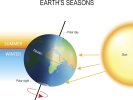
Kitu nilichokuambia hakibadiliki ni earth tilt 👇👇
Earth's tilt, also known as axial tilt or obliquity, refers to the angle between the Earth's rotational axis and its orbital plane around the Sun. Earth's axis is tilted at an angle of approximately 23.5 degrees relative to its orbital plane. This tilt is responsible for the changing seasons as different parts of the Earth receive varying amounts of sunlight throughout the year.
Aisee usipoelewa hapa, BASI TENA!!!!