Somali Bantus walikataliwa Somalia, UN waliomba warudishwe kwao Tanzania
Our Community
Regional Communities
Navigation
Install the app
How to install the app on iOS
Follow along with the video below to see how to install our site as a web app on your home screen.
Note: This feature may not be available in some browsers.
More options
Style variation
You are using an out of date browser. It may not display this or other websites correctly.
You should upgrade or use an alternative browser.
You should upgrade or use an alternative browser.
Somali Bantus walikataliwa Somalia, UN waliomba warudishwe kwao Tanzania

Yaap wanubi wapo Sanya Juu Kilimanjaro na Kondoa mjini.Wapo watu walitoka Sudan pia na kuja tanzania miaka hiyo..
Kuna watu babu zao walikuwa na asili ya huko
Ova

The only
JF-Expert Member
- May 19, 2011
- 10,805
- 14,181
Huwezi kutokuwa muarabu ukizaliwa na dna ya kiarabu unakuws mtanxania mwenye asili ya kiarabu.rostam ni mtqnzaniq mwenye asili ya yemen.mo ni mtanzania mwenye asili ya indiaHebu wacha uongo na fitina. Hivi kwani mbona nyinyi wale wenye asili ya kiarabu ambao wamezaliwa hata generations 4 au 5 bado tu munawasema ni waarabu?

BinSalum7
JF-Expert Member
- Jan 26, 2019
- 1,733
- 3,847
Rostam ana asili ya Iran.Huwezi kutokuwa muarabu ukizaliwa na dna ya kiarabu unakuws mtanxania mwenye asili ya kiarabu.rostam ni mtqnzaniq mwenye asili ya yemen.mo ni mtanzania mwenye asili ya india
The only
JF-Expert Member
- May 19, 2011
- 10,805
- 14,181
Ndo hao hao wanaitwa persian na sio waarabuRostam ana asili ya Iran.
Huyu huyu msomali aiyependa Wabantu ndiyo huyo tumemkaribisha EAC?Somalia kuna Wabantu ambao walifika huko wengi kwa Utumwa, maisha yao yalikuwa magumu kuanzia mwanzo Wasomali hawakuwahi kuwakubali na wamekataliwa kata kata na Msomali yoyote aliyejaribu ku-intermarry na Mbantu alitengwa na jamii ya Wasomali.
Hali ilikuwa mbaya kwa Wabantu Somalia hadi UN iliwaombea hifadhi Tanzania wakarudishwa Mkoani Tanga wengi tu wengine walipewa hifadhi USA.
Kwa mujibu wa UN hawa Wabantu wa Somalia walichukuliwa kama Watumwa karne ya 20 na walitokea jamii ya Wazigua, Wazaramo, Wayao, Wamakua pamoja na wengine, fikiria miaka yote hiyo lkn bado hawakubaliki nchini Somalia, …
=======
History has come full circle for refugee descendants of slaves who have received a fresh start in their ancestral homeland of Tanzania.
Somali Bantus gain Tanzanian citizenship in their ancestral land
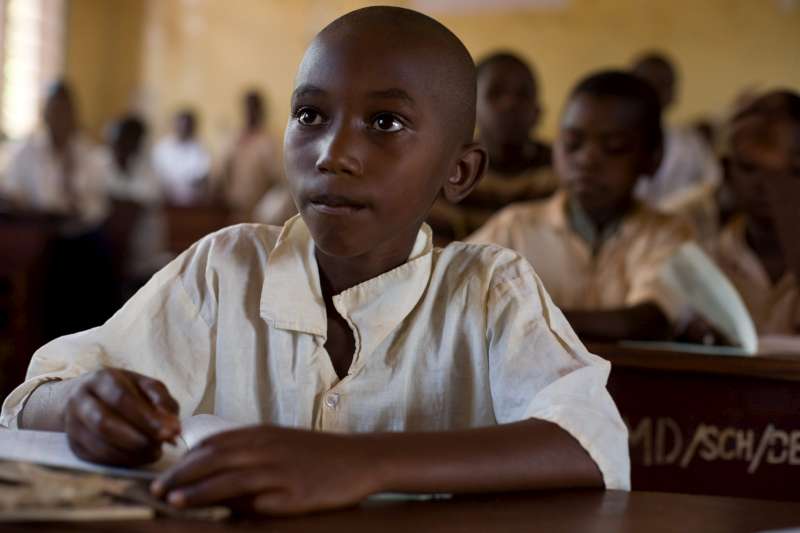
In Somalia, Bantu children were denied education for decades, but this Somali Bantu boy, a new Tanzanian citizen, attends school in Chogo settlement in northeastern Tanzania. © UNHCR/B.Bannon
CHOGO, Tanzania, June 3 (UNHCR) - Some 300 years after their ancestors were taken from here to be sold as slaves, almost 1,300 Somali Bantu refugees are now full citizens of Tanzania.
A further 1,500 refugees in Chogo settlement, in the north-eastern coastal region of Tanga, are still in the process of getting naturalized.
Working and living alongside the local population, many of the Somali Bantu refugees and new citizens can trace their origins to this area of the country, from where their ancestors were transported as slaves. The refugees returned in the early 1990s fleeing civil war and the collapse of Siad Barre’s regime in Somalia.
Back then, tens of thousands of Somalis travelled on overcrowded and rickety dhows to the Kenyan harbour of Mombasa. A small group of refugees of Bantu origin made their way even further south, to Tanga, reversing the path their ancestors had taken more than three centuries ago.
Ramadhani Abdalah, a Tanzanian Zigua farmer, remembers very well the day the refugees arrived in Tanga.
“I heard about refugees before, but when they came, it was my first time to actually see a refugee,” he now recalls. “I was so surprised. They were talking in the same language as I do, Zigua, but they came from Somalia.”
Ramadhani lives in one of the neighbouring villages of Chogo settlement where he prepares land for planting. He is hired by a former Somali Bantu farmer and is paid 12,000 Tanzanian shillings (about US$9) for each acre of land he clears.
At first the government of Tanzania, with assistance from UNHCR, hosted the Somali refugees in Mkuyu camp, also in Tanga region. In March 2003, more than 3,000 refugees were transferred from there to Chogo, a newly-constructed settlement some 80 kilometres away, in a move towards naturalizing the Somali Bantus who wished to stay.
Upon arrival in Chogo, each refugee family received more than 2.5 acres (about one hectare) of land, to farm and to build a home. With the help of UNHCR, working with the Tanzanian authorities and the Tanzanian non-governmental organization, Relief to Development Society, a school, health centre and market were constructed.
Since 2005, the new citizens and the 1,500 refugees awaiting citizenship have been supporting themselves and living together with the surrounding communities.
Haji Sefu Ali, one of the elders in Chogo, proudly shows off his farm. “In Chogo, we have named the villages after places in Somalia,” he says. “We are tilling land, raising cattle and chicken and are taking care of ourselves.”
Life has been a struggle, adds Fatouma, his neighbour and a grandmother of three, but “today, we are citizens of Tanzania. My granddaughters could even become president one day. In Somalia, for a Bantu, that would not be possible.”
By Brendan Bannon and Eveline Wolfcarius in Chogo, Tanzania
Source: United Nations High Commissioner for Refugees.
Somali Bantus - Wikipedia
en.m.wikipedia.org
Jifunze kuandika ueleweke.Huyu huyu msomali aiyependa Wabantu ndiyo huyo tumemkaribisha EAC?
Panua kufikiri kwako.Jifunze kuandika ueleweke.
Rudia kusoma ulichoandika.Unataka watu waliosoma ulichoandika wakisie?Panua kufikiri kwako.

Sega la asali
JF-Expert Member
- Oct 5, 2023
- 1,153
- 2,700
Kumbe hata FaizaFoxy naye anaonekana kafir?Nchi zilizotawaliwa na udini wao kuwa Mwafrika basi wewe ni kafir.
Basi sawa

Mr Chromium
JF-Expert Member
- Aug 20, 2020
- 2,761
- 3,835
Hakuna biashara ya utumwa iliyofanyika kwa wabantu waliohamia Somalia. Walinunuliwa na nani?
Somalia ina wakazi wengi wenye asili ya kibajuni,wamarca na,mchanganyiko wa wasomali na wareno wanaitwa (Gibilcad).
Kama mtu huna uhakika na unachokiandika bora uulize.
Jimbo la Shabelle Hose mdio makazi ya wabantu wengi wao waliohama kutoka Uzigua na wengine kutoka Lindi na Mtwara.
Mpaka sasa jimbo hilo lina wakazi hao wengi na wanaishi kama wasomali wengine.
we unajitia mjuaji lakini huelewi chochote !! Kama anachoongea mwandishi hukifahamu sijui uko dunia ya ngap