wise-comedian
JF-Expert Member
- Aug 4, 2011
- 3,293
- 3,945
Trump hizi ni dhambi,huwezi wauzia wenzako popobawa!
Follow along with the video below to see how to install our site as a web app on your home screen.
Note: This feature may not be available in some browsers.

Na nyinyi J-7 1950! This are planes that are only used by Albania in the whole of EuropeHivyo vindege vyenu mnavyobrag manatufanya tucheke... Kwanza ni matoleo ya nyuma sana... Unaonaongelea F-5 leo wakati wenzako wana F-35...ru in your total sense?
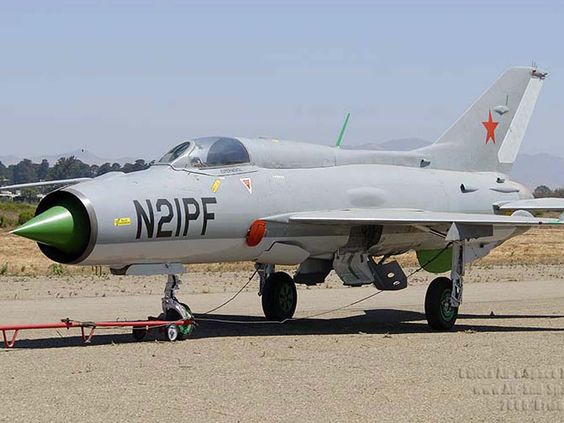


What is strong?Na nyinyi J-7 1950! This are planes that are only used by Albania in the whole of Europe
In Asia, Used by Iraq and Iran, no any other strong country uses them
Chengdu J-7 - Wikipedia
The F-5 are still a darling of many countries
USA
Brasil
Switzerland
Ethiopia
Malaysia
Singapore
South Korea
Norway
Kenya and many more
Northrop F-5 - Wikipedia
Tanzania ndege zenu ndio taab zaidi, sasa hata hizi za Air tractor afadhali, nyinyi si mna seabird Seeker?Hivyo vindege vyenu mnavyobrag manatufanya tucheke... Kwanza ni matoleo ya nyuma sana... Unaonaongelea F-5 leo wakati wenzako wana F-35...ru in your total sense?


Tanzania kwa mambo ya kijeshi hata msiongee!!Hivyo vindege vyenu mnavyobrag manatufanya tucheke... Kwanza ni matoleo ya nyuma sana... Unaonaongelea F-5 leo wakati wenzako wana F-35...ru in your total sense?


Super power!!What is strong?

Hahaha we chaliiTrump hizi ni dhambi,huwezi wauzia wenzako popobawa!

Wenye wivu wajinyonge...Tanzania mlicho nacho ni utoto.....ata ndege ziwe Mikebe na si zenyu inawaashia nini?
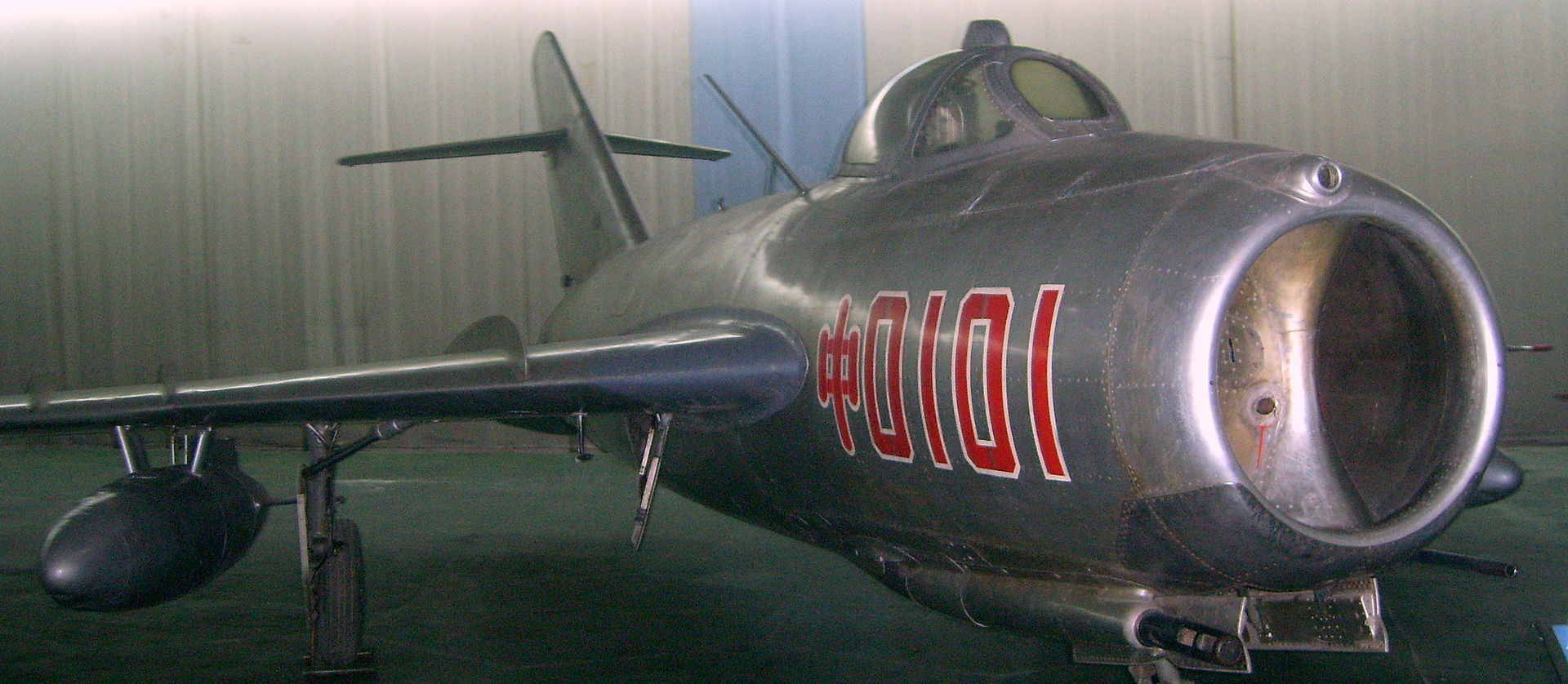
Wabongo mna J-5 as trainer planes, seriously? 1940 planes!!! Nyinyi huwa mna jiaibisha sana, kungangana na Kenya!!Trump hizi ni dhambi,huwezi wauzia wenzako popobawa!

Mbona waganda wapo pale Migingo wanafanya yao, hata alshabab wapo na Camps Kenya.Kaeni hapo mki kejeli lakini ingieni Kenya kuleta fujo mtakipata Kweli kweli
So Kenya is among the super powers?Super power!!
Copy and paste zitawamaliza nyie Wajaluo... Hao wa afrigan kila siku wanapigana vita visivyoisha zingekuwa hzo ndege zinawasaidia Waamerika wasingekimbia hyo nchithe A-29 tucano is another light attack aircraft in the same category
Insight into AAF’s A-29 Super Tucano light attack Aircraft - Khaama Press (KP) | Afghan News Agency
The Afghan defense officials have said the newly-added A-29 Super Tucano light attack aircraft have made a significant impact on providing close-air support to the Afghan ground forces.
According to the Ministry of Defense (Mod) officials, at least 83 missions were flown between Thursday and Friday with the A-29s playing a vital role in the rampant air campaigns carried by the Afghan Air Force.
The Afghan Air Force is currently operating 8 A-29 light attack aircraft which have been supplied by the United States as part of the country’s efforts to rebuild and bolster the capabilities of the Afghan Air Force.
The last 4 aircraft were added to the Afghan Air Force fleet late in the month of March this year.
According to AAF officials, the A-29s can carry out precise airstrike using laser technology and can four types of weapons, 250 kgs of bombs, guided and unguided rockets, and can fly with low speed and altitude to precisely find and attack the targets.
According to the manufacturer of the aircraft, Embraer, the aircraft was made considering the dramatic changes in military aviation.
“Breakthroughs in avionics, sensors and armament systems have greatly influenced and rationalized the employment of a wide range of fighter, patrol and reconnaissance aircraft platforms, all of which have a significant effect on pilot training. Today’s new operating scenarios demand superior skills from airmen which were unimaginable even ten years ago. Then, the aircraft and the training syllabus together simply produced a qualified pilot who was molded to fit operational realities. In these challenging times, the instruction cycle of future military pilots must now ensure an extremely fluid transition to operational units,” according to Embraer.
An insight into the aircraft as per Embraer has been detailed considering the origin, anatomy, interface, and other capabilities:
The Anatomy of a Winner:
The Super Tucano’s airframe was designed, both in its single- and twin-seater versions, with the latest generation technology and computer-aided tools that provide the aircraft with a potential service life of 18,000 hours for typical training missions,or 12,000 flying hours in operational environments, depending on mission loads and utilization.
The airframe is designed to withstand +7G/-3.5G loads. The aircraft’s structure is corrosion-protected and the side-hinged canopy has a windshield capable of withstanding a bird strike at 270 kts. The aircraft’s cockpit environment has been enlarged to more comfortably accommodate male and female pilots and instrumentation has been designed to glass cockpit standards.
The Super Tucano incorporates features such as an environmental control system designed to maximize crew comfort and an On-Board Oxygen Generation System (OBOGS). Should the need arise, the Super Tucano is equipped with Martin-Baker MK-10lCX Ejection Seats incorporating a three-mode ejection sequential device.
A 1,600 SHP Pratt & Whitney PT6A-68/3 turboprop engine that incorporates FADEC (Full Authority Digital Engine Control) and EICAS (Engine Indication and Crew Alerting System) powers the aircraft.
Although it is a high-performance turboprop, the Direct Operational Cost of the Super Tucano is kept within the same range as its predecessor. The aircraft owes this advantage to improved logistics coupled with enhanced systems reliability and an Integrated Data Acquisition and Recorder (IDAR) system that helps speed maintenance work, in addition to easy component accessibility and revised inspection tasks.
Breakthrough in Human-Machine Interface:
The Super Tucano provides a latest generation Human-Machine Interface designed to minimize pilot workload through the optimization of all tasks (tracking, interception, surveillance, support, etc.).
Featuring a state-of-the-art avionics system structured around a MIL-STD-1533 Databus Architecture, the Super Tucano also incorporates the following systems:
• Full Hands on Throttle and Stick (HOTAS) concept
• Laser INS with GPS Navigation System
• Computerized Attack Modes (CCIP, CCRP, CCIL, etc.)
• HUD (Head Up Display) with UFCP (Up Front Control Panel)
• Two 6” x 8” Liquid crystal, active matrix Color Multi-Function Displays (CMFD) per pilot station
• Tactical V/UHF with provisions for data-links
• Integrated Radio Communication and Navigation
• Video Camera/Recorder
• NVG Gen III-compatible internal/external lighting system
• Automatic Pilot with embedded mission planning capability
• Forward Looking Infrared (FLIR)
• All-glass, low workload cockpit for situational awareness
• Helmet Mounted Display System (optional)
The Claws of a New Light Attack Aircraft:
Keeping in mind that the Super Tucano’s role will not be limited to training alone, Embraer has equipped the A-29 (the Super Tucano version for the Brazilian Air Force, with 99 orders) with systems designed not only to comply with basic requirements, but also to keep pace with the continual changes taking place in the aircraft’s potential operating theaters.
At the heart of the A-29’s mission system are its two latest-generation MDPs (Mission & Display Processors), which receive and process data from sensors, navigation and attack variables and manage a multitude of other tasks such as HOTAS (Hands-On Throttle and Stick) operations, in addition to symbology generation and presentation for HUD and CMFDs.
Systems and equipment have been fully integrated on the aircraft:
• Crew survivability is ensured through armor protection and state-of-the-art provisions such as MAWS (Missile Approach Warning System) and RWR (Radar Warning Receiver) in addition to chaff and flare dispensers. The communication and navigation system is similar to that of training applications, but features such as PR (Positioning Reporting) and ALE (Automatic Link Establishment) allow automatic transmission of aircraft position and flight data to ground bases. The aircraft is also equipped with an EGIR (Embedded GPS/INS & Radar Altimeter).
• A two-axes military automatic pilot helps reduce pilot workload on long-endurance missions.
• Tactical communications take place through a digital anti-interception and jamming V/UHF radio, which through a data-link modem is capable of transmitting frozen FLIR (Forward Looking Infrared) images or positioning fixes to other aircraft. In the silent receiver mode, the system can pick up data from ground stations or AEW&C aircraft without revealing its position.
• HUD (Head Up Display) with UFCP (Up Front Control Panel) and
• FLIR (Forward Looking Infrared) supplies digitized thermal imaging in two crew-selectable display modes, fully compatible with third-generation NVGs or better.
Multi-role:
Trainer-Like Fighting and Fighter-Like Training
Embraer spared no effort in providing the Super Tucano with an Armament System that incorporates state-of-the-art technology.
Compatibility and Flexibility
The Super Tucano is designed to carry a fighter’s typical array of weapons — either smart or conventional. Its armament line-up is fully integrated with its avionics system and comprises most advanced ordnance and sensors.
Sound Armament
The aircraft features two .50″ machine guns (200 rounds each) in the wings. Five hard points under the wing and fuselage allow up to 1,500 kg of weapons for most configurations. The aircraft’s inboard stations, as well as its ventral one, are “wet” for external fuel tanks.
In addition to its two internal machine guns, the Super Tucano can be configured with additional underwing armament, such as two 20mm gun pods or .50″ machine guns, thereby significantly increasing its firepower for missions requiring air-to-ground saturation.
Outboard stations allow the loading and firing of short-range air-air missiles of the AIM-9 class.
All stations can be loaded with the Mk 81 or Mk 82 (conventional or equipped with guidance kits) bombs, SBAT-70/19 or LAU-68 rocket launchers.
Proven Performance:
As a result of its unique design, the Super Tucano is ideally suited to cope with the Information Warfare environment.
In Brazil, it operates within the latest and most sophisticated surveillance system implemented in the world — the Amazon Surveillance Program or SIVAM.
The aircraft flies in border surveillance missions, pursuing and intercepting aerial targets. It is capable of receiving and transmitting data through its embedded, s
Kwahyo nyie mkitaka nunua kitu mna a goodle kwanza yahoo answers then mnaenda nunua...the rest of the article, security experts are recomending the US start using turboprops to fight ISIS if they deploy large troops on the ground in syria
Yes, Really, Destroy ISIS With Turboprop Light Attack Aircraft
The Obama administration is searching for options in Syria. The conflict, which has raged for four years, shows no signs of abating. The Russian entry into the war on behalf of the Syrian regime is an unwelcome development that will serve to increase civilian casualties.
For the United States and NATO, there are few good policy options available, and Western governments have long since lost the illusion that they can exert any sort of control over events in Syria. The conflict has become a battleground for long-deferred grievances, policy agendas and power struggles throughout the region.
At this stage, U.S. strategy options arguably revolve around containing the conflict within Iraq and Syria while trying to mitigate the effects on vulnerable populations in the conflict zone. Air power offers tactical options to support containment while remaining at a distance and minimizing the involvement of U.S. ground forces.
There are geographical challenges inherent with supporting the fast-jet fighter and bomber force, and there are emerging options for introducing a light attack capability that America hasn’t employed since Vietnam.
If the United States is planning on increasing the presence of ground forces in support of Iraqi and Kurdish ground elements, we should bring along a little local air power and reintroduce light attack aircraft.
Basing challenge
First, the United States has a problem—there are no bases in Iraq which currently support the coalition’s fast-jet fighters. The existing fighter bases which served us through Operation Iraqi Freedom are generally too close to the enemy or no longer in the hands of the Iraqi government.
Fighters operating over Mosul in northern Iraq have to come from Kuwait, a carrier in the Persian Gulf or airfields in the Gulf states—a one-way trip covering 500 to 1,000 nautical miles, depending on the base.
Incirlik Air Base in Turkey recently reopened for fighter operations for the first time in more than a decade. Incirlik’s proximity is a bonus, in that it knocks 125 nautical miles off the flight from Kuwait to Mosul, but the base is subject to constraints imposed by Turkey.
Even at the height of the no-fly zone enforcement, Turkish authorities regularly canceled flying operations on short notice, usually because of “special missions.” Turkish special missions, in the parlance of the time, were air strikes against Kurdish targets in Turkey, Iraq and even Iran.
The distance from suitable bases places a huge burden on aircraft, requiring massive amounts of tanker-delivered fuel and eating up the airframe life on a legacy fighter force that has an average age of more than a quarter century. The fuel consumption that this operational distance drives is equally large, and made more expensive in that tankers deliver the majority of it.
While the Air Force justifiably boasts of “Global Reach,” that reach is bought at huge expense and is completely reliant on secure bases with long runways and deep logistical support. This leaves small airfields in Turkey and Iraq out of reach.
Another issue is that distance equates to response time. If we are going to introduce additional ground forces to fight the Islamic State and shore up our Iraqi and Kurdish allies, those soldiers will still be highly dependent on aircraft flown from very distant basing.
Light attack
It doesn’t have to be this way. It’s possible to base combat aircraft inside Iraq. More accurately, it would be possible if the Air Force had any.
In Vietnam, the Air Force relied heavily on the Korean War vintage A-1E Skyraider for close air support and escort for rescue aircraft. The Pentagon transferred those aircraft to the South Vietnamese Air Force in 1973, and the U.S. Air Force transitioned to the A-7 Corsair II and the A-37B Dragonfly.
By 1991, the Dragonflies had been retired and the United States was out of the light attack business.
Turboprop light attack aircraft like the AT-6 Coyote or A-29 Super Tucano require a less constrained basing structure and much less logistical support than their fast jet counterparts. Fully armed, they carry the same bombload as an F-16 with three external fuel tanks, while gaining roughly twice the unrefeueled endurance.
They can operate from rough fields and are comparative fuel-sippers. The engines are highly reliable and resistant to foreign object damage.
Importantly, they use the same weapons and tactics as modern fighter/attack aircraft, capable of aerial gunnery, rocket employment and release of a variety of precision bombs. Today, every Air Force and Navy pilot receives flight training in the T-6 Texan II, making them familiar with low wing turboprops in this class.
The AT-6 and A-29 are off-the-shelf aircraft. The AT-6C is a fencer, benefiting from commonality with the A-10C Thunderbolt II and T-6 Texan II — and possesses a very robust communications and data array. The A-29 is a bruiser, with a higher, heavier airframe and a slightly heavier stores load. They each use the PT-6A-68 turboprop delivering 1,600 shaft horsepower, making them some of the most powerful single-engine turboprop aircraft in the world.

So old metal, tell if that will actually make Tanzania think twice? Ndege nyingi ni vibajaj too small for combat.Hawk Mk 52
f-5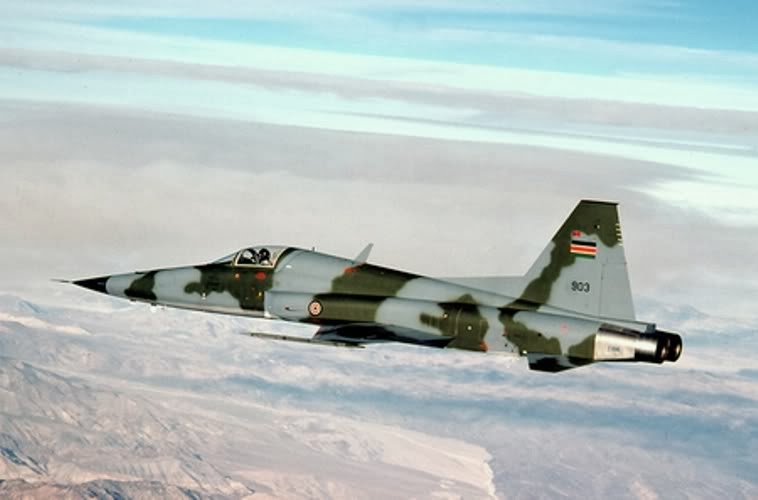
And many more