Vipi kauli ya Kagame kuwa Rwanda ingekuwa na bandari kama ya Dar, huduma zote Rwanda zingekuwa bure?

Vipi kauli ya Kagame kuwa Rwanda ingekuwa na bandari kama ya Dar, huduma zote Rwanda zingekuwa bure?

Vyombo mbalimbali vya habari viliripoti kuhusu kauli hii ya Raisi wa Rwanda Paul Kagame kuwa Kuwepo kwa Bandari ya Dar Tanzania ilipaswa kupaa kabisa kiuchumi hasa kutokana na kuzungukwa na nchi kadhaa zinazo tegemea kusafirisha mizigo yake.

Zipo nchi nyingi duniani ambazo kwa bandari pekee zimepata kupaa kiuchumi miongoni mwao ikiwamo Hongkong ,Singapore,Uholanzi nk.Lakini kwanini Tanzania Hatuoni mabadiliko ya kiuchumi yakiwa dhahiri kutokana na bandari hii?

Miradi mingi ya kiuchumi ni mikopo toka kwa wahisani.Barabara kama ya DOM-IRINGA ni mkopo toka Benki ya Africa,na miradi mingi ni mikopo toka kwa wahisani kiasi sasa kila Mtanzania mpaka mtoto mdogo anadaiwa zaidi ya Tsh 450000(laki nne na nusu).Fedha za mapato kama ya bandari hii huenda wapi?Kuna harufu ya ufisadi wa mapato ya bandari kwa kiasi kikubwa.

Napata shaka kuona kuna benk kama M Benki imbayo tawi lake limo ndani ya jengo la ofisi za mapato.Mtu analipia pale na document yake ni halali palepale na mzigo unatoka.

Hii benki niya nani?Benki zingine ukilipia document yake mpaka mpaka iende hazina ku verify ndipo uchukue mzigo.

Naona kama mafisadi wananjia zao za kuchota hela kirahisi kama kupitia benki hii,labda ndiyo maana hatuoni mabadiliko yoyote ya kiuchumi.

Gari moja ndogo inayo pita kwenda nchi nyingine hulipia sichini ya 3000000/=(milioni tatu) na gari pale zinapita kama maji tu.Pita barabara ya Dar-Tunduma uone gari zenye number ya IT utapata picha ya hoja hii pata picha ya 300.

Kagame yuko serious sana,Rwanda hawana kitu lakini kimaendeleo wapo mbele.
 
Mkuu, nilishawaambia kuwa the game of politics hawaiwezi...waendelee na porojo zao wawaachie wanaume tucheze on the world stage. Tangu hao wanajeshi wa SADC waingie kule congo, niliwaambia hawa wakina jMali kuwa wangoje tuone baada ya hiyo operation nani atakuwa winner. I think everyone can now see who is going to be the real winner. I rest my case.

Tayari FDLR wameshashinda hata wakivunjika leo hii. basi tu kwa sababu hautaelewa hata ukifafanuliwa.
 
Huko Moshi still kuna taka uki compare na Kigali , hizo fines zinazokusanywa Moshi hamna zinachofanya , zaidi ya kuishia kwenye mikono ya mgambo ambao majority wamefanya ni njia ya mtaji.Lakini still Kigali ikikusanywa inaenda ilipolengwa sio mfukoni, Kwa hiyo bado wako JUU.Tukubali wenzetu wako juu kwenye suala la Rushwa.

kwa sababu tanzania pamoja na rushwa vile vile tuna uhuru wa habari, ndio maana wewe na mimi tunaweza kujua kuwa kuna rushwa. Rwanda hakuna uhuru wa habari, hakuna uhuru wa kujieleza, Rushwa ipo tena kubwa tu, lakini waandishi wote waliojaribu kuandika kuhusu hilo wanauawa! magazeti yanafungwa, etc. Hata forum ya mtandaoni tu kama hii HAKUNA! na kagame kila siku anajisifia kwa IT, why? ni kwa sababu kwa wananchi wa Rwanda hawahitaji kuambiwa kuwa kuanzisha forum kama hii ambayo itasababisha watu wazungumze anonymously kutawatia hatarini. Ukitaka kujua mambo ya Rwanda: either nenda Rwanda jionee mwenyewe, au uliza watu wanayoijua, sio humu JF kwa hawa wanaolipwa.
soma hii toka kwa wataalamu wa kupima rushwa dunia nzima WALIOKAA Rwanda, sio JF!

18Apr[h=2]Control of Corruption in Rwanda?[/h]
Interview with ANTICORRP contributor Alessandro Bozzini
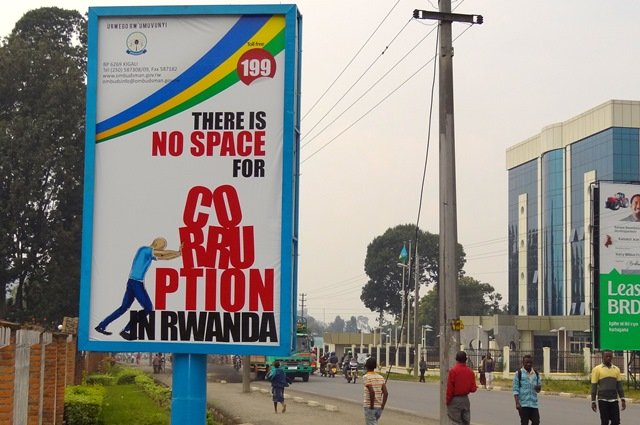
Photo credit: Adam Jones (Creative Commons)


Last week marked 20 years since the start of the Rwandan Genocide, and many observers praise the country for the dramatic recovery it has made since 1994, especially with regard to economic development. Controlling corruption is often quoted as one of the key reasons of Rwanda's success.​
According to data from the World Bank Worldwide Governance Indicators, between 1996-2011, Rwanda improved its control of corruption score moving from the 20[SUP]th[/SUP] percentile to the 70[SUP]th[/SUP] percentile. ANTICORRP project researchers identified the country as part of a number of "achiever" countries (those which had either improved dramatically in the rankings or were regional outliers) to be investigated more in-depth.


Alessandro Bozzini lived in Rwanda for three years, working on anti-corruption issues, and is the author of an upcoming project report on the country and the extent to which it has managed to control corruption. He was kind enough to share his experience working in Rwanda as an anti-corruption practitioner, as well as give us a preview of the report.
1. What challenges did you face when writing the report? What surprised you during the process?


I lived there for 3 years working on corruption issues, so when I was approached to write the paper I had the majority of the information and contacts that I needed.
A challenge in Rwanda is [obtaining] data. There is a different standard of record-keeping, first of all, and transparency is limited. People in general are also reluctant to discuss sensitive political issues and speak out on corruption, especially grand corruption.


2. From what you've seen, how has Rwanda changed in the past 20 years in terms of controlling corruption?
It's interesting…people tend to compare Rwanda today with Rwanda 20 years ago, as if the country didn't exist before the genocide. The country during and right after the genocide was at its lowest point, it was completely torn apart, so the change from then until now is indeed dramatic. However, some of the things people say now about Rwanda, that it's a "development star," were not unheard of in the 70s or 80s.

In terms of anti-corruption measures, after 1994, the leadership had to re-build the country, so the push toward cracking down on corruption came a bit later and has been quite successful at curbing petty corruption. I'm not aware of any previous corruption studies on Rwanda, and of course I didn't live in the country then, so I can't really say how successful control of corruption was pre-1994, but I take the official narrative of, "the country then was very corrupt, but not now" with a grain of salt.


3. Let's talk about governance indicators. By certain measures, Rwanda is performing incredibly well. Does this square with what is actually happening on the ground?
Relatively speaking, yes, because if you look at a number of indicators, you see that the country scores high on control of corruption indicators and low on other accountability indicators. Overall, I think you get a representative picture as indeed the country has managed to control some corruption, but there's little transparency, no independent media, no independent judiciary, virtually no independent civil society…


4. How useful are governance indicators in the context of Rwanda and how do you think they could be more accurate – what do they miss?
It depends on the indicator. Rwanda poses a challenge in terms of governance indicators. There's limited transparency and limited useful data. Like I said, people avoid talking about sensitive issues. Once, for example, I saw a survey showing that 92% of the population is satisfied with the job the police do. I'm always cautious when I see such high numbers out of any survey. There's no real independent media, not much independent civil society, so it's hard to say whether such surveys are biased toward the government narrative or not. Expert surveys and analyses on Rwanda tend to reveal opinions that are so polarised, that it's difficult to use these as well.


5. In terms of governance and controlling corruption, what would you say is the greatest challenge the country is currently facing?
Corruption, at least petty corruption has been reduced via a top-down approach. But petty corruption is not the main problem. The bigger issue is the presence of a mighty power conglomerate. Politics and economics are very tightly linked, and there are a number of companies closely associated with the party or with the army. Naturally, in such an arrangement, favouritism is likely to occur, particularly in procurement. There's very little official opposition, as opposing parties have repeatedly been banned or failed to register. Parliament is quite weak, there's virtually no public debate; everyone seems to agree with everyone else. Luckily the current leadership is invested in developing the country, but given the monopoly on power, there's certainly a constant risk of grand corruption, particularly favouritism, conflict of interest and undue influence.

The biggest challenge that the leadership faces is strengthening institutions and granting real independence to the media, to civil society, to the judiciary. They currently control everything quite tightly.


6. Is there a penalty for corrupt behaviour?What happens to whistleblowers?

Yes there is a penalty for corrupt behaviour and it's disproportionately high. It's good that there is a penalty of course and that law is enforced, but you have to wonder if people fall in line because they care about doing the right thing or because they're afraid?

There's a whistle-blower protection law. But a lot of people don't speak out mainly because there's just not a culture of debate and disagree in public. Also, public dissent is not tolerated by authorities. Therefore, people don't speak out about sensitive issues. They discuss them behind closed doors.


7. Are there any lessons for neighbouring countries? If so, what are they?

The key lesson is that commitment from top leadership is important for successfully taking on corruption, but it's not enough. A top-down approach might help control petty corruption in the short-term, but this doesn't necessarily help control grand corruption. In order to do this, transparency and independent judiciary, media, civil society, are needed- checks and balances are needed.


Tags: control of corruption, Rwanda

source: Control of Corruption in Rwanda? « Anticorrp


cc: murutongore NasDaz bona
 
Last edited by a moderator:
Tayari FDLR wameshashinda hata wakivunjika leo hii. basi tu kwa sababu hautaelewa hata ukifafanuliwa.

FDLR wameshashinda? hahahaha...in your dreams my friend. In real life the FDLR have failed miserably. Wanyarwanda kwa umoja wao wamewakataa wadhalimu wa FDLR na siasa zao za chuki na utengano wa kikabila.
 
Huko Moshi still kuna taka uki compare na Kigali , hizo fines zinazokusanywa Moshi hamna zinachofanya , zaidi ya kuishia kwenye mikono ya mgambo ambao majority wamefanya ni njia ya mtaji.Lakini still Kigali ikikusanywa inaenda ilipolengwa sio mfukoni, Kwa hiyo bado wako JUU.Tukubali wenzetu wako juu kwenye suala la Rushwa.

kwa sababu tanzania pamoja na rushwa vile vile tuna uhuru wa habari, ndio maana wewe na mimi tunaweza kujua kuwa kuna rushwa. Rwanda hakuna uhuru wa habari, hakuna uhuru wa kujieleza, Rushwa ipo tena kubwa tu, lakini waandishi wote waliojaribu kuandika kuhusu hilo wanauawa! magazeti yanafungwa, etc. Hata forum ya mtandaoni tu kama hii HAKUNA! na kagame kila siku anajisifia kwa IT, why? ni kwa sababu kwa wananchi wa Rwanda hawahitaji kuambiwa kuwa kuanzisha forum kama hii ambayo itasababisha watu wazungumze anonymously kutawatia hatarini. Ukitaka kujua mambo ya Rwanda: either nenda Rwanda jionee mwenyewe, au uliza watu wanayoijua, sio humu JF kwa hawa wanaolipwa.
soma hii toka kwa wataalamu wa kupima rushwa dunia nzima WALIOKAA Rwanda, sio JF!

18AprControl of Corruption in Rwanda?

Interview with ANTICORRP contributor Alessandro Bozzini
Photo credit: Adam Jones (Creative Commons)


Last week marked 20 years since the start of the Rwandan Genocide, and many observers praise the country for the dramatic recovery it has made since 1994, especially with regard to economic development. Controlling corruption is often quoted as one of the key reasons of Rwanda’s success.​
According to data from the World Bank Worldwide Governance Indicators, between 1996-2011, Rwanda improved its control of corruption score moving from the 20[SUP]th[/SUP] percentile to the 70[SUP]th[/SUP] percentile. ANTICORRP project researchers identified the country as part of a number of “achiever” countries (those which had either improved dramatically in the rankings or were regional outliers) to be investigated more in-depth.


Alessandro Bozzini lived in Rwanda for three years, working on anti-corruption issues, and is the author of an upcoming project report on the country and the extent to which it has managed to control corruption. He was kind enough to share his experience working in Rwanda as an anti-corruption practitioner, as well as give us a preview of the report.
1. What challenges did you face when writing the report? What surprised you during the process?


I lived there for 3 years working on corruption issues, so when I was approached to write the paper I had the majority of the information and contacts that I needed.
A challenge in Rwanda is [obtaining] data. There is a different standard of record-keeping, first of all, and transparency is limited. People in general are also reluctant to discuss sensitive political issues and speak out on corruption, especially grand corruption.


2. From what you’ve seen, how has Rwanda changed in the past 20 years in terms of controlling corruption?
It’s interesting…people tend to compare Rwanda today with Rwanda 20 years ago, as if the country didn’t exist before the genocide. The country during and right after the genocide was at its lowest point, it was completely torn apart, so the change from then until now is indeed dramatic. However, some of the things people say now about Rwanda, that it’s a “development star,” were not unheard of in the 70s or 80s.

In terms of anti-corruption measures, after 1994, the leadership had to re-build the country, so the push toward cracking down on corruption came a bit later and has been quite successful at curbing petty corruption. I’m not aware of any previous corruption studies on Rwanda, and of course I didn’t live in the country then, so I can’t really say how successful control of corruption was pre-1994, but I take the official narrative of, “the country then was very corrupt, but not now” with a grain of salt.


3. Let’s talk about governance indicators. By certain measures, Rwanda is performing incredibly well. Does this square with what is actually happening on the ground?
Relatively speaking, yes, because if you look at a number of indicators, you see that the country scores high on control of corruption indicators and low on other accountability indicators. Overall, I think you get a representative picture as indeed the country has managed to control some corruption, but there’s little transparency, no independent media, no independent judiciary, virtually no independent civil society…


4. How useful are governance indicators in the context of Rwanda and how do you think they could be more accurate – what do they miss?
It depends on the indicator. Rwanda poses a challenge in terms of governance indicators. There’s limited transparency and limited useful data. Like I said, people avoid talking about sensitive issues. Once, for example, I saw a survey showing that 92% of the population is satisfied with the job the police do. I’m always cautious when I see such high numbers out of any survey. There’s no real independent media, not much independent civil society, so it’s hard to say whether such surveys are biased toward the government narrative or not. Expert surveys and analyses on Rwanda tend to reveal opinions that are so polarised, that it’s difficult to use these as well.


5. In terms of governance and controlling corruption, what would you say is the greatest challenge the country is currently facing?
Corruption, at least petty corruption has been reduced via a top-down approach. But petty corruption is not the main problem. The bigger issue is the presence of a mighty power conglomerate. Politics and economics are very tightly linked, and there are a number of companies closely associated with the party or with the army. Naturally, in such an arrangement, favouritism is likely to occur, particularly in procurement. There’s very little official opposition, as opposing parties have repeatedly been banned or failed to register. Parliament is quite weak, there’s virtually no public debate; everyone seems to agree with everyone else. Luckily the current leadership is invested in developing the country, but given the monopoly on power, there’s certainly a constant risk of grand corruption, particularly favouritism, conflict of interest and undue influence.

The biggest challenge that the leadership faces is strengthening institutions and granting real independence to the media, to civil society, to the judiciary. They currently control everything quite tightly.


6. Is there a penalty for corrupt behaviour?What happens to whistleblowers?

Yes there is a penalty for corrupt behaviour and it’s disproportionately high. It’s good that there is a penalty of course and that law is enforced, but you have to wonder if people fall in line because they care about doing the right thing or because they’re afraid?

There’s a whistle-blower protection law. But a lot of people don’t speak out mainly because there’s just not a culture of debate and disagree in public. Also, public dissent is not tolerated by authorities. Therefore, people don’t speak out about sensitive issues. They discuss them behind closed doors.


7. Are there any lessons for neighbouring countries? If so, what are they?

The key lesson is that commitment from top leadership is important for successfully taking on corruption, but it’s not enough. A top-down approach might help control petty corruption in the short-term, but this doesn’t necessarily help control grand corruption. In order to do this, transparency and independent judiciary, media, civil society, are needed- checks and balances are needed.


Tags: control of corruption, Rwanda

source: Control of Corruption in Rwanda? « Anticorrp


cc: murutongore NasDaz bona
 
Last edited by a moderator:
FDLR wameshashinda? hahahaha...in your dreams my friend. In real life the FDLR have failed miserably. Wanyarwanda kwa umoja wao wamewakataa wadhalimu wa FDLR na siasa zao za chuki na utengano wa kikabila.

over 80% ya wanyarwanda ni FDLR ideologically, ndio maana kila siku kagame anaibua "collaborators" wapya from RPF, sasa hivi mpaka "liberators" kina Rose Kabuye nao washakuwa "collaborators" and "traitors"...nasubiri kwa hamu zamu ya kina Mushikiwabo watapogeuzwa...
 
Kwa population ya Rwanda kweli wangepewa Bandari huduma ingebidi ziwe bure.
 
over 80% ya wanyarwanda ni FDLR ideologically, ndio maana kila siku kagame anaibua "collaborators" wapya from RPF, sasa hivi mpaka "liberators" kina Rose Kabuye nao washakuwa "collaborators" and "traitors"...nasubiri kwa hamu zamu ya kina Mushikiwabo watapogeuzwa...

80% of the population??mmmmh! You mean 8 out of 10 Rwandese share FDLR's ideology of ethnic cleansing and Hutu power bullcrap? Why then do they choose to remain in Rwanda? Ask yourself my friend?Hizi propaganda zenu zimepitwa na wakati. Wanyarwanda wanajenga nchi kwa umoja wao nyie mko busy watering down leaps in reconciliation and the unquenchable thirst for prosperity across Rwanda. Mtashindwa.
 
Vijana wakiacha maandamano na kuhudhuria mikutano ya vyama vya siasa na badala yake wakajikita katika kufanya kazi nchi hii itafika mbali.

Acha kudhalilisha wanawake, uliambiwa maandamano ndiyo yanayosababisha pesa za bandari ziingie kwenye akaunti za mafisadi? Wala Kagame hajasema kusingekuwa na maandamano Tanzania angetoa huduma bure! Wewe na Ziro ni damu damu!
 
80% of the population??mmmmh! You mean 8 out of 10 Rwandese share FDLR's ideology of ethnic cleansing and Hutu power bullcrap? Why then do they choose to remain in Rwanda? Ask yourself my friend? Hizi propaganda zenu zimepitwa na wakati. Wanyarwanda wanajenga nchi kwa umoja wao nyie mko busy watering down leaps in reconciliation and the unquenchable thirst for prosperity across Rwanda. Mtashindwa.

1. where in the FDLR constitution, publication, any recorded speech, utterance etc, did you get that ideology of "ethnic cleansing and Hutu power"? seriously, umeipata wapi hiyo? Ukishindwa kuthibitisha then kubali wewe ndio una mipango miovu dhidi ya FDLR ndio maana unawasingizia dhambi kubwa kama hiyo.

2. Do know that The co-founder of FDLR is now HEAD OF PRISONS in your government? Inawezekana mwanzilishi wa Al-qaeda "akatubu" halafu akapewa ukuu wa majeshi nchini Marekani?

3. Nime-estimate 80%, na nadhani its actually more than that, kwa sababu theoretically kila anayempinga kagame ni FDLR. Mashtaka yote yanayowakabili watu kama FORMER AMBASSADOR Theogene Rudasingwa, FORMER ARMY CHIEF Kayumba Nyamwasa, the late FORMER SPY CHIEF karegeya, na sasa other prominent RPF members, ambao walikuwa wanapambana na FDLR juzi juzi tu hapa ni "collaboration" with FDLR hiyo hiyo.
Now kama watutsi tena extremist ones like Nyamwasa, like Rose kabuye and others wanashirikiana na FDLR, ordinary tutsis, tena watutsi waliopoteza wazazi na ndugu kwenye "genocide" kama msanii kizito mihigo, nao pia wanashirikiana na FDLR, hapo ethnic cleansing inaingiaje? Are all these tutsis stupid enough to "collaborate" with people who WANT TO ETHNICALLY CLEANSE THEM? Hebu fafanua hapa.
 
.... Usitetee Uozo Mkuu Hata Kama Tanzania Ni Yetu Lakn Ukwel Ni Kwmba Ofisad Umezidi Sana

Tanzania sio yako hilo moja, pili hata ufisadi ukizidi hilo sio swala la kagame, yeye bandari yetu haimhusu hata kama tunaifanyia ufisadi, yeye mteja tu.
 
Tanzania sio yako hilo moja, pili hata ufisadi ukizidi hilo sio swala la kagame, yeye bandari yetu haimhusu hata kama tunaifanyia ufisadi, yeye mteja tu.

kama vile rwanda haikuhusu wewe interahamwe. keep your nose in your business of feeding your family haya mengine huyawezi. Wahenga walisema ukishindana na tembo kunya.......malizia.
 
80% of the population??mmmmh! You mean 8 out of 10 Rwandese share FDLR's ideology of ethnic cleansing and Hutu power bullcrap? Why then do they choose to remain in Rwanda? Ask yourself my friend?Hizi propaganda zenu zimepitwa na wakati. Wanyarwanda wanajenga nchi kwa umoja wao nyie mko busy watering down leaps in reconciliation and the unquenchable thirst for prosperity across Rwanda. Mtashindwa.

Mkuu. walishashindwa. Kilichobaki ni kuwafyeka hao remnants wa FDLR and see where they will run to. Unadhani ile operation ilikuwa na malengo gani? fill in the blanks.
 
kama vile rwanda haikuhusu wewe interahamwe. keep your nose in your business of feeding your family haya mengine huyawezi. Wahenga walisema ukishindana na tembo kunya.......malizia.
1.Hahahaha. Naona Nondo zimeshakuchanganya mpaka unaongea vichekesho: Kwani "interahamwe" ni raia wa nchi gani? Ulichosema ni sawa na kusema "wewe mkikuyu kenya haikuhusu", it doesn' t make sense. 2. Hiyo methali ni ya wahenga wa nani? wa kwako wewe mtutsi, au mimi "interahamwe"? Wewe unatakiwa kutoa methali ya kitutsi sio ya kitanzania, hao wahenga ni wa kwangu mimi sio wa kwako. Au ndio yale yale ya kuvamia tamaduni za watu na kuzigeuza za kwenu?
 
Back
Top Bottom