Watu weusi ndio walivuka bahari kuu na kufanya ustaarabu kote Asia na Ulaya

Watu weusi ndio walivuka bahari kuu na kufanya ustaarabu kote Asia na Ulaya

9a33aad4eeae243503ec1f102324be29.jpg
 
!!?....hakijaniuma kitu,ila sijawahi ona mtu mwenye kutumia Dhihaka akafanikiwa kuwasilisha mawazo yake.

Hakuna watu wapya ni sehemu ya hao pia ndio wanapaswa kuunga mkono wazo lenu...kama unalo lakini
Samahani ndugu mancho, sidhani kama mkuki alimaanisha kukudhihaki,
Ni ombi langu kwamba hili ni tatizo letu, hii Hali yetu, kwa hivyo Kama mwalimu kijijini juu hapo juu, hebu anzeni kuchangia mawazo ya kujikomboa. Katika mijadala huu Sasa
Asante ndugu
 
izo ndoto za maskini kuokota fuko la ela.
Tunazungumzia uvumbuzi uliotangazwa leo kwamba mtu wa kale wa uingereza alikuwa mtu mweusi,we vipi, hapa si kijiwe Cha umbeya na kahawa, Kama mada na jukwaa halikuhusu, sepa...waache wenye kujitaka kujifunza, katafute mada za udaku, hapa si kwako
 
Cheddar Man: DNA shows early Briton had dark skin
By Paul RinconScience editor, BBC News website

p05xbsb2.jpg


Media captionDNA shows early Brit had dark skin
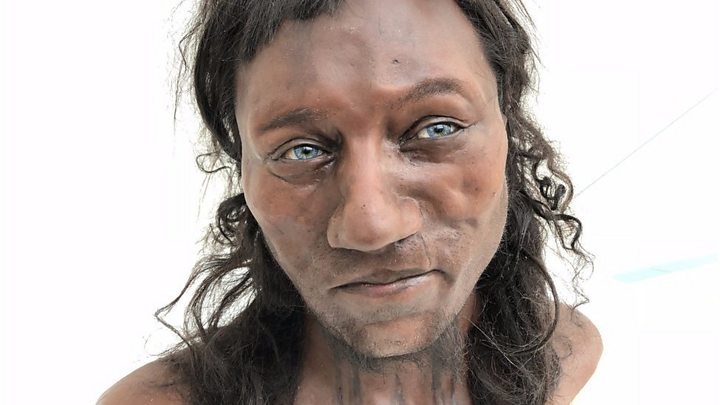
A cutting-edge scientific analysis shows that a Briton from 10,000 years ago had dark brown skin and blue eyes.

Researchers from London's Natural History Museum extracted DNA from Cheddar Man, Britain's oldest complete skeleton, which was discovered in 1903.

University College London researchers then used the subsequent genome analysis for a facial reconstruction.

It underlines the fact that the lighter skin characteristic of modern Europeans is a relatively recent phenomenon.

No prehistoric Briton of this age had previously had their genome analysed.

As such, the analysis provides valuable new insights into the first people to resettle Britain after the last Ice Age.

The analysis of Cheddar Man's genome - the "blueprint" for a human, contained in the nuclei of our cells - will be published in a journal, and will also feature in the upcoming Channel 4 documentary The First Brit, Secrets Of The 10,000-year-old Man.

'Cheddar George' tweet on early Briton

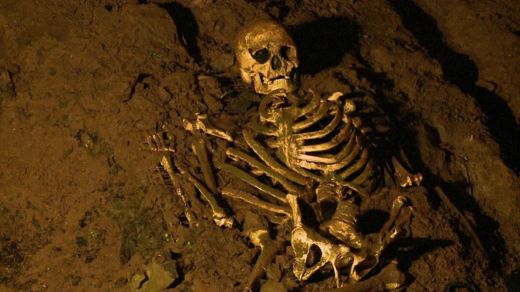
Cheddar Man's remains had been unearthed 115 years ago in Gough's Cave, located in Somerset's Cheddar Gorge. Subsequent examination has shown that the man was short by today's standards - about 5ft 5in - and probably died in his early 20s.

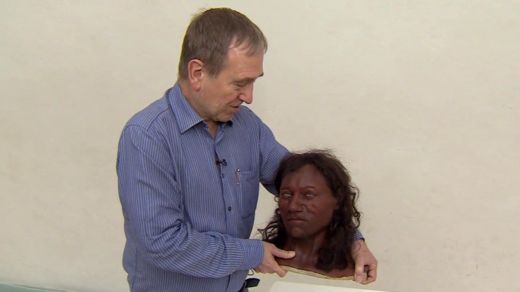
Prof Chris Stringer, the museum's research leader in human origins, said: "I've been studying the skeleton of Cheddar Man for about 40 years

"So to come face-to-face with what this guy could have looked like - and that striking combination of the hair, the face, the eye colour and that dark skin: something a few years ago we couldn't have imagined and yet that's what the scientific data show."

_99914498_mediaitem99908647.jpg

Image captionA replica of Cheddar Man's skeleton now lies in Gough's Cave
Fractures on the surface of the skull suggest he may even have met his demise in a violent manner. It's not known how he came to lie in the cave, but it's possible he was placed there by others in his tribe.

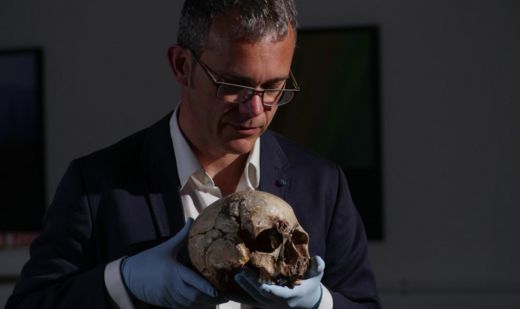
The Natural History Museum researchers extracted the DNA from part of the skull near the ear known as the petrous. At first, project scientists Prof Ian Barnes and Dr Selina Brace weren't sure if they'd get any DNA at all from the remains.

But they were in luck: not only was DNA preserved, but Cheddar Man has since yielded the highest coverage (a measure of the sequencing accuracy) for a genome from this period of European prehistory - known as the Mesolithic, or Middle Stone Age.

They teamed up with researchers at University College London (UCL) to analyse the results, including gene variants associated with hair, eye and skin colour.

Extra mature Cheddar
They found the Stone Age Briton had dark hair - with a small probability that it was curlier than average - blue eyes and skin that was probably dark brown or black in tone.

This combination might appear striking to us today, but it was a common appearance in western Europe during this period.

Steven Clarke, director of the Channel Four documentary, said: "I think we all know we live in times where we are unusually preoccupied with skin pigmentation."

Prof Mark Thomas, a geneticist from UCL, said: "It becomes a part of our understanding, I think that would be a much, much better thing. I think it would be good if people lodge it in their heads, and it becomes a little part of their knowledge."

Unsurprisingly, the findings have generated lots of interest on social media.

Skip Twitter post by @RantyHighwayman
[iframe id="twitter-widget-0" scrolling="no" frameborder="0" allowtransparency="true" allowfullscreen="true" class="twitter-tweet twitter-tweet-rendered" data-tweet-id="961141595889422338" title="Twitter Tweet" style="border-width: initial; border-style: none; color: inherit; font-style: inherit; font-variant: inherit; font-stretch: inherit; font-family: inherit; font-weight: initial; letter-spacing: inherit; line-height: inherit; margin: 10px 0px; padding: 0px; vertical-align: baseline; background-image: url("data:image/svg+xml;utf8,[/iframe]
Report
End of Twitter post by @RantyHighwayman

Cheddar Man's genome reveals he was closely related to other Mesolithic individuals - so-called Western Hunter-Gatherers - who have been analysed from Spain, Luxembourg and Hungary.

Dutch artists Alfons and Adrie Kennis, specialists in palaeontological model-making, took the genetic findings and combined them with physical measurements from scans of the skull. The result was a strikingly lifelike reconstruction of a face from our distant past.

Pale skin probably arrived in Britain with a migration of people from the Middle East around 6,000 years ago. This population had pale skin and brown eyes and absorbed populations like the ones Cheddar Man belonged to.

_99915701_mediaitem99915700.jpg

Image captionProf Chris Stringer had studied Cheddar Man for 40 years - but was struck by the Kennis brothers' reconstruction
No-one's entirely sure why pale skin evolved in these farmers, but their cereal-based diet was probably deficient in Vitamin D. This would have required agriculturalists to absorb this essential nutrient from sunlight through their skin.

"There may be other factors that are causing lower skin pigmentation over time in the last 10,000 years. But that's the big explanation that most scientists turn to," said Prof Thomas.

Boom and bust
The genomic results also suggest Cheddar Man could not drink milk as an adult. This ability only spread much later, after the onset of the Bronze Age.

Present-day Europeans owe on average 10% of their ancestry to Mesolithic hunters like Cheddar Man.

Britain has been something of a boom-and-bust story for humans over the last million-or-so years. Modern humans were here as early as 40,000 years ago, but a period of extreme cold known as the Last Glacial Maximum drove them out some 10,000 years later.

There's evidence from Gough's Cave that hunter-gatherers ventured back around 15,000 years ago, establishing a temporary presence when the climate briefly improved. However, they were soon sent packing by another cold snap. Cut marks on the bones suggest these people cannibalised their dead - perhaps as part of ritual practices.

_99914502_mediaitem99914501.jpg
Image copyrightCHANNEL 4
Image captionThe actual skull of Cheddar Man is kept in the Natural History Museum, seen being handled here by Ian Barnes
Britain was once again settled 11,000 years ago; and has been inhabited ever since. Cheddar Man was part of this wave of migrants, who walked across a landmass called Doggerland that, in those days, connected Britain to mainland Europe. This makes him the oldest known Briton with a direct connection to people living here today.

This is not the first attempt to analyse DNA from the Cheddar Man. In the late 1990s, Oxford University geneticist Brian Sykes sequenced mitochondrial DNA from one of Cheddar Man's molars.

Mitochondrial DNA comes from the biological "batteries" within our cells and is passed down exclusively from a mother to her children.

Prof Sykes compared the ancient genetic information with DNA from 20 living residents of Cheddar village and found two matches - including history teacher Adrian Targett, who became closely connected with the discovery. The result is consistent with the approximately 10% of Europeans who share the same mitochondrial DNA type.
 
Extra mature Cheddar
They found the Stone Age Briton had dark hair - with a small probability that it was curlier than average - blue eyes and skin that was probably dark brown or black in tone.

This combination might appear striking to us today, but it was a common appearance in western Europe during this period.
 
Inasemekana huyu bwana pengine kifo chake kilisababishwa na kuuwawa, isije ikawa Ndiyo wale watoto wa Adam([emoji2][emoji2]). Ngoja tufatilie haya mambo tunaweza tukafahamishwa hawa wazungu wametokea wapi na mabaki yao yalianza kuonekana miaka ipi?
 
Na kama Mungu alisema na tumfanye mtu kwa mfano wetu na wakatengeneza mtu mweusi nazani mnaanza kupata picha huko juu kuna jamii ya aina gani.[emoji33]
 
Na kama Mungu alisema na tumfanye mtu kwa mfano wetu na wakatengeneza mtu mweusi nazani mnaanza kupata picha huko juu kuna jamii ya aina gani.[emoji33]
Biblia ndio imetuingiza Chaka hili, biblia si kweli ndugu
 
Tatizo wewe ni mbishi na hautaki kujua,nani amekwambia hawakuvuka nje kwenda kusaka makazi sehemu nyingine?soma kaka,soma historia tena si hyo ya kina Nyambari Nyangwine na Major Events.Hyo Spain unavyiona hapo ishatawaliwa na weusi kwa miaka mingi tu,Columbus alivyofika Marekani alikuta tayari kuna weusi walishafika kitambo,Australia yenyewe waingereza waliikuta na weusi ndio nchi yao,visiwa vya Papua New Guinea wapo weusi.

Nikuulize swali,hivi kwanini kwenye kila lugha ya asili kwa makabila yote kuna maneno ambayo ukiyatafsiri maana yake ni "soma" na "andika", sasa haya maneno walikua wanayatumia wapi kama shule zililetwa na hao wazungu wako?

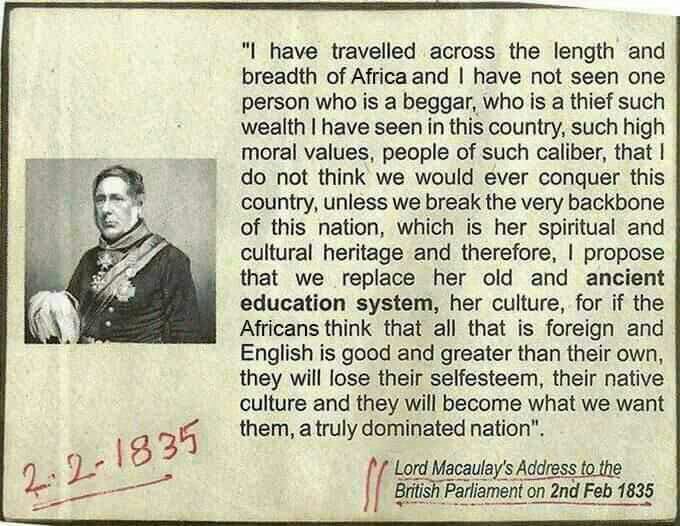
Daah katika kuhakikisha white supremacy inatawala na African inferiority inajikita vizazi mpaka vizazi wazungu wamefanikiwa sana.
Nakuona Ndugutupo pamoja
 
BOOKS

Britain’s black history has been
shamefully whitewashed

There were many African settlers in Britain even before the Romans, says David Olusoga — a fact that all standard histories have conveniently ‘forgotten’
Hakim Adi
PA-26282465.jpg

Author David Olusoga (Photo: Getty)
14 January 2017

Black and British: A Forgotten HistoryDavid Olusoga
Macmillan, pp.624, £25

I have been researching and writing about black British history for over 30 years but never before have I been fortunate enough to review a 600-page book on the subject, published to accompany a recent major BBC documentary. The book and the four-part series give some indication of the extent of a history which David Olusoga presents as ‘forgotten’: the subject, he argues, has been largely excluded from the mainstream narrative of British history. Why it should be forgotten, and who might have forgotten it should give us all pause for reflection, since the denial of black British history by those who should know better could be considered tantamount to racism.

Olusoga reminds us that Britain’s ‘island story’ cannot be understood in isolation from the rest of the world and certainly not from Africa and other parts of what was once the British empire. He also demonstrates that Africans were often a central part of Britain’s history centuries before the empire, going back to the Roman period and beyond. Indeed, he argues that black British history is not just about black people but about encounters between blacks and whites, including intermarriage or the ‘mixed relationships’ that have been commented on since Elizabethan times.

The latest archaeological techniques and historical research show that in Roman Britain there were many individuals of African heritage of all classes. We are now becoming more familiar with the fourth-century ‘Ivory Bangle Lady’ of York and ‘The Beachy Head Lady’ from sub-Saharan Africa, thought to have lived in East Sussex c. 200 AD. It seems likely that soon we will have more conclusive evidence that Africans were travelling to Britain long before the arrival of the Romans.

Black and British also builds on the work of previous historians for its depiction of the African presence in Tudor England, including individuals becoming better known, such as the royal trumpeter John Blanke and the diver Jacques Francis. Olusoga explains the conditions that led to this African presence in Shakespeare’s time but curiously makes no mention of Shakespeare’s alleged friendship with an African woman.

But he is certainly at pains to remind us of Britain’s links with enslavement and empire, with Africa, the Caribbean and the Americas. It is perhaps not surprising that, when describing the centuries of imperial expansion, historians have underplayed the fact that Britain then led the world in human trafficking. But it is impossible to understand the industrial revolution, the creation of Sierra Leone, the use of the guinea and much else besides unless Britain’s history is presented in its entirety.

In the 18th century there was an obvious connection between the transportation of Africans to North America and the Caribbean and the thousands of Africans who resided in Britain, some of whom were also evidently slaves. Britain’s great homes, its financial system, its major ports and textile industry were all based on the enslavement of African men, women and children.

It is for this reason that Olusoga includes the travels and travails of the 18th-century Black Loyalists, enslaved Africans who had fought for the crown against American independence and then found their way to Britain, Canada and eventually also to Sierra Leone. Their story, he maintains, is as much part of black British history as the postwar settlement of Brixton. For similar reasons, he devotes considerable space to the abolitionist campaigns of the 19th century, including Britain’s naval interventions in the Atlantic, as well as events that might not normally be thought of as part of Britain’s history, such as the 1865 Morant Bay Rebellion in Jamaica.

There can be no doubt that Black and British is an ambitious attempt to provide a ‘re-examination of a shared history’. This has been long overdue and Olusoga delighted many with his BBC series. Time will tell whether his book is as influential as Peter Fryer’s Staying Power proved to be. Black and Britishcertainly demonstrates that this shared history extends not only back in time for at least 2,000 years but can be extended geographically to include parts of Africa, America and the Caribbean.

Hakim Adi is professor of the history of Africa and the African diaspora at the University of Chichester.
 
Unajua bible imeandika vizuri tu na agano la kale lote linaelezea historia ya watu weusi na anguko lao. Agano jipya tunaona warumi. Hawa Ndiyo walikuja kuchakachua mambo. Watu weusi nijamii iliyo potea. Hebu jaribu kutazama kwa jicho la tatu. Kwanini mataifa makubwa yote ya miaka hii yapo nnje ya Africa?
 
Back
Top Bottom