Jihi maswali niliyo kuuliza.Wewe unaona hulazimishwi kwakua hujafikiria kiundani.
Hebu jiulize ukiwa mdogo, ulilazimishwa kusoma madrat au ulisoma kwa kupenda? Lengo la wewe kusoma madrsat lilikua ni nini?
Ulilishwa vitu ambavyo leo hii unaona ni kawaida kuwa navyo wakati hukustahili
Kiranga alikuwa anasali Kanisa Katoliki. Ilikuwaje akaanza kuamini hakuna Mungu?
Our Community
Regional Communities
Navigation
Install the app
How to install the app on iOS
Follow along with the video below to see how to install our site as a web app on your home screen.
Note: This feature may not be available in some browsers.
More options
Style variation
You are using an out of date browser. It may not display this or other websites correctly.
You should upgrade or use an alternative browser.
You should upgrade or use an alternative browser.
Kiranga alikuwa anasali Kanisa Katoliki. Ilikuwaje akaanza kuamini hakuna Mungu?
- Thread starter Uponyaji na uzima
- Start date
Zipo kabla ya kifo na adhabu za kaburini,na mema kabla ya kifo na mema kaburini.Tena vitabu vyenyewe vinasema adhabu ni baada ya kifo .
.
Hili achana nalo sababu umeshindwa kulithibitisha. Mtunzi wa hadithi hizo alikuwa nani na ilikuwaje ?Ni hadithi ambazo zilikua na lengo maalum ambalo mpaka sasa wamefanikiwa pakubwa sana
Muandishi wa hadithi hizo ni nani na ilikuwaje akaandika hizo hadithi ?Hapo pana mtego mdogo sana. Mwandishi aliwaza mbali akaona akisema ukiwa hai, haitawahi tokea. Akaona aseme baada ya kifo kwakua yeye au wao walikua wanajua maana ya kifo hivyo ukifa huwezi rudi kwenye uzima ukaja kutoa ushuha
Nakuuliza maswali marahisi sana,ila unayakimbia.

nusuhela
JF-Expert Member
- Jan 26, 2014
- 5,915
- 7,210
Mkuu Qur'an ni kitabu kama vitabu vingine tu. Najua ni mawazo ya watu waliamua kuyaweka kwenye kitabu ili wawafundishe wengine kwa lengo maalum.Jihi maswali niliyo kuuliza.
Hivyo huwa sipendi ku refer... napenda kutumia hoja zangu binafsi.
Nitatumia Qur'an labda kukuuliza maswali kutokana na kitabu chako nione wewe unafikiria nini
nusuhela
JF-Expert Member
- Jan 26, 2014
- 5,915
- 7,210
Mkuu hivi ukaniulize mwandishi wa Qur'an kweli.?Muandishi wa hadithi hizo ni nani na ilikuwaje akaandika hizo hadithi ?
Nakuuliza maswali marahisi sana,ila unayakimbia.
Wewe si umeikuta imeandikwa? Mimi najadiri kilichoandikwa kwa kuchambua dhumuni. Kumbuka, mimi natumia akili yangu wewe una refer kwenye mawazo yaliyowekwa kwenye kitabu.
Lengo la kukuuliza maswali nataka ujibu nje ya kitabu
Nimekwambia thibitisha kama ni mawazo ya watu,unaruka ruka. Kinyume chake wewe ni muongo na utuambie ujinga huu umeupata wapi ?Mkuu Qur'an ni kitabu kama vitabu vingine tu. Najua ni mawazo ya watu waliamua kuyaweka kwenye kitabu ili wawafundishe wengine kwa lengo maalum.
Hivyo huwa sipendi ku refer... napenda kutumia hoja zangu binafsi.
Nitatumia Qur'an labda kukuuliza maswali kutokana na kitabu chako nione wewe unafikiria nini
Qur'aan si kama vitabu vingine,sababu Qur'aan haina kosa hata chembe ndani yake.
Wewe umedai ni hadithi za kutungwa. Sahihi kabisa lazima nikuulize nani ameitunga na utupe ushahidi.Mkuu hivi ukaniulize mwandishi wa Qur'an kweli.?
Ndiyo imeandikwa,sasa kuandikwa ndiyo kufanye imetungwa ? Hakikisha unaandika mambo una ujuzi nayo.Wewe si umeikuta imeandikwa?
Wapi umejadili kilichoandikwa zaidi ya kusema kwamba ni hadithi kalwa sababu hazija uthibitisho,na nikuomba utoe ushahidi hili nalo likakushinda.Mimi najadiri kilichoandikwa kwa kuchambua dhumuni.
Sasa akili yako ni mbovu sana na una uwezo mdogo sababu unayaongea au kuyaandika hila uthibitisho. Sasa ni mjinga pekee anaye weza kuhitimisha jambo lenye kutaka ushahidi pasi na ushahidi. Huu ujinga unatakiwa kuuacha.Kumbuka, mimi natumia akili yangu wewe una refer kwenye mawazo yaliyowekwa kwenye kitabu.
Swali gani umeuliza linajbiwa nje ya kitabu,sijaona hilo swali,bali nimekuuliza maswali kibao hujibu una ruka ruka.Lengo la kukuuliza maswali nataka ujibu nje ya kitabu
Nasubiri majibu ya maswali yangu.
nusuhela
JF-Expert Member
- Jan 26, 2014
- 5,915
- 7,210
Mkuu uwezo wako wa kufikiria ni mdogo sana.Kwanza kbs,, Hicho kitu hakipo sehemu gani ?
Ni sahihi
Mungu hayupo wapi ?
Nitajie hip Milango mi5 ya fahamu
Mbona hoja yako haina kichwa wala miguu ?
Kwahiyo hao wakoloni huko kwao hawafanyi ibada ?
Kwahiyo siku hz mtu akienda kuswali, anakosa muda wa kufanya uvumbuzi ?
Wewe si huamini uwepo wa Mungu na bila shaka utakuwa hufanyi ibada,, Je, ni kitu gani umevumbua ?
Kwahiyo hvo virusi vipo huku tu ?
Aisee,, kama akili yako ndo inakushauri hv, basi Jitafakari sana !!
Kwahiyo ulitaka wasifanye ibada ndio uamini kuwa unapigwa au?
Alafu unaniuliza eti Mungu hayupo wapi?
Mungu hayupo kama mnavyoaminishwa na hivyo vitabu ambavyo mimi nasema ni mawazo ya watu ambayo waliyaandika kwa lengo maalumu ndio maana hata nikikuambia wewe unithibitishie, utakimbilia kwenye hayo mawazo uliyokalili.
Alafu unasema mimi siabudu kwahiyo nimevumbua nini. Unaelewa unachokisema? Hujui kama mfumo mzima umethirika kwa jamii tangu vizazi vya mababu ku adopt huu ujinga kuanzia utamaduni mpaka elimu ambazo zilikua ni gelesha tu..
Unasema virusi kwani vipo hapa tu?
Kwani unatawaliwa wewe tu?
Au ulitaka viwe hapa tu ili uamini?
Mbona virusi kibao tu vipo hapa tu hujiulizi..
Acha uvivu wa kufikiri
nusuhela
JF-Expert Member
- Jan 26, 2014
- 5,915
- 7,210
Uthibitisho unaoutaka wewe sijui ni upi. Ila labda nikuambie tu. Mambo yaliyoandikwa humo ambayo unaambiwa yalitokea zamani, hayatatokea vizazi vyako vikaja kuyaona.Wewe umedai ni hadithi za kutungwa. Sahihi kabisa lazima nikuulize nani ameitunga na utupe ushahidi.
Ndiyo imeandikwa,sasa kuandikwa ndiyo kufanye imetungwa ? Hakikisha unaandika mambo una ujuzi nayo.
Wapi umejadili kilichoandikwa zaidi ya kusema kwamba ni hadithi kalwa sababu hazija uthibitisho,na nikuomba utoe ushahidi hili nalo likakushinda.
Sasa akili yako ni mbovu sana na una uwezo mdogo sababu unayaongea au kuyaandika hila uthibitisho. Sasa ni mjinga pekee anaye weza kuhitimisha jambo lenye kutaka ushahidi pasi na ushahidi. Huu ujinga unatakiwa kuuacha.
Swali gani umeuliza linajbiwa nje ya kitabu,sijaona hilo swali,bali nimekuuliza maswali kibao hujibu una ruka ruka.
Nasubiri majibu ya maswali yangu.
Hatatokea mtu akaonekana kwa macho. Huu ndio uthibitisho wangu kuwa hizo ni hadithi tu. Hakuna shuhuda wa hayo yaliyoandikwa na kama Mungu wenu angekuwepo angeleta ushahidi vizazi na vizazi.
Labda nikiandika hivi nitakua nimethibitisha.
Quran ni kitabu kama vingine ambacho kina character kadhaa akiwemo Mohammed ambaye hata wewe hukuwaki mshuhudia
Unaandika ujinga mpaka najiuliza inakuwake unajadili jambo hili na mimi.Uthibitisho unaoutaka wewe sijui ni upi. Ila labda nikuambie tu. Mambo yaliyoandikwa humo ambayo unaambiwa yalitokea zamani, hayatatokea vizazi vyako vikaja kuyaona.
Hatatokea mtu akaonekana kwa macho. Huu ndio uthibitisho wangu kuwa hizo ni hadithi tu. Hakuna shuhuda wa hayo yaliyoandikwa na kama Mungu wenu angekuwepo angeleta ushahidi vizazi na vizazi.
Labda nikiandika hivi nitakua nimethibitisha.
Quran ni kitabu kama vingine ambacho kina character kadhaa akiwemo Mohammed ambaye hata wewe hukuwaki mshuhudia
Unaamini uwepo wa watu hawa :
1. Isaac Newton ?
2. Galileo Galilei ?
3. Albert Einstein ?
4. George Washington ?
Uliwahi kuwashuhudia ? Kwahiyo habari zao nao ni Hadithi ?
Unaamini vipi habari za watu ambao hukuwahi kuwashuhudia ?
Hili huwezi kulithibitisha sababu hukijui hicho unachokijadili.
Kwahiyo umejuaje kama vizazi vijavyo hawata yaona ? Je kutokuuaona kwao ndiyo uthibitisho kwamba ni hadithi ?
Hii mada imekuzidi uwezo.
nusuhela
JF-Expert Member
- Jan 26, 2014
- 5,915
- 7,210
Mkuu ipo hivi. Kama lengo la waliokuletea hiyo dini lilikua ni kukupumbaza, unadhani wangekuambia kweli haya ni mawazo ya watu?Unaandika ujinga mpaka najiuliza inakuwake unajadili jambo hili na mimi.
Unaamini uwepo wa watu hawa :
1. Isaac Newton ?
2. Galileo Galilei ?
3. Albert Einstein ?
4. George Washington ?
Uliwahi kuwashuhudia ? Kwahiyo habari zao nao ni Hadithi ?
Unaamini vipi habari za watu ambao hukuwahi kuwashuhudia ?
Hili huwezi kulithibitisha sababu hukijui hicho unachokijadili.
Kwahiyo umejuaje kama vizazi vijavyo hawata yaona ? Je kutokuuaona kwao ndiyo uthibitisho kwamba ni hadithi ?
Hii mada imekuzidi uwezo.
Si wanakutengenezea hadithi ambayo wanakufundisha uiamini ili lengo lao litimie?
Kama hiyo Qur'an umeikuta imeandikwa, maana yake iliandikwa.
Tunachojadiri sisi ni hicho kilichoandikwa ndio maana kuna maswali inatakiwa tujiulize kwa yaliyomo ndani ya hicho kitabu ila kung'amua kama kweli au sio kweli.
Kwa upande wangu mimi nasema kama Mungu angekuwepo kweli, wala tusingekua na mijadala ya hivi.
Wewe unaona kitabu chako hakijakosewa kwakua umejazwa imani. Na mambo ya imani yanajulikana jinsi yalivyo.
Lakini kwa mimi niliyeamua kuwa huru kimawazo, nauwezo wa kuchambua na kugundua uongo.
Ndio maana niliwauliza swali la mtego ambalo hakuna mtu mwenye uwezo wa kujibu. Hata huyo mwandishi angekuwepo, basi naamini angepata point ya kuboresha kitabu chake
nusuhela
JF-Expert Member
- Jan 26, 2014
- 5,915
- 7,210
Unajiona special kwa kujaza mambo yaliyo kwenye Qur'an? Si bora mimi natumia ubongo wangu kuhoji kuliko wewe unatumia mawazo ya watu eti kisa yameandikwa kwenye kitabu.Unaandika ujinga mpaka najiuliza inakuwake unajadili jambo hili na mimi.
Unaamini uwepo wa watu hawa :
1. Isaac Newton ?
2. Galileo Galilei ?
3. Albert Einstein ?
4. George Washington ?
Uliwahi kuwashuhudia ? Kwahiyo habari zao nao ni Hadithi ?
Unaamini vipi habari za watu ambao hukuwahi kuwashuhudia ?
Hili huwezi kulithibitisha sababu hukijui hicho unachokijadili.
Kwahiyo umejuaje kama vizazi vijavyo hawata yaona ? Je kutokuuaona kwao ndiyo uthibitisho kwamba ni hadithi ?
Hii mada imekuzidi uwezo.
Nikikuuliza kinachokufanya uamini uwepo wa Mungu ni nini? Naamini jibu lako litakua Qur'an imesema.
Hapo hapo hujiulizi kama ungezaliwa huko china milimani ungeamini kitu gani.!!

Statics
JF-Expert Member
- Dec 29, 2017
- 394
- 1,015
Umempa hoja nzuri sana...Unaandika ujinga mpaka najiuliza inakuwake unajadili jambo hili na mimi.
Unaamini uwepo wa watu hawa :
1. Isaac Newton ?
2. Galileo Galilei ?
3. Albert Einstein ?
4. George Washington ?
Uliwahi kuwashuhudia ? Kwahiyo habari zao nao ni Hadithi ?
Unaamini vipi habari za watu ambao hukuwahi kuwashuhudia ?
Hili huwezi kulithibitisha sababu hukijui hicho unachokijadili.
Kwahiyo umejuaje kama vizazi vijavyo hawata yaona ? Je kutokuuaona kwao ndiyo uthibitisho kwamba ni hadithi ?
Hii mada imekuzidi uwezo.
Kwa msingi wa hoja yake, ina maana hata vitabu vilivyoandikwa na hao wanasayansi pamoja na kanuni ( formulars) zao, sio za kuziamini....
Hoja yake ni ya uongo.
Nacheka sana,hakuna swali unalo weza kuuliza katika mada hii la mtego na lisilo jibika.Mkuu ipo hivi. Kama lengo la waliokuletea hiyo dini lilikua ni kukupumbaza, unadhani wangekuambia kweli haya ni mawazo ya watu?
Si wanakutengenezea hadithi ambayo wanakufundisha uiamini ili lengo lao litimie?
Kama hiyo Qur'an umeikuta imeandikwa, maana yake iliandikwa.
Tunachojadiri sisi ni hicho kilichoandikwa ndio maana kuna maswali inatakiwa tujiulize kwa yaliyomo ndani ya hicho kitabu ila kung'amua kama kweli au sio kweli.
Kwa upande wangu mimi nasema kama Mungu angekuwepo kweli, wala tusingekua na mijadala ya hivi.
Wewe unaona kitabu chako hakijakosewa kwakua umejazwa imani. Na mambo ya imani yanajulikana jinsi yalivyo.
Lakini kwa mimi niliyeamua kuwa huru kimawazo, nauwezo wa kuchambua na kugundua uongo.
Ndio maana niliwauliza swali la mtego ambalo hakuna mtu mwenye uwezo wa kujibu. Hata huyo mwandishi angekuwepo, basi naamini angepata point ya kuboresha kitabu chake
Ajabu unaandika mambo mengi yasiyo na msingi,hujajibu swali langu.
Jibu swali nililo kuuliza.
Nacheka sana,hivi huwa mnapata wapi ujasiri wa kujadili mada kama hizi,huku hamna hoja,mnakimbia kimbia maswali...?Unajiona special kwa kujaza mambo yaliyo kwenye Qur'an? Si bora mimi natumia ubongo wangu kuhoji kuliko wewe unatumia mawazo ya watu eti kisa yameandikwa kwenye kitabu.
Nikikuuliza kinachokufanya uamini uwepo wa Mungu ni nini? Naamini jibu lako litakua Qur'an imesema.
Hapo hapo hujiulizi kama ungezaliwa huko china milimani ungeamini kitu gani.!!
Ithibati ya mimi kuamini uwepo wa Mola una njia nyingi,na hizi zifuatazo ni chache :
1. Fitrah
2. Tangible evidence
3. Revelation
Hizi ni njia kwazo zinanifanya niamini uwepo wa Mola.
Naona unanipotezea muda na maswali yangu hujibu.
Kazi yangu nimemaliza.
Hawa wanaruka ruka hoja hawajibu na maswali hawajibu. Kwa ufupi hawana maarifa juu ya hili.Umempa hoja nzuri sana...
Kwa msingi wa hoja yake, ina maana hata vitabu vilivyoandikwa na hao wanasayansi pamoja na kanuni ( formulars) zao, sio za kuziamini....
Hoja yake ni ya uongo.

Nzige Mdudu
JF-Expert Member
- Aug 20, 2018
- 1,048
- 830
Kama kawaida yako unaendelea kuingiza concepts zingine ili uharibu lengo la swali, nasikitika bado wewe na Atheist wenzio mnashindwa kutoa majibu mpaka sasa. Anyway unalazimisha niifungue link, bila shaka maswali kutokana na kilichoandikwa kwenye maandishi hayo nitakuuliza wewe unipatie majibu.Ukishaandika "mala kwa mala" tu unanitoa hamu ya kujadiliana nawe.
Hujui herufi za Kiswahili, hapo hatujafika kwenye Kiingereza, sishangai hatuelewani.
Sasa naelewa kwa nini nikikupa link huwezi kusoma.
Bila shaka hujui kusoma Kiingereza.
Sasa unataka nikufundishe Kiingereza pia?
Nimekwambia naweza kujua kwamba 10 si square root ya 2 hata kama sijui square root ya 2, kwa sababu najua square root ya 2 ni lazima iwe ndogo kuliko 2.
Unajua hesabu? Unataka nikufundishe hesabu pia?
NB: Kwenye notes za link yako nimeweka alama nyekundu kwenye sentensi ninazohitaji maelezo zaidi maana maelezo yake hayajitoshelezi yameeleeza generally without scientific proof, nimeweka pia alama ya kijani kwenye maswali ambayo nahitaji majibu yake.
NOTES FROM YOUR LINK
The planetary system we call home is located in an outer spiral arm of the Milky Way galaxy (Unaweza kuniambia aliyeunda/kuumba hii outer spiral arm of the milky way galaxy? Ilitokeaje formation yake).
Our solar system consists of our star, the Sun, and everything bound to it by gravity — the planets Mercury, Venus, Earth, Mars, Jupiter, Saturn, Uranus and Neptune, dwarf planets such as Pluto, dozens of moons and millions of asteroids, comets and meteoroids.
Beyond our own solar system, there are more planets than stars in night sky. So far, we have discovered thousands of planetary systems orbiting other stars in the Milky Way, with more planets being found all the time. Most of the hundreds of billions of stars in our galaxy are thought to have planets of their own, and the Milky Way is but one of perhaps 100 billion galaxies in the universe.
While our planet is in some ways a mere speck in the vast cosmos, we have a lot of company out there. It seems that we live in a universe packed with planets — a web of countless stars accompanied by families of objects, perhaps some with life of their own.
Size and Distance
Our solar system extends much farther than the eight planets that orbit the Sun. The solar system also includes the Kuiper Belt that lies past Neptune's orbit. (Naomba niambie aliyeunda/formation ya hii Kuiper Belt? ilitokeaje) This is a sparsely occupied ring of icy bodies, almost all smaller than the most popular Kuiper Belt Object, dwarf planet Pluto.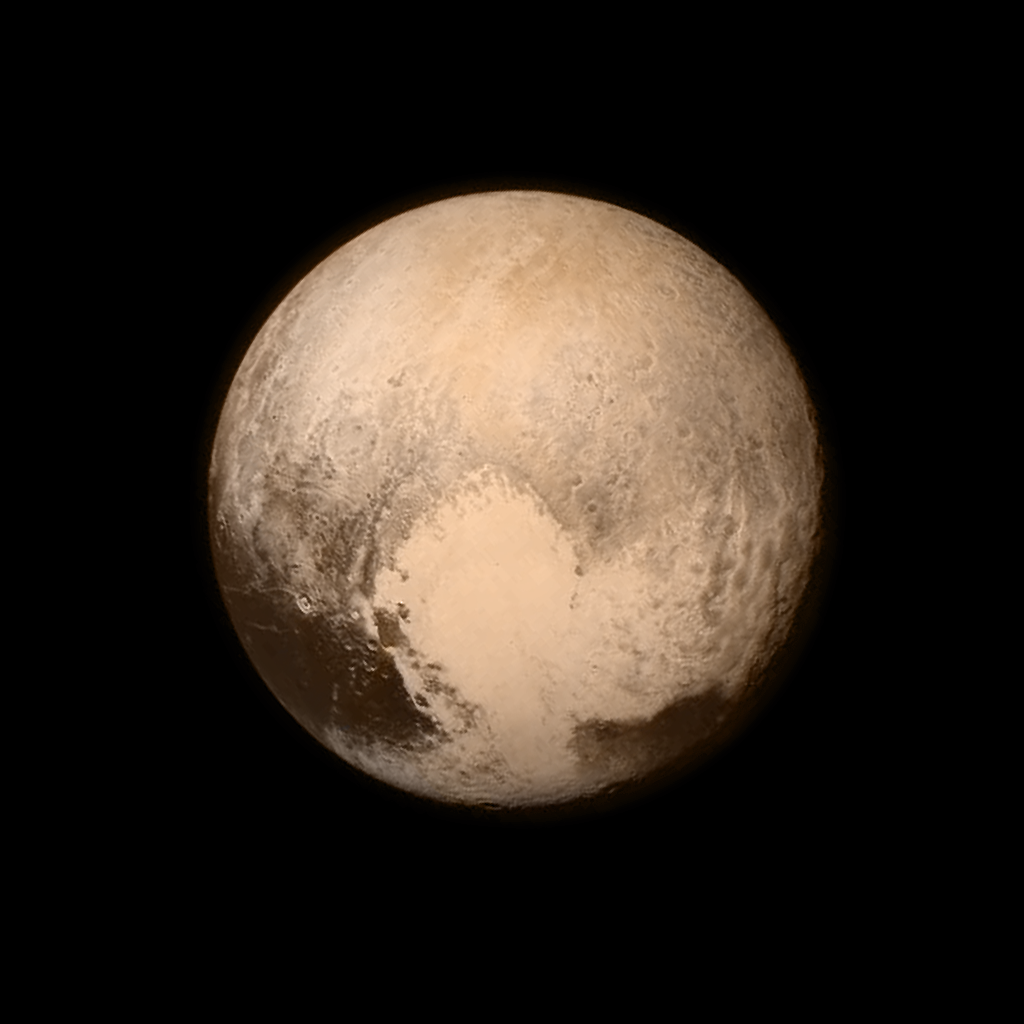
Pluto nearly fills the frame in this image from the Long Range Reconnaissance Imager (LORRI) aboard NASA's New Horizons spacecraft, taken on July 13, 2015, when the spacecraft was 476,000 miles (768,000 kilometers) from the surface. Image Credit: NASA/JHUAPL/SWRI
And beyond the fringes of the Kuiper belt is the Oort Cloud. This giant spherical shell surrounds our solar system. It has never been directly observed, but its existence is predicted based on mathematical models and observations of comets that likely originate there.
The Oort Cloud is made of icy pieces of space (Naomba niambie aliyeunda/kuumba hii Oort Cloud na icy pieces of space? vilitokeaje) debris the sizes of mountains and sometimes larger, orbiting our Sun as far as 1.6 light years away. This shell of material is thick, extending from 5,000 astronomical units to 100,000 astronomical units. One astronomical unit (or AU) is the distance from the Sun to Earth, or about 93 million miles (150 million kilometers). The Oort Cloud is the boundary of the Sun's gravitational influence, where orbiting objects can turn around and return closer to our Sun.
The Sun's heliosphere doesn't extend quite as far. The heliosphere is the bubble created by the solar wind—a stream of electrically charged gas blowing outward from the Sun in all directions. (Nani aliyeunda/formation ya hiyo solar wind-a stream of electrically gas? vilitokeaje) The boundary where the solar wind is abruptly slowed by pressure from interstellar gases is called the termination shock. This edge occurs between 80-100 astronomical units.
Two NASA spacecraft, launched in 1977, have crossed the termination shock: Voyager 1 in 2004 and Voyager 2 in 2007. But it will be many thousands of years before the two Voyagers exit the Oort Cloud.
Formation
Our solar system formed about 4.5 billion years ago from a dense cloud of interstellar gas and dust (Unaweza kuniambia nani aliyeunda hiyo dence cloud of interstellar gas and dust, vilitokeaje?). The cloud collapsed, possibly due to the(Hapa science haina uhakika ina-assume) shockwave of a nearby exploding star, called a supernova (Nifahamishe pia aliyeunda hii nyota supernova/ilitokeaje?). When this dust cloud collapsed, it formed a solar nebula—a spinning, swirling disk of material.At the center, gravity pulled more and more material in (Unaweza kuniambia aliyeunda gravity? ilitokeaje). Eventually the pressure in the core was so great that hydrogen atoms (Nijuze pia formation ya hizi hydrogen atoms/zilitokeaje?) began to combine and form helium, releasing a tremendous amount of energy. With that, our Sun was born, and it eventually amassed more than 99 percent of the available matter (Unaweza kuniambia formation ya hizi matter/zilitokeaje?).
Matter farther out in the disk was also clumping together. These clumps smashed into one another, forming larger and larger objects. Some of them grew big enough for their gravity to shape them into spheres, becoming planets, dwarf planets and large moons (Hapa science ina-assume haioneshi how the formation occured, inasimulia kama hadisi hakuna scientific proof, kama ipo niambie viliwezaje kujiunda hivyo?). In other cases, planets did not form: the asteroid belt is made of bits and pieces (Niambie formation ya bits and pieces/ vilijiundaje?) of the early solar system that could never quite come together into a planet. Other smaller leftover pieces became asteroids, comets, meteoroids, and small, irregular moons.
Structure
The order and arrangement of the planets and other bodies in our solar system is due to the way the solar system formed. Nearest the Sun, only rocky material could withstand the heat (Hapa science inasimulia kama hadisi tu as how it happened, unaweza kuniambia iliwezekanaje scientifically hiyo order and arrangement of the planets and other bodies ikawa hivyo/ilikuaje?. There must be a designer of that) when the solar system was young. For this reason, the first four planets—Mercury, Venus, Earth and Mars—are terrestrial planets. They're small with solid, rocky surfaces.Meanwhile, materials we are used to seeing as ice, liquid or gas settled in the outer regions of the young solar system. Gravity pulled these materials together, and that is where we find gas giants Jupiter and Saturn and ice giants Uranus and Neptune.
Potential for Life
Our solar system is the only place we know of that harbors life, but the farther we explore the more we find potential for life in other places. Both Jupiter’s moon Europa and Saturn’s moon Enceladus have global saltwater oceans under thick, icy shells.Moons
There are more than 150 known moons in our solar system and several more awaiting confirmation of discovery. Of the eight planets, Mercury and Venus are the only ones with no moons. The giant planets grab the most moons. Jupiter and Saturn have long lead our solar system’s moon counts. In some ways, the swarms of moons around these worlds resemble mini versions of our solar system. Pluto, smaller than our own moon, has five moons in its orbit, including the Charon, a moon so large it makes Pluto wobble. Even tiny asteroids can have moons. In 2017, scientists found asteroid 3122 Florence had two tiny moons.NB: Bado nahitaji majibu ya swali kwenye post #584
Mazindu Msambule
JF-Expert Member
- Feb 22, 2012
- 7,510
- 6,877
Mwenzio kaleta USHAHIDI hadi kanisa alilokua akisali, weka ma wewe ushahidi wako kuhusu ulokole wake huyu mpagani. (Mpagani ni mtu asie amini katika Mungu na hivyo hana DINI)kiranga hakuwa mkatoliki wewe! kiranga alikuwa mlokole aliyebatizwa kwa maji mengi na alikuwa ananena kwa luga kabisa
Mazindu Msambule
JF-Expert Member
- Feb 22, 2012
- 7,510
- 6,877
Hivi asili ya Freemason ni nini kweli? Sio hawa hawa Roma kweli? Fatilia utajua, kuna habari hawa hawa ndio walianzisha hata hi dini nyingine maarufu tena walianzishia pale pale mashariki ya kati, halafu hi dini kwa nje inaonekana kama ina uadui mkubwa sana na RC while mambo yaoa mengi yanafanana sana.Kweli asee kuna jamaa nilisoma nae alikuwa TYCS muhumini mzuri sana! Amekuja kuwa atheist mwenye misimamo ya hali ya juu! What's behind being a roman catholic then suddenly an atheist?