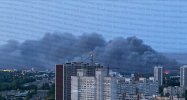
Sweden yashambuliwa kimtindo,uharibifu mkubwa wa minara 30 ya mawasiliano ya kijeshi yaharibiwa vibaya, bila kupigwa na kombora hata moja.
Haijajulikana ni nani wamehusika na uharibifu huo mkubwa ulioathiri mawasiliano ya nchi za NATO.
Sweden imekua ikitumika kuwasiliana kwa ajili ya kushambulia Urusi.
Mshukiwa wa kwanza atajwa Urusi,Urusi yakana kuhusika.
NATO wanachunguza


- NATO Ally Reveals Mass Act of Unexplained Sabotage
Published Jun 06, 2025 at 2:51 AM EDT
Updated Jun 06, 2025 at 3:49 AM
There were around 30 as yet unexplained sabotage attacks on telecommunications infrastructure in Sweden, mostly along the same major road, authorities in the country have revealed.
Nothing was stolen in the attacks on masts, but cables were cut and fuses and other technical equipment destroyed, Sweden's national public broadcaster SVT Nyheter reported, citing investigators.
Newsweek has contacted the Swedish Prosecution Authority, which is leading the investigation, for comment.
Why It Matters
Swedish investigators have not publicly identified a suspect so far, but the attacks are part of a broader trend of sabotage against Swedish telecoms infrastructure, amid reports from
NATO allies of a significant increase in
Russian espionage related to the Ukraine war.
Anti-5G activists have also been known to target telecoms masts for destruction in Europe, believing them to be harmful to human health.
What To Know
The attacks began over Easter weekend, but have not led to major disruptions.
Investigators are working on the theory that a single actor is behind the attacks, which mostly targeted infrastructure along the E22 in Sweden.
The E22, also known as the European Road, is part of a road transport network that stretches for more than 3,300 miles, connecting the U.K. in the west to Russia in the east.
Swedish security services are monitoring the investigation, and Detective Superintendent Håkan Wessung, head of serious crime in Sweden's Kalmar, told SVT that "we don't rule anything out."
Previous acts of sabotage in Sweden underscored persistent threats to critical national infrastructure.
Read more
NATO
In 2016, police investigators confirmed that a 300-meter-high (nearly 1,000 feet) telecommunications mast in southwestern Sweden was intentionally felled, leaving around 85,000 households without TV broadcasts and affecting emergency announcements.
Police suspected both pranksters and international saboteurs, with public concerns about possible Russian involvement, Reuters reported.
Similar sabotage acts have affected NATO member states previously, including Sweden, such as the cutting of key
underwater communications cables in the Baltic, arson attacks on logistics facilities in Germany, and cyberattacks targeting defense firms.
What People Are Saying
Swedish prosecutor Michelle Stein, who is leading the police investigation, told SVT: "There are circumstances that make everything seem to be connected, but it is something that the investigation will have to show."
What Happens Next
Swedish authorities continue to investigate the wave of sabotage incidents, coordinating with NATO allies to monitor for further threats and to identify any perpetrators.
Ongoing international operations aim to bolster surveillance and security for critical telecommunications and undersea infrastructure in the region
BBC
Sweden investigates suspected sabotage of undersea telecoms cable
Swedish police have been investigating the suspected sabotage of an undersea telecoms cable in the Baltic Sea, connecting Germany and Finland.
A series of undersea cables and gas pipelines have been damaged in suspected attacks since Russia's invasion of Ukraine in 2022,
prompting Nato to launch a monitoring mission in the sea last month.
The Swedish coastguard has dispatched a research vessel to the east of Gotland, which is the country's largest island and the reported location of the latest breach.
Sweden's Prime Minister Ulf Kristersson has said the government is aware of the cable break and added it "must be seen in the context of the current serious security situation".
The owner of the cable, Finnish telecom operators Cinia, said it detected minor damage.
Swedish police have said "the preliminary investigation relates to suspected sabotage". The Swedish coastguard has said they do not know when the damage occurred.
"We have a ship called KBV 003 on its way to east of Gotland. It is in the Swedish economic zone and we are assisting with the crime scene investigation," the coastguard added.
European leaders have suspected Russian involvement in breaches.
However, poor weather, inadequate equipment and human error has been found to be responsible for some damages.
Bulgarian ship the Vezhen was cleared of sabotage by the Swedish authorities earlier this month.