
bayonamperembi
JF-Expert Member
- Nov 16, 2011
- 368
- 178
Pumzika kwa amani askofu. Matendo yako mema yatakuwakilisha kwenye kizazi hiki na kijacho
Follow along with the video below to see how to install our site as a web app on your home screen.
Note: This feature may not be available in some browsers.

Shule zetu zina mchango kwenye hili.Mkuu uandishi wako ni kama umeishia lapili B, HATA KUMBUKWA!!

Wapi leta ushahidialisapoti ushoga, alihongwa na mabeberu asapoti watu kufukuliwa tope Afrika

Mmmmmh! Mkuu huo uongo nakataa kata kataUshoga ni ulemavu kama ulemavu mwingine . Kama hayupo kwenye jamii yako, mshukuru Mungu . Lakini si ujanjanja
Si dhambi hata kidogo kuua shogaMkuu unataka uwaue ?!. Si utakuwa nawe umetenda dhambi Ile ile !!

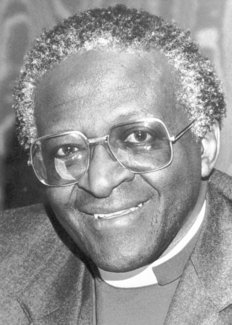
Muadhama Profesa Emeritus Askofu Mkuu Dkt. Desmond Mpilo Tutu wa Afrika Kusini amefariki dunia akiwa na umri wa miaka 90! Askofu Mkuu Desmond Tutu alikuwa ni Askofu Mkuu wa Jimbo la Capetown na Mkuu wa Kanisa Anglikana Kusini mwa Afrika wakati wa utawala wa Ubaguzi wa Rangi nchini Afrika Kusini. Huyo ndiye aliyekuwa nguvu ya kimaadili katika mapambano ya ha haki na pia sauti ya Kanisa na dhamiri ya Mungu nchini Afrika Kusini wakati wa miaka ya giza!Rais Ramaphosa amethibitisha kifo cha mshindi wa Nobel na miongoni mwa watu muhimu kumaliza ubaguzi wa rangi nchini Afrika Kusini, Desmond Tutu katika umri wa miaka 90.
Tutu aligundulika kuwa na saratani ya kibofu mwishoni mwa miaka 1990 na amelazwa mara kadhaa kwa maradhi yanayohusiana na matibu ya saratani hiyo.
=========
View attachment 2057934
South Africa's Archbishop Desmond Tutu, one of the leaders of the anti-apartheid movement, has died at the age of 90, the President's Office has said.
Desmond Tutu: Archbishop and anti-apartheid veteran dies aged 90
He was an outspoken critic of the country's previous brutal system of oppression against the country's Black majority.
He was awarded the Nobel Peace Prize in 1984 for his campaign of non-violent opposition to South Africa's white minority rule.
"The passing of Archbishop Emeritus Desmond Tutu is another chapter of bereavement in our nation's farewell to a generation of outstanding South Africans who have bequeathed us a liberated South Africa," President Cyril Ramaphosa said.
A statement on behalf of the Tutu family described him as a man who "turned his own misfortune into a teaching opportunity to raise awareness and reduce the suffering of others."
It said: "He wanted the world to know that he had prostate cancer, and that the sooner it is detected the better the chance of managing it."
The statement added: "Ultimately, at the age of 90, he died peacefully at the Oasis Frail Care Centre in Cape Town this morning.
View attachment 2057952
Source: skynews
==========
View attachment 2057976

endelea kutetea ushogaWapi leta ushahidi


Kwani nini? Eti Mwamakula naye sawa na Tutu😆😆😆🤣🤣🤣😁😁😁😂😂😂Unashangaa nini ?
The response of the authorities has been an escalating intransigence and violence, the violence of police dogs, tear gas, detention without trial, exile, and even death
There is no peace in Southern Africa. There is no peace because there is no justice. There can be no real peace and security until there be first justice enjoyed by all the inhabitants of that beautiful land.
We in the South African Council of Church have said we are opposed to all forms of violence – that of a repressive and unjust system, and that of those who seek to overthrow that system. However, we have added that we understand those who say they have had to adopt what is a last resort for them. Violence is not being introduced into the South African situation de novo from outside by those who are called terrorists or freedom fighters, depending on whether you are oppressed or an oppressor. The South African situation is violent already, and the primary violence is that of apartheid, the violence of forced population removals, of inferior education, of detention without trial, of the migratory labor system, etc.
The father leaves his family in the bantustan homeland, there eking out a miserable existence, whilst he, if he is lucky, goes to the so-called white man’s town as a migrant, to live an unnatural life in a single sex hostel for 11 months of the year, being prey there to prostitution, drunkenness, and worse. This migratory labor policy is declared Government policy, and has been condemned, even by the white Dutch Reformed Church,1 not noted for being quick to criticize the Government, as a cancer in our society. This cancer, eating away at the vitals of black family life, is deliberate Government policy. It is part of the cost of apartheid, exorbitant in terms of human suffering
Desmond Tutu
Nobel Lecture
Nobel Lecture*, December 11, 1984
Ladies and Gentlemen,
Before I left South Africa, a land I love passionately, we had an emergency meeting of the Executive Committee of the South African Council of Churches with the leaders of our member churches. We called the meeting because of the deepening crisis in our land, which has claimed nearly 200 lives this year alone. We visited some of the trouble-spots on the Witwatersrand. I went with others to the East Rand. We visited the home of an old lady. She told us that she looked after her grandson and the children of neighbors while their parents were at work. One day the police chased some pupils who had been boycotting classes, but they disappeared between the township houses. The police drove down the old lady’s street. She was sitting at the back of the house in her kitchen, whilst her charges were playing in the front of the house in the yard. Her daughter rushed into the house, calling out to her to come quickly. The old lady dashed out of the kitchen into the living room. Her grandson had fallen just inside the door, dead. He had been shot in the back by the police. He was 6 years old. A few weeks later, a white mother, trying to register her black servant for work, drove through a black township. Black rioters stoned her car and killed her baby of a few months old, the first white casualty of the current unrest in South Africa. Such deaths are two too many. These are part of the high cost of apartheid.
Everyday in a squatter camp near Cape Town, called K.T.C., the authorities have been demolishing flimsy plastic shelters which black mothers have erected because they were taking their marriage vows seriously. They have been reduced to sitting on soaking mattresses, with their household effects strewn round their feet, and whimpering babies on their laps, in the cold Cape winter rain. Everyday the authorities have carried out these callous demolitions. What heinous crime have these women committed, to be hounded like criminals in this manner? All they have wanted is to be with their husbands, the fathers of their children. Everywhere else in the world they would be highly commended, but in South Africa, a land which claims to be Christian, and which boasts a public holiday called Family Day, these gallant women are treated so inhumanely, and yet all they want is to have a decent and stable family life. Unfortunately, in the land of their birth, it is a criminal offence for them to live happily with their husbands and the fathers of their children. Black family life is thus being undermined, not accidentally, but by deliberate Government policy. It is part of the price human beings, God’s children, are called to pay for apartheid. An unacceptable price. The father leaves his family in the bantustan homeland, there eking out a miserable existence, whilst he, if he is lucky, goes to the so-called white man’s town as a migrant, to live an unnatural life in a single sex hostel for 11 months of the year, being prey there to prostitution, drunkenness, and worse. This migratory labor policy is declared Government policy, and has been condemned, even by the white Dutch Reformed Church,1 not noted for being quick to criticize the Government, as a cancer in our society. This cancer, eating away at the vitals of black family life, is deliberate Government policy. It is part of the cost of apartheid, exorbitant in terms of human suffering
I come from a beautiful land, richly endowed by God with wonderful natural resources, wide expanses, rolling mountains, singing birds, bright shining stars out of blue skies, with radiant sunshine, golden sunshine. There is enough of the good things that come from God’s bounty, there is enough for everyone, but apartheid has confirmed some in their selfishness, causing them to grasp greedily a disproportionate share, the lion’s share, because of their power. They have taken 87 of the land, though being only about 20 of our population. The rest have had to make do with the remaining 13. Apartheid has decreed the politics of exclusion. 73 of ..... READ MORE The Nobel Peace Prize 1984


 www.sowetanlive.co.za
Kuupinga kwa nguvu zoteWewe Una mlengo gani?
RIP msalimie Jembe Magufuli huko peponi
Andika kiswahili, kingereza hujui.
Guy na gay ni vitu viwili tofauti kabisa, ficha upumbavu wako.

