George Stinney
From Wikipedia, the free encyclopedia
George Stinney

Stinney's mug shot
Born George Junius Stinney, Jr.
October 21, 1929
Alcolu, South Carolina, United States
Died June 16, 1944 (aged 14)
Columbia,
South Carolina, United States
Criminal penalty Death by
electric chair
Criminal status
Conviction(s) First-degree murder (vacated)
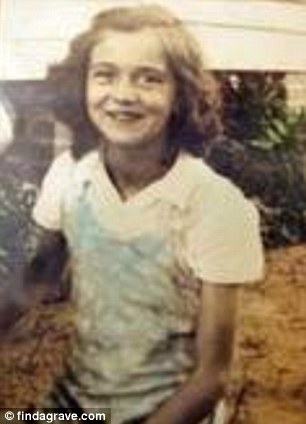
George Junius Stinney, Jr. (October 21, 1929 – June 16, 1944) was an African-American youth convicted at age 14 of murder in 1944 in his home town of
Alcolu, South Carolina. He was the youngest person in the United States in the 20th-century to be sentenced to death and to be executed.
[1]
Stinney was convicted in 1944 in a two-hour trial
[2] of the
first-degree murder of two
white girls: 11-year-old Betty June Binnicker and 8-year-old Mary Emma Thames. After being arrested, Stinney was said to have confessed to the crime.
[3][4] There was no written record of his conviction,
[5] and no transcript of the brief trial. He was executed by
electric chair.
Since Stinney's conviction and execution, the question of his guilt, the validity of his confession, and the judicial process leading to his execution have been criticized as "suspicious at best and a miscarriage of justice at worst."
[6]
A group of people investigated his case, seeking to gain justice for Stinney. In 2013 his family petitioned for a new trial. On December 17, 2014, his conviction was posthumously
vacated 70 years after his execution, because the circuit court judge ruled that he had not been given a fair trial; he had no effective defense and his Sixth Amendment rights had been violated.
[7][8]
Contents
Case background
George Stinney was arrested on suspicion of murdering two girls, Betty June Binnicker, age 11, and Mary Emma Thames, age 8, in their joint home town of
Alcolu,
Clarendon County, South Carolina, on March 23, 1944.
[9] Alcolu was a small, working-class mill town, where white and black neighborhoods were separated by railroad tracks. The girls were last seen riding their bicycles looking for flowers. As they passed the Stinney property, they asked young George Stinney and his sister, Katherine,
[10] if they knew where to find "
maypops", a local name for passionflowers.
[4]
When the girls did not return home, search parties were organized. The bodies of the girls were found the next morning, on the black side of town, in a ditch filled with muddy water. According to an article reported by the wire services on March 24, 1944, and published widely, with the mistake of the boy's name preserved, the sheriff announced the arrest and said that "George Junius" had confessed and led officers to "a hidden piece of iron.".
[3][4]
Both girls had suffered
blunt force trauma to the face and head.
[11] Reports differed as to what kind of weapon had been used.
[12] According to a report by the medical examiner, these wounds had been "inflicted by a blunt instrument with a round head, about the size of a hammer." The girls had not been sexually assaulted. The ME noted reported the genitalia of the older girl was slightly bruised.
[13]
Trial
Following the arrest of Stinney, his father was fired from his job, and he had to leave with the rest of his family immediately the housing provided by the company. The family feared for their safety. His parents did not see George again before the trial. He had no support during his 81-day confinement and trial; he was kept at a jail in Columbia 50 miles from town because of the risk of lynching.
[14]
The entire trial, including jury selection, took one day. Stinney's court-appointed defense counsel was a tax commissioner campaigning for election to local political office. Stinney's lawyer did not challenge the three police officers who testified that Stinney confessed to the two murders, despite this being the only evidence against him. There was no physical evidence linking him to the murders.
[5] There was no written record of Stinney's purported confession. At trial, Stinney denied confessing to the crime.
[14]
Stinney's trial had an
all-white jury. More than 1,000 people crowded the courtroom but no blacks were allowed.
[14] As was typical across the South, most black people in South Carolina had been
disenfranchised since the turn of the century, and only voters were called as jurors. The society was segregated and blacks were excluded from the political process.
Other than the testimony of the three police officers, at trial prosecutors called three witnesses: the man who discovered the bodies of the two girls, and the two doctors who performed the post-mortem examination. Stinney's counsel did not call any witnesses. Trial presentation lasted two and a half hours. The jury took ten minutes to
deliberate, after which they returned with a guilty verdict. The judge sentenced Stinney to death by the electric chair. There is no transcript of the trial.
[14]
Stinney's family, churches and the NAACP appealed to the governor for clemency, given the age of the boy. Others urged the governor to let the execution proceed, which he did.
[15]
Execution
The execution of George Stinney was carried out at the
Central Correctional Institution in
Columbia on June 16, 1944, at 7:30 p.m.
[11] Standing 5 feet 1 inch (155 cm) tall and weighing just over 90 pounds (40 kg),
[9] Stinney was so small compared to the usual adult prisoners that law officers had difficulty securing him to the frame holding the electrodes. The state's adult-sized face-mask did not fit him; as he was hit with the first 2,400
V surge of electricity, the mask covering his face slipped off.
[16] Stinney was declared dead within four minutes of the initial electrocution. From the time of the murders until Stinney's execution, 83 days had passed.
[11]
Reopening of case
In 2004, George Frierson, a local historian who grew up in Alcolu, started researching the case after reading a newspaper article about it. His work gained the attention of South Carolina lawyers Steve McKenzie and Matt Burgess.
[5] In addition, Ray Brown, attorney James Moon, and others contributed countless hours of research and review of historical documents, in finding witnesses and evidence to assist in exonerating young Stinney. Among those who aided the case were the
Civil Rights and Restorative Justice Project (CRRJ) at
Northeastern University School of Law, who filed an
amicus brief with the court in 2014.
[17] Frierson and the
pro bono lawyers first sought relief through the Pardon and Parole Board of South Carolina.
McKenzie and Burgess, along with lawyer Ray Chandler representing Stinney's family, filed a motion for a new trial on October 25, 2013.
[18]
If we can get the case re-opened, we can go to the judge and say, 'There wasn't any reason to convict this child. There was no evidence to present to the jury. There was no transcript. This case needs to be re-opened. This is an injustice that needs to be righted.' I'm pretty optimistic that if we can get the witnesses we need to come forward, we will be successful in court. We hopefully have a witness that's going to say — that's non-family, non-relative witness — who is going to be able to tie all this in and say that they were basically an alibi witness. They were there with Mr. Stinney and this did not occur.
— Steve McKenzie
[
citation needed]
George Frierson stated in interviews, "there has been a person that has been named as being the culprit, who is now deceased. And it was said by the family that there was a deathbed confession." Frierson said that the rumored culprit came from a well-known, prominent white family. A member, or members of that family, had served on the initial coroner's inquest jury which had recommended that Stinney be prosecuted.
[19]
In its
amicus brief, the CRRJ said:
There is compelling evidence that George Stinney was innocent of the crimes for which he was executed in 1944. The prosecutor relied, almost exclusively, on one piece of evidence to obtain a conviction in this capital case: the unrecorded, unsigned “confession” of a 14-year-old child who was deprived of counsel and parental guidance, and whose defense lawyer shockingly failed to call exculpating witnesses or to preserve his right of appeal.
[17]
New evidence in the court hearing in January 2014 included testimony by Stinney's siblings that he was with them at the time of the murders. In addition, an affidavit was introduced from the "Reverend Francis Batson, who found the girls and pulled them from the water-filled ditch. In his statement he recalls there was not much blood in or around the ditch, suggesting that they may have been killed elsewhere and moved."
[5] Wilford "Johnny" Hunter, who was in prison with Stinney, "testified that the teenager told him he had been made to confess" and always maintained his innocence.
[5]
Rather than approving a new trial, on December 17, 2014,
circuit court Judge Carmen Mullen
vacated Stinney's conviction. She ruled that he had not received a fair trial, as he was not effectively defended and his
Sixth Amendment right had been violated.
[8][7] The ruling was a rare use of the legal principle of
coram nobis. Judge Mullen ruled that his confession was likely coerced and thus
inadmissible. She also found that the execution of a 14-year-old constituted "cruel and unusual punishment."
[17]
Family members of both Betty Binnicker and Mary Thames expressed disappointment at the ruling. They said that, although they acknowledge his execution at the age of 14 is controversial, they never doubted his guilt. The niece of Betty Binnicker has said she and her family have extensively researched the case, and argues that "people who [just] read these articles in the newspaper don't know the truth."
[12] Binnicker's niece said that, in the early 1990s, a police officer who had arrested Stinney had contacted her and said: "Don't you ever believe that boy didn't kill your aunt."
[12] These family members said that the claims of a deathbed confession from an individual confessing to the girls' murders have never been substantiated.
[12]
The solicitor for the state of South Carolina, who argued for the state against
exoneration, was Ernest A. Finney III. He is the son of
Ernest A. Finney, Jr., appointed as South Carolina's first African-American State Supreme Court justice since Reconstruction.
[20]
Books and films about Stinney's case
David Stout based his first novel
Carolina Skeletons (1988) on this case. He was awarded the 1989
Edgar Allan Poe Award for Best First Novel.
[21] Stout suggests in the novel that Stinney, whom he renames Linus Bragg, was innocent. The plot revolves around a fictitious nephew of Stinney/Bragg, who unravels the truth about the case decades later.
The novel was adapted as a 1991 television movie of the same name directed by John Erman, featuring
Kenny Blank as Stinney/Bragg.
Lou Gossett, Jr. played Stinney's/Bragg's younger brother James.
[22]
As of February 2014, another movie about the Stinney case,
83 Days, was planned by Pleroma Studios, written and produced by Ray Brown with
Charles Burnett as director.
[23][24][25]
George Stinney - Wikipedia, the free encyclopedia