- Thread starter
- #281
Putin asaini waraka wa kuamuru Majeshi ya Urusi kuingia Ukraine kulinda amani majimboni
Our Community
Regional Communities
Navigation
Install the app
How to install the app on iOS
Follow along with the video below to see how to install our site as a web app on your home screen.
Note: This feature may not be available in some browsers.
More options
Style variation
You are using an out of date browser. It may not display this or other websites correctly.
You should upgrade or use an alternative browser.
You should upgrade or use an alternative browser.
Putin asaini waraka wa kuamuru Majeshi ya Urusi kuingia Ukraine kulinda amani majimboni
- Thread starter
- #282
25 February 2022
UN HQ
New York
Ukrainian Ambassador: "I invite the Russian ambassador to pray for salvation."
Ukrainian Ambassador to the U.N. Sergiy Kyslytsya: "Last night was the most horrific for Kyiv since, just imagine, 1941 when it was attacked by Nazis." He asks for a moment of silence "to pray, or to meditate if you do not believe in God, for peace. To pray for souls of those who have already been killed. For souls of those who may be killed. And I invite the Russian ambassador to pray for salvation."
Source : C-SPAN
UN HQ
New York
Ukrainian Ambassador: "I invite the Russian ambassador to pray for salvation."
Ukrainian Ambassador to the U.N. Sergiy Kyslytsya: "Last night was the most horrific for Kyiv since, just imagine, 1941 when it was attacked by Nazis." He asks for a moment of silence "to pray, or to meditate if you do not believe in God, for peace. To pray for souls of those who have already been killed. For souls of those who may be killed. And I invite the Russian ambassador to pray for salvation."
Source : C-SPAN
- Thread starter
- #283
28 February 2022
UN GENERAL ASSEMBLY
New York
Ukrainian Amb. Sergei Kyslytsya read out a screenshot of a text exchange between a Russian soldier and his mother from before he was killed during a meeting of the United Nations General Assembly.
Source : NBC News
UN GENERAL ASSEMBLY
New York
Ukrainian Ambassador Reads Texts From Russian Soldier Before He Was Killed
Ukrainian Amb. Sergei Kyslytsya read out a screenshot of a text exchange between a Russian soldier and his mother from before he was killed during a meeting of the United Nations General Assembly.
Source : NBC News
- Thread starter
- #284
Just War Theory
Just war theory deals with the justification of how and why wars are fought. The justification can be either theoretical or historical. The theoretical aspect is concerned with ethically justifying war and the forms that warfare may or may not take. The historical aspect, or the “just war tradition,” deals with the historical body of rules or agreements that have applied in various wars across the ages. For instance, international agreements such as the Geneva and Hague conventions are historical rules aimed at limiting certain kinds of warfare which lawyers may refer to in prosecuting transgressors, but it is the role of ethics to examine these institutional agreements for their philosophical coherence as well as to inquire into whether aspects of the conventions ought to be changed. The just war tradition may also consider the thoughts of various philosophers and lawyers through the ages and examine both their philosophical visions of war’s ethical limits (or absence of) and whether their thoughts have contributed to the body of conventions that have evolved to guide war and warfare.Table of Contents
- Introduction
- The Jus Ad Bellum Convention
- The Principles Of Jus In Bello
- Jus post bellum
- Conclusion
- References and Further Readin
1. Introduction
Historically, the just war tradition–a set of mutually agreed rules of combat—may be said to commonly evolve between two culturally similar enemies. That is, when an array of values are shared between two warring peoples, we often find that they implicitly or explicitly agree upon limits to their warfare. But when enemies differ greatly because of different religious beliefs, race, or language, and as such they see each other as “less than human”, war conventions are rarely applied. It is only when the enemy is seen to be a people, sharing a moral identity with whom one will do business in the following peace, that tacit or explicit rules are formed for how wars should be fought and who they should involve and what kind of relations should apply in the aftermath of war. In part, the motivation for forming or agreeing to certain conventions, can be seen as mutually benefiting—preferable, for instance, to the deployment of any underhand tactics or weapons that may provoke an indefinite series of vengeance acts, or the kinds of action that have proved to be detrimental to the political or moral interests to both sides in the past.Regardless of the conventions that have historically formed, it has been the concern of the majority of just war theorists that the lack of rules to war or any asymmetrical morality between belligerents should be denounced, and that the rules of war should apply to all equally. That is, just war theory should be universal, binding on all and capable in turn of appraising the actions of all parties over and above any historically formed conventions.
The just war tradition is indeed as old as warfare itself. Early records of collective fighting indicate that some moral considerations were used by warriors to limit the outbreak or to rein in the potential devastation of warfare. They may have involved consideration of women and children or the treatment of prisoners (enslaving them rather than killing them, or ransoming or exchanging them). Commonly, the earlier traditions invoked considerations of honor: some acts in war have always been deemed dishonorable, whilst others have been deemed honorable. However, what is “honorable” is often highly specific to culture: for instance, a suicidal attack or defense may be deemed the honorable act for one people but ludicrous to another. Robinson (2006) notes that honor conventions are also contextually slippery, giving way to pragmatic or military interest when required. Whereas the specifics of what is honorable differ with time and place, the very fact that one moral virtue is alluded to in the great literature (for example, Homer’s Iliad) is sufficient for us to note that warfare has been infused with some moral concerns from the beginning rather than war being a mere Macbethian bloodbath.
The just war theory also has a long history. Parts of the Bible hint at ethical behavior in war and concepts of just cause, typically announcing the justice of war by divine intervention; the Greeks may have paid lip service to the gods, but, as with the Romans, practical and political issues tended to overwhelm any fledgling legal conventions: that is, interests of state or Realpolitik (the theory known as political realism would take precedence in declaring and waging war. Nonetheless, this has also been the reading of political realists, who enjoy Thucydides’ History of the Peloponnesian War as an example of why war is necessarily the extension of politics and hence permeated by hard-nosed state interest rather than “lofty” pretensions to moral behavior.
Although St. Augustine provided comments on the morality of war from the Christian perspective (railing against the love of violence that war can engender) as did several Arabic commentators in the intellectual flourishing from the 9th to 12th centuries, but the most systematic exposition in the Western tradition and one that still attracts attention was outlined by Saint Thomas Aquinas in the 13th century. In the Summa Theologicae, Aquinas presents the general outline of what becomes the traditional just war theory as discussed in modern universities. He discusses not only the justification of war but also the kinds of activity that are permissible (for a Christian) in war (see below). Aquinas’s thoughts become the model for later Scholastics and Jurists to expand and to gradually to universalize beyond Christendom – notably, for instance, in relations with the peoples of America following European incursions into the continent. The most important of these writers are: Francisco de Vitoria (1486-1546), Francisco Suarez (1548-1617), Hugo Grotius (1583-1645), Samuel Pufendorf (1632-1704), Christian Wolff (1679-1754), and Emerich de Vattel (1714-1767).
In the twentieth century, just war theory has undergone a revival mainly in response to the invention of nuclear weaponry and American involvement in the Vietnam war. The most important contemporary texts include Michael Walzer’s Just and Unjust Wars (1977), Barrie Paskins and Michael Dockrill The Ethics of War (1979), Richard Norman Ethics, Killing, and War (1995), Brian Orend War and International Justice (2001) and Michael Walzer on War and Justice (2001), as well as seminal articles by Thomas Nagel “War and Massacre”, Elizabeth Anscombe “War and Murder”, and a host of others, commonly found in the journals Ethics or The Journal of Philosophy and Public Affairs.
Since the terrorist attacks on the USA on 9/11 in 2001, academics have turned their attention to just war once again with international, national, academic, and military conferences developing and consolidating the theoretical aspects of the conventions. Just war theory has become a popular topic in International Relations, Political Science, Philosophy, Ethics, and Military History courses. Conference proceedings are regularly published, offering readers a breadth of issues that the topic stirs: for example, Alexander Moseley and Richard Norman, eds. Human Rights and Military Intervention, Paul Robinson, ed., Just War in a Comparative Perspective, Alexsander Jokic, ed., War Crimes and Collective Wrongdoing. What has been of great interest is that in the headline wars of the past decade, the dynamic interplay of the rules and conventions of warfare not only remain intact on the battlefield but their role and hence their explication have been awarded a higher level of scrutiny and debate. In the political circles, justification of war still requires even in the most critical analysis a superficial acknowledgement of justification. On the ground, generals have extolled their troops to adhere to the rules, soldiers are taught the just war conventions in the military academies (for example, explicitly through military ethics courses or implicitly through veterans’ experiences). Yet despite the emphasis on abiding by war’s conventions, war crimes continue – genocidal campaigns have been waged by mutually hating peoples, leaders have waged total war on ethnic groups within or without their borders, and individual soldiers or guerilla bands have committed atrocious, murderous, or humiliating acts on their enemy. But, arguably, such acts do remain atrocities by virtue of the just war conventions that some things in war are deemed to be inexcusable, regardless of the righteousness of the cause or the noise and fog of battle.
Yet increasingly, the rule of law – the need to hold violators and transgressors responsible for their actions in war and therefore after the battle – is making headway onto the battlefield. In chivalrous times, the Christian crusader could seek priestly absolution for atrocities committed in war, a stance supported by Augustine for example; today, the law courts are seemingly less forgiving: a violation of the conventions assumes that the soldier is responsible and accountable and should be charged for a crime. Nonetheless, the idealism of those who seek the imposition of law and responsibility on the battlefield (cf. Geoffrey Robertson’s Crimes Against Humanity), often runs ahead of the traditions and customs, or plain state interests, that demean or weaken the justum bellum that may exist between warring factions. And in some cases, no just war conventions and hence no potential for legal acknowledgement of malfeasance, exist at all; in such cases, the ethic of war is considered, or is implicitly held to be, beyond the norms of peaceful ethics and therefore deserving a separate moral realm where “fair is foul and foul is fair” (Shakespeare, Macbeth I.i). In such examples (e.g, Rwanda, 1994), a people’s justification of destructiveness and killing to whatever relative degree they hold to be justifiable triumphs over attempts to establish the laws of peaceful interaction into this separate bloody realm; and in some wars, people fighting for their land or nation prefer to pick up the cudgel rather than the rapier, as Leo Tolstoy notes in War and Peace (Book 4.Ch.2), to sidestep the etiquette or war in favor securing their land from occupational or invading forces.
The continued brutality of war in the face of conventions and courts of international law lead some to maintain that the application of morality to war is a nonstarter: state interest or military exigency would always overwhelm moral concerns. But there are those of a more skeptical persuasion who do not believe that morality can or should exist in war: its very nature precludes ethical concerns. But as there are several ethical viewpoints, there are also several common reasons laid against the need or the possibility of morality in war. Generally, consequentialists and act utilitarians may claim that if military victory is sought then all methods should be employed to ensure it is gained at a minimum of expense and time. Arguments from ‘military necessity’ are of this type; for example, to defeat Germany in World War II, it was deemed necessary to bomb civilian centers, or in the US Civil War, for General Sherman to burn Atlanta. However, intrinsicists (who claim that there are certain acts that are good or bad in themselves) may also decree that no morality can exist in the state of war: they may claim that it can only exist in a peaceful situation in which, for instance, recourse exists to conflict resolving institutions. Alternatively, intrinsicists may claim that possessing a just cause (the argument from righteousness) is a sufficient condition for pursuing whatever means are necessary to gain a victory or to punish an enemy. A different skeptical argument, one advanced by Michael Walzer, is that the invention of nuclear weapons alters war so much that our notions of morality—and hence just war theories—become redundant. However, against Walzer, it can be reasonably argued that although such weapons change the nature of warfare (for example, the timing, range, and potential devastation) they do not dissolve the need to consider their use within a moral framework: a nuclear warhead remains a weapon and weapons can be morally or immorally employed.
Whilst skeptical positions may be derived from consequentialist and intrinsicist positions, they need not be. Consequentialists can argue that there are long-term benefits to having a war convention. For example, by fighting cleanly, both sides can be sure that the war does not escalate, thus reducing the probability of creating an incessant war of counter-revenges. Intrinsicists, on the other hand, can argue that certain spheres of life ought never to be targeted in war; for example, hospitals and densely populated suburbs.
The inherent problem with both ethical models is that they become either vague or restrictive when it comes to war. Consequentialism is an open-ended model, highly vulnerable to pressing military or political needs to adhere to any code of conduct in war: if more will be gained from breaking the rules than will be lost, the consequentialist cannot but demur to military “necessity.” On the other hand, intrinsicism can be so restrictive that it permits no flexibility in war: whether it entails a Kantian thesis of dutifully respecting others or a classical rights position, intrinsicism produces an inflexible model that would restrain warriors’ actions to the targeting of permissible targets only. In principle such a prescription is commendable, yet the nature of war is not so clean cut when military targets can be hidden amongst civilian centers.
Against these two ethical positions, just war theory offers a series of principles that aim to retain a plausible moral framework for war. From the just war (justum bellum) tradition, theorists distinguish between the rules that govern the justice of war (jus ad bellum) from those that govern just and fair conduct in war (jus In bello) and the responsibility and accountability of warring parties after the war (jus post bellum). The three aspects are by no means mutually exclusive, but they offer a set of moral guidelines for waging war that are neither unrestricted nor too restrictive. The problem for ethics involves expounding the guidelines in particular wars or situations.
READ MORE : Source : Just War Theory | Internet Encyclopedia of Philosophy
- Thread starter
- #285
29 August 2011
Michael Walzer on Just War Theory | Big Think
MICHAEL WALZER: Michael Walzer is one of America's leading political philosophers. He is a professor emeritus at the Institute for Advanced Study in Princeton, New Jersey and editor of Dissent, a left-wing quarterly of politics and culture. He has written on a wide range of topics, including just and unjust wars, nationalism, ethnicity, economic justice, social criticism, radicalism, tolerance, and political obligation. He is also a contributing editor to The New Republic and a member of the editorial board of Philosophy & Public Affairs. To date he has written 27 books and has published over 300 articles, essays, and book reviews. He is a member of several philosophical organizations including the American Philosophical Society. ---------------------------------------------------------------------------------- TRANSCRIPT: Michael Walzer: Well going in this was a classic case of a just war. There was an active aggression invasion of a country, the invasion of a member of the U.N, and we organize the coalition to resist and throw back the invasion and then we stopped. In classic Just War Theory that’s what you are supposed to do. You are supposed to defeat the aggression and repel it and then stop. You don’t march...you don’t have to overthrow the aggressive government; that’s for the people to do if they want to do it, and we stopped. But then we incited a rebellion inside Iraq leading people to expect, since we had an army right there, that we would help the rebels, and then we didn’t. And there was mass murder. Saddam, who had been unable to fight against the coalition army was perfectly capable of fighting against then slaughtering his own people, and he did on a very large scale in the south and later in the north … so, yes, we behaved very badly and some of the troubles that we've had in Iraq after ’03 come from the loss of confidence of trust that we produced by our behavior in ‘91.
Source: BIG THINK
More lectures :
20 October 2016
MICHAEL WALZER - THE HIGH TECH ARMY USUALLY DOES NOT WIN .
Michael Walzer : Just & UnJust Wars, Updated
Michael Walzer, professor emeritus at the Institute for Advanced Study and author of Just and Unjust War, discusses ethics in war,
Source : Carnagie Council for in Ethics International Affairs
Michael Walzer on Just War Theory | Big Think
MICHAEL WALZER: Michael Walzer is one of America's leading political philosophers. He is a professor emeritus at the Institute for Advanced Study in Princeton, New Jersey and editor of Dissent, a left-wing quarterly of politics and culture. He has written on a wide range of topics, including just and unjust wars, nationalism, ethnicity, economic justice, social criticism, radicalism, tolerance, and political obligation. He is also a contributing editor to The New Republic and a member of the editorial board of Philosophy & Public Affairs. To date he has written 27 books and has published over 300 articles, essays, and book reviews. He is a member of several philosophical organizations including the American Philosophical Society. ---------------------------------------------------------------------------------- TRANSCRIPT: Michael Walzer: Well going in this was a classic case of a just war. There was an active aggression invasion of a country, the invasion of a member of the U.N, and we organize the coalition to resist and throw back the invasion and then we stopped. In classic Just War Theory that’s what you are supposed to do. You are supposed to defeat the aggression and repel it and then stop. You don’t march...you don’t have to overthrow the aggressive government; that’s for the people to do if they want to do it, and we stopped. But then we incited a rebellion inside Iraq leading people to expect, since we had an army right there, that we would help the rebels, and then we didn’t. And there was mass murder. Saddam, who had been unable to fight against the coalition army was perfectly capable of fighting against then slaughtering his own people, and he did on a very large scale in the south and later in the north … so, yes, we behaved very badly and some of the troubles that we've had in Iraq after ’03 come from the loss of confidence of trust that we produced by our behavior in ‘91.
Source: BIG THINK
More lectures :
20 October 2016
MICHAEL WALZER - THE HIGH TECH ARMY USUALLY DOES NOT WIN .
Michael Walzer : Just & UnJust Wars, Updated
Michael Walzer, professor emeritus at the Institute for Advanced Study and author of Just and Unjust War, discusses ethics in war,
Source : Carnagie Council for in Ethics International Affairs
- Thread starter
- #286
01 March 2022
Russia : Vita ya kiuchumi yapamba moto, akauti ya benki kuu ya Urusi $630 billion (€562 billion) kushindwa kutumika n.k
Waziri wa Ufaransa ambayo imemaliza uenyekiti wa urais wa mzunguko wa Umoja wa Ulaya EU atangaza vita kamili ya kiuchumi kwa mvamizi Russia.
01 March 2022
Russia's escalating war in Ukraine has prompted unprecedented economic sanctions against the country. Over the weekend, Russian banks were further cut off from the international financial system. Some have been excluded from the SWIFT payments system while moves have been made to stop the Russian central bank using its $630 billion (€562 billion) of foreign reserves. The sanctions are by far the most severe to have been leveled at Russia since the country invaded Ukraine last week.
The country's increasing financial and political isolation is already causing significant consequences for the economy, the 11th-largest in the world by GDP. Russia's currency, the ruble, fell by around 30% to record lows after the latest sanctions, although it did recover slightly in recent hours. That compounds massive losses already experienced last week. In response, the Russian central bank has made an emergency decision to hike interest rates from 9.5% to 20%. The bank has also temporarily blocked the sale of securities held by foreigners. The currency collapse has led to long lines outside ATMs across Russia, with fears rising over further plunges in the value of the ruble. On Monday, the central bank announced that the Moscow Stock Exchange would not open. It also said in a statement that it has increased interest rates to support "financial and price stability and protect the savings of citizens from depreciation."
Source : DW News
Russia : Vita ya kiuchumi yapamba moto, akauti ya benki kuu ya Urusi $630 billion (€562 billion) kushindwa kutumika n.k
Waziri wa Ufaransa ambayo imemaliza uenyekiti wa urais wa mzunguko wa Umoja wa Ulaya EU atangaza vita kamili ya kiuchumi kwa mvamizi Russia.
Vikwazo hivyo dhidi ya Russia ni kuzuia leseni za matumizi ya technolojia kwa Russia, Wawekezaji kama SHELL kujitoa ktk ubia na shirika la Russia la mafuta la Taifa yaani Gazprom, mradi wa Bomba la Mafuta na Gesi toka Russia kusitishwa, miamala baina ya mabenki kupitia SWIFT, kukamatwa kwa mali kama mabenki ya Russia, Benki Kuu ya Urusi kushindwa kuzifikia akauti zake za nje zenye jumla ya $630 billion (€562 billion) , hii itapelekea uchumi wa Russia kutetereka, kukosekana fedha za kigeni, biashara za Russia kufilisika n.kPJSC Gazprom is a Russian majority state-owned multinational energy corporation headquartered in the Lakhta Center in Saint Petersburg.
Owner: Russian government (50.23%)
Revenue: $87.4 billion (2020)
01 March 2022
Russia: An Economy at War | DW Business Special
Russia's escalating war in Ukraine has prompted unprecedented economic sanctions against the country. Over the weekend, Russian banks were further cut off from the international financial system. Some have been excluded from the SWIFT payments system while moves have been made to stop the Russian central bank using its $630 billion (€562 billion) of foreign reserves. The sanctions are by far the most severe to have been leveled at Russia since the country invaded Ukraine last week.
The country's increasing financial and political isolation is already causing significant consequences for the economy, the 11th-largest in the world by GDP. Russia's currency, the ruble, fell by around 30% to record lows after the latest sanctions, although it did recover slightly in recent hours. That compounds massive losses already experienced last week. In response, the Russian central bank has made an emergency decision to hike interest rates from 9.5% to 20%. The bank has also temporarily blocked the sale of securities held by foreigners. The currency collapse has led to long lines outside ATMs across Russia, with fears rising over further plunges in the value of the ruble. On Monday, the central bank announced that the Moscow Stock Exchange would not open. It also said in a statement that it has increased interest rates to support "financial and price stability and protect the savings of citizens from depreciation."
Source : DW News
- Thread starter
- #288
28 February 2022
Brussels, Belgium
UMOJA WA ULAYA YATOA TAMKO KALI
Umoja wa Ulaya /EU imetoa waraka unaofafanua vikwazo kwa nchi ya Russia iliyoivamia Ukraine.
EU imelaani hatua hiyo ya Russia kutaka kubadili mipaka ya nchi halali ki sovereignty, na kuuita uvamizi huo katika karne ya 21 ni aibu kuu kwa mstakabali wa uliokuwepo hali endelevu ya amani na usalama wa dunia.
EU imetamka kupiga marufuku huduma za kibenki na Russia, kuzuia anga la nchi za EU kutumika na chombo chochote cha anga kiwe cha binafsi, umma au kwa ajili ya biashara na utafiti.
28 February 2022
Brussels, Belgium
European Council
Council of the European Union
Firstly the Council adopted two assistances measures under the European Peace Facility (EPF) that will contribute to strengthening the capabilities and resilience of the Ukrainian Armed Forces to defend the territorial integrity and sovereignty of the country, and protect the civilian population against the ongoing military aggression. The assistance measures, worth in total EUR 500 000 000, will finance the provision of equipment and supplies to the Ukrainian Armed Forces, including - for the first time - lethal equipment.
Secondly, the Council adopted severe restrictive measures related to aviation and finance.
EU member states will deny permission to land in, take off from or overfly their territories to any aircraft operated by Russian air carriers, including as a marketing carrier, or to any Russian registered aircraft, or to non-Russian registered aircraft which are owned or chartered, or otherwise controlled by a Russian legal or natural person.
Moreover, it will be prohibited to make transactions with the Russian Central Bank or any legal person, entity or body acting on behalf or at the direction of the Russian Central Bank.
The European Union condemns in the strongest possible terms the Russian Federation’s unprovoked and unjustified military aggression against Ukraine, as well as the involvement of Belarus in this aggression.
The European Union demands that Russia immediately ceases its military actions, unconditionally withdraws all forces and military equipment from the entire territory of Ukraine and fully respects Ukraine’s territorial integrity, sovereignty and independence within its internationally recognised borders. The European Council calls on Russia and Russia-backed armed formations to respect international humanitarian law and stop their disinformation campaign and cyber-attacks.
The use of force and coercion to change borders has no place in the 21st century. Tensions and conflict should be resolved exclusively through dialogue and diplomacy. The EU will continue cooperating closely with neighbours and reiterates its unwavering support for, and commitment to, the sovereignty and territorial integrity of Georgia and of the Republic of Moldova. It will continue strong coordination with partners and allies, within the UN, OSCE, NATO and the G7.
Source : EU adopts new set of measures to respond to Russia’s military aggression against Ukraine
Brussels, Belgium
UMOJA WA ULAYA YATOA TAMKO KALI
Umoja wa Ulaya /EU imetoa waraka unaofafanua vikwazo kwa nchi ya Russia iliyoivamia Ukraine.
EU imelaani hatua hiyo ya Russia kutaka kubadili mipaka ya nchi halali ki sovereignty, na kuuita uvamizi huo katika karne ya 21 ni aibu kuu kwa mstakabali wa uliokuwepo hali endelevu ya amani na usalama wa dunia.
EU imetamka kupiga marufuku huduma za kibenki na Russia, kuzuia anga la nchi za EU kutumika na chombo chochote cha anga kiwe cha binafsi, umma au kwa ajili ya biashara na utafiti.
28 February 2022
Brussels, Belgium
European Council
Council of the European Union
- Council of the EU
- Press release
- 28 February 2022
- 17:40
EU adopts new set of measures to respond to Russia’s military aggression against Ukraine
In view of Russian Federation’s unprovoked and unjustified military aggression against Ukraine and the escalating situation, the Council today agreed on a new set of measures that will impose severe consequences on Russia for its actions. Such decisions was agreed in close coordination with EU's partners and allies.Firstly the Council adopted two assistances measures under the European Peace Facility (EPF) that will contribute to strengthening the capabilities and resilience of the Ukrainian Armed Forces to defend the territorial integrity and sovereignty of the country, and protect the civilian population against the ongoing military aggression. The assistance measures, worth in total EUR 500 000 000, will finance the provision of equipment and supplies to the Ukrainian Armed Forces, including - for the first time - lethal equipment.
Following the request by Foreign Affairs Minister of Ukraine, we are immediately responding by mobilising the European Peace Facility for two emergency assistance measures to finance the supply of lethal and non-lethal material to the Ukrainian army. This is the first time in history that the EU will be providing lethal equipment to a third country. We are doing everything we can to support Ukraine, we stand by the Ukrainian people.
High Representative of the European Union for Foreign Affairs and Security Policy
Secondly, the Council adopted severe restrictive measures related to aviation and finance.
EU member states will deny permission to land in, take off from or overfly their territories to any aircraft operated by Russian air carriers, including as a marketing carrier, or to any Russian registered aircraft, or to non-Russian registered aircraft which are owned or chartered, or otherwise controlled by a Russian legal or natural person.
Moreover, it will be prohibited to make transactions with the Russian Central Bank or any legal person, entity or body acting on behalf or at the direction of the Russian Central Bank.
The European Union condemns in the strongest possible terms the Russian Federation’s unprovoked and unjustified military aggression against Ukraine, as well as the involvement of Belarus in this aggression.
The European Union demands that Russia immediately ceases its military actions, unconditionally withdraws all forces and military equipment from the entire territory of Ukraine and fully respects Ukraine’s territorial integrity, sovereignty and independence within its internationally recognised borders. The European Council calls on Russia and Russia-backed armed formations to respect international humanitarian law and stop their disinformation campaign and cyber-attacks.
The use of force and coercion to change borders has no place in the 21st century. Tensions and conflict should be resolved exclusively through dialogue and diplomacy. The EU will continue cooperating closely with neighbours and reiterates its unwavering support for, and commitment to, the sovereignty and territorial integrity of Georgia and of the Republic of Moldova. It will continue strong coordination with partners and allies, within the UN, OSCE, NATO and the G7.
Source : EU adopts new set of measures to respond to Russia’s military aggression against Ukraine
- Thread starter
- #289
01 March 2022
Minsk, Belarus
Russia’s secret plot to invade second nation leaked ?
Belarus’ President Alexander Lukashenko has shown a battle map on live TV, seemingly showing a planned Russian operation which moves beyond Ukraine into another nearby country.
The dictator fronted security officials in a live TV broadcast while positioned in front of a battle map that seemingly indicates a planned southern Russian operation which spans from Ukraine into nearby Moldova.
The map included Russian lines of attack into Ukraine – some of which have already come to pass – and also outlined attacks which have not yet occurred.
One of those seems to point to an operation stretching from the Ukrainian port city of Odessa into Moldova.
Mr Lukashenko’s apparent blunder came within hours of the Ukrainian parliament confirming the presence of Belarusian troops in Ukraine.
While the Belarusian leader has repeatedly denied claims his country was poised to join to fight against Ukraine, the invasion map has been seen by many as a clear sign Belarus planned to assist Russia.
It comes hot on the heels of Belarus voting to revoke its non-nuclear status, sparking fears its territory could be used by Russia as a launch pad against Ukraine.
Source : news.com.au
Minsk, Belarus
Russia’s secret plot to invade second nation leaked ?
Belarus’ President Alexander Lukashenko has shown a battle map on live TV, seemingly showing a planned Russian operation which moves beyond Ukraine into another nearby country.
The dictator fronted security officials in a live TV broadcast while positioned in front of a battle map that seemingly indicates a planned southern Russian operation which spans from Ukraine into nearby Moldova.
The map included Russian lines of attack into Ukraine – some of which have already come to pass – and also outlined attacks which have not yet occurred.
One of those seems to point to an operation stretching from the Ukrainian port city of Odessa into Moldova.
Mr Lukashenko’s apparent blunder came within hours of the Ukrainian parliament confirming the presence of Belarusian troops in Ukraine.
While the Belarusian leader has repeatedly denied claims his country was poised to join to fight against Ukraine, the invasion map has been seen by many as a clear sign Belarus planned to assist Russia.
It comes hot on the heels of Belarus voting to revoke its non-nuclear status, sparking fears its territory could be used by Russia as a launch pad against Ukraine.
Source : news.com.au
- Thread starter
- #290
01 March 2022
Russia could be kicked off the internet
Ukraine’s Deputy Prime Minister and Minister for Digital Transformation Mykhailo Fedorov has urged the Internet Corporation for Assigned Names and Numbers to effectively ban Russia from the internet.
In a letter, Mr Fedorov asked the body to revoke the .ru and .su domains, either permanently or as a temporary measure, in light of Mr Putin’s “atrocious crimes” against Ukraine.
Source : Russia's Secret Plot To Invade Second Nation Leaked
Russia could be kicked off the internet
Ukraine’s Deputy Prime Minister and Minister for Digital Transformation Mykhailo Fedorov has urged the Internet Corporation for Assigned Names and Numbers to effectively ban Russia from the internet.
In a letter, Mr Fedorov asked the body to revoke the .ru and .su domains, either permanently or as a temporary measure, in light of Mr Putin’s “atrocious crimes” against Ukraine.
Source : Russia's Secret Plot To Invade Second Nation Leaked
Vikwazo ndio vitammaliza Putin, acha atumie makombora yake lakini ataminywa kwenye uchumi mpaka aombe poo au aamue tuu kuishi kama Castro, na sijui kama warusi watakubali kuishi kwenye umaskini maana utajiri tayari wanaujua,Putin ataishia kuondolewa na wananchi wakeKitakachofuata ni hayo majimbo kuitisha kura ya Maoni wataamua wawe sehemu ya Urusi na ndio mchezo umeisha .....Nadhani kwasasa tukubali ipo siku zitawaka kati ya US na Hao jamaa zake na Urusi kwa upande mwingine.
Lakini pia Upande Mwingine simlaumu Mrusi nalaumu Ukraine kutokujitambua wao wanaambiwa usijiunge na hao NATO watakuja Kutusumbua hapa Jirani wanangangania. Hii ni Vita Ya Wababe kila mmoja ana Maslahi yake unadhani EU inaweza kukataa Gas ya Urusi wakati ndio wanatumia kwa kujihami na baridi??
Mtu mwenyewe wanahangaika nae Putin ambae hajali kitisho kabisaaa. . .Putin Hajali na mpaka anachukua hatua Hii hakua na namna kwasababu Ukraine ikijiunga NATO ni hatari zaidi kwao or so waanzishe Ile Cuba Crisis ya Mwaka 1962 nae Russia atege silaha zake kule Venezuela au Cuba....
Ukraine ndio watakaoumia hapa wala hamna kingine..Issue ya vikwazo ni kelele tu....

Somoche
JF-Expert Member
- Oct 6, 2010
- 6,795
- 9,143
WEWE Utakua wapi?? hivi unajua mtoaji wa mafuta No 2 ni Urusi?? sasa wewe unajua utaathirika sana au hujajua hilo??Vikwazo ndio vitammaliza Putin, acha atumie makombora yake lakini ataminywa kwenye uchumi mpaka aombe poo au aamue tuu kuishi kama Castro, na sijui kama warusi watakubali kuishi kwenye umaskini maana utajiri tayari wanaujua,Putin ataishia kuondolewa na wananchi wake
- Thread starter
- #294
Russia refuses to launch UK's OneWeb satellites unless demands are met
By Chelsea Gohd published about 4 hours agoAnd that's not likely to happen.
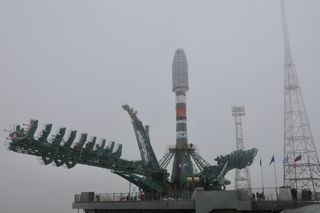
A Russian Soyuz rocket topped with 36 OneWeb internet satellites is scheduled to launch from Baikonur Cosmodrome in Kazakhstan on March 4, 2022. But Russia has imposed new demands on OneWeb and the UK government, calling the launch into question. (Image credit: Roscosmos via Twitter)
Roscosmos will not launch three dozen OneWeb internet satellites as planned on Friday (March 4) unless the company meets new demands, the Russian space agency announced today (March 2).
This morning, Roscosmos rolled a Soyuz rocket out to the launch pad at the Russia-operated Baikonur Cosmodrome in Kazakhstan carrying 36 satellites for the London-based company OneWeb. Shortly after the rollout, Roscosmos Director-General Dmitry Rogozin made an online statement that the agency will not launch the satellites as planned if the company does not guarantee that the craft will not be used for military purposes.
READ MORE : Russia refuses to launch UK's OneWeb satellites unless demands are met
Space X naona wanachekelea sasa na bora mrusi achukue tuu hiyo pesa maana space X wanazirusha hizo kwa bei ya daladala na kila siku bei inashuka,na mchina kishaanza kufungua market yake ya kurusha kwa bei ya chips kuku, enzi za Soyuz kuwa peke yao kwenye hii market is over na startup kibao zinaingia kushindana kwenye space , hata NASA sasa wamehamia Space XRussia refuses to launch UK's OneWeb satellites unless demands are met
By Chelsea Gohd published about 4 hours ago
And that's not likely to happen.
A Russian Soyuz rocket topped with 36 OneWeb internet satellites is scheduled to launch from Baikonur Cosmodrome in Kazakhstan on March 4, 2022. But Russia has imposed new demands on OneWeb and the UK government, calling the launch into question. (Image credit: Roscosmos via Twitter)
Roscosmos will not launch three dozen OneWeb internet satellites as planned on Friday (March 4) unless the company meets new demands, the Russian space agency announced today (March 2).
This morning, Roscosmos rolled a Soyuz rocket out to the launch pad at the Russia-operated Baikonur Cosmodrome in Kazakhstan carrying 36 satellites for the London-based company OneWeb. Shortly after the rollout, Roscosmos Director-General Dmitry Rogozin made an online statement that the agency will not launch the satellites as planned if the company does not guarantee that the craft will not be used for military purposes.
READ MORE : Russia refuses to launch UK's OneWeb satellites unless demands are met

kichakaa man
JF-Expert Member
- Oct 20, 2011
- 5,500
- 5,164
Russia kwenye space ni mafather huyo space x bado sana Katika kuingia ligi na RussiaSpace X naona wanachekelea sasa na bora mrusi achukue tuu hiyo pesa maana space X wanazirusha hizo kwa bei ya daladala na kila siku bei inashuka,na mchina kishaanza kufungua market yake ya kurusha kwa bei ya chips kuku, enzi za Soyuz kuwa peke yao kwenye hii market is over na startup kibao zinaingia kushindana kwenye space , hata NASA sasa wamehamia Space X
ooooh man...unaishi wapi wewe?Russia kwenye space ni mafather huyo space x bado sana Katika kuingia ligi na Russia
- Thread starter
- #298
Toka maktaba :
25 February 2022
Kyiv, Ukraine
Hali ilikyokuwa treni ya mwisho mjini Kyiv / Kiev Ukraine ikiondoka na wakimbizi
Mjini kati / City centre Kiev, watu wakitafuta usafiri kuondoka mjini. Wengi wanatafuta usafiri wa treni. Kila mtu mjini anaonekana kabeba sanduku au kifurushi ili kupata usafiri wa aina yeyote utakaopatikana n.k hii ilikuwa tarehe 25 February 2022 'live' mistari mirefu ya kutafuta tiketi toka Ukraine na hatimaye safari yenyewe nzima ilivyokuwa live kuelekea Hungary, Romania au Poland n.k
🇺🇦 With reports that the city of Kyiv was soon to be closed off I decided the best thing to do was to join the crowds and leave for the border before being stuck. Whilst it was a sad to see the people leaving their homes behind and taking their kids and pets with them towards an uncertain future it also showed the best of the people. Spirits were high, nobody panicked, people shared food and drinks with each other. It was humbling to be a part of it.
Source : Bald and Bankrupt
25 February 2022
Kyiv, Ukraine
Hali ilikyokuwa treni ya mwisho mjini Kyiv / Kiev Ukraine ikiondoka na wakimbizi
Mjini kati / City centre Kiev, watu wakitafuta usafiri kuondoka mjini. Wengi wanatafuta usafiri wa treni. Kila mtu mjini anaonekana kabeba sanduku au kifurushi ili kupata usafiri wa aina yeyote utakaopatikana n.k hii ilikuwa tarehe 25 February 2022 'live' mistari mirefu ya kutafuta tiketi toka Ukraine na hatimaye safari yenyewe nzima ilivyokuwa live kuelekea Hungary, Romania au Poland n.k
Leaving Kyiv On A Refugee Train 🇺🇦
🇺🇦 With reports that the city of Kyiv was soon to be closed off I decided the best thing to do was to join the crowds and leave for the border before being stuck. Whilst it was a sad to see the people leaving their homes behind and taking their kids and pets with them towards an uncertain future it also showed the best of the people. Spirits were high, nobody panicked, people shared food and drinks with each other. It was humbling to be a part of it.
Source : Bald and Bankrupt
- Thread starter
- #299
WHAT IS LIKE TO LIVE UNDER THE SHADOW OF A WAR IN UKRAINE
🇺🇦 A week now seems a lifetime ago in terms of the rapidly changing events in Ukraine. I arrived in the country thinking to myself 'Putin isn't mad enough to invade because the Ukrainian people will fight to the death for their country. It will be like Stalingrad.' And yet I was completely wrong to underestimate his insanity. Now as I write this the people who I met in this video are living under bombs and bullets. Unbelievable how much suffering Ukrain e has gone through in its history
Source : bald and bankrupt
🇺🇦 A week now seems a lifetime ago in terms of the rapidly changing events in Ukraine. I arrived in the country thinking to myself 'Putin isn't mad enough to invade because the Ukrainian people will fight to the death for their country. It will be like Stalingrad.' And yet I was completely wrong to underestimate his insanity. Now as I write this the people who I met in this video are living under bombs and bullets. Unbelievable how much suffering Ukrain e has gone through in its history
Source : bald and bankrupt
- Thread starter
- #300
Kiev, Ukraine
Mji wa Kiev, Ukraine tarehe 16 December 2021🇺🇦
Wakaazi wa mji mkuu wa Ukraine mwezi December 2021 walikuwa wanaendelea na maisha yao kama kawaida bila hofu au shaka yoyote huku wakishangaa habari ktk media za nje ya Ukraine kuwa kuna uwezekano wa Ukraine kuvamiwa ..
A lot of people have been asking me if I will leave Ukraine due to the military troop buildup on the border by Russia. Here are my thoughts on the situation, my escape plan, and what the on the ground, insider information is from an American living in Ukraine.
Source : Johnny FD
Mji wa Kiev, Ukraine tarehe 16 December 2021🇺🇦
Wakaazi wa mji mkuu wa Ukraine mwezi December 2021 walikuwa wanaendelea na maisha yao kama kawaida bila hofu au shaka yoyote huku wakishangaa habari ktk media za nje ya Ukraine kuwa kuna uwezekano wa Ukraine kuvamiwa ..
A lot of people have been asking me if I will leave Ukraine due to the military troop buildup on the border by Russia. Here are my thoughts on the situation, my escape plan, and what the on the ground, insider information is from an American living in Ukraine.
Source : Johnny FD