V8Watetezi wa dp world sijui mmelipwa kiasi gani mna energy sana ya kupambania mkate
Mbwembwe za DP World, kwa kuanzia tu wanawekeza Dola milioni 500 bandari ya Dar
Our Community
Regional Communities
Navigation
Install the app
How to install the app on iOS
Follow along with the video below to see how to install our site as a web app on your home screen.
Note: This feature may not be available in some browsers.
More options
Style variation
You are using an out of date browser. It may not display this or other websites correctly.
You should upgrade or use an alternative browser.
You should upgrade or use an alternative browser.
Mbwembwe za DP World, kwa kuanzia tu wanawekeza Dola milioni 500 bandari ya Dar
Hata human traffic ndo zao.Intelegency ya nchi iwe makini wasije ungia na ka link ka KUTOROSHEA FEDHA NJE direct 😬😬😬 sijawahi kuuona wema wa waarabu hata siku moja,kwa kuongea utadhani wema kweli.

macho_mdiliko
Platinum Member
- Mar 10, 2008
- 25,191
- 48,765
Unamfananisha huyu gulube mashine ya kukoboa na na Maria mama wa Yesu?
Mwinyi alikodosha ngorongoro miaka 99 kwa Saudi arabiamwinyi na Loliondo.
Pia tusisahau kuwa linalokuja katika mapinduzi haya ya kiteknolojia kuna mengi tusiyoyajua. Sababu tumewapa DP World waje na 'zimwi la teknolojia' ambayo hatujui inafanyaje kazi na kuishia mateka
tunapelekwa mzobe mzobe kuhusu makasha ya Rwanda, Burundi, DR Congo yatalipiwa ushuru au watalipia usafiri pekee yake.
Roboti zitapungunza kazi ngapi za mawakala, wapagazi, makuli kwa maelfu mangapi ili kupunguza gharama za uendeshaji, mishahara, likizo za mwaka na likizo za dharura.
Musuli mkubwa wa kifedha wa DP World unatuweka katika hali gani wakati wa majadiliano je mwenye nguvu atapata kila atakacho ?
Je wingi wa mizigo itapelekea Dar es Salaam uchumi wake kuyumba kwa vile kazi zote na maofisi yatahamia Kigali Rwanda kama ilivyokuwa uchumi wa Mombasa kuyumba pale ofisi na bandari kavu zilipohamia Naivasha Kenya ?
Joseph Schumpeter that refers to the process of innovation and technological change that leads to the destruction of existing economic structures, such as industries, firms, and jobs.
Mombasa yalia shughuli kuhamishiwa bara
DW
https://www.dw.com › kenya-yaha...
Kenya yahamishia uchukuzi wa mizigo Naivasha
2 Jun 2020 — "Hali ya uchumi au hali ya biashara katika kaunti ya Mombasa imekuwa mbaya sana. Na tegemeo kubwa kabisa la watu wa pwani ni port (bandari).

Pac the Don
JF-Expert Member
- Feb 17, 2021
- 6,170
- 7,710
Njaa kali mtaan 🤣🤣🤣👆😂😂😂😂😂😂😂😂😂

Blackcornshman
JF-Expert Member
- Aug 25, 2016
- 6,514
- 15,701
Dolla milioni500 ni pesa ndogo sana kwa LINCHI kubwa kama Tanzania.
Mbona hela ndogo sana, sisi wenyewe tuliweka trilioni tatu, tanga trilioni 1 mtwara trilioni 1DP World siyo watu wa mchezo mchezo, vyanzo vyao vya habari vinasema kwa kuanzia tu wanawekeza Dollar za Kimerekani million 500. Piga mwenyewe hesabu kwa 1fedha za kwetu.
Wataanza kwa kuhakikisha wanaweka mfumo wa kisasa wa TEHAMA unaosomana na na idara zingine zinazohusika papo kwa papo. Mfumo utawezesha kung'amua mizigo imepakiwa wapi, saa ngapi, ipo wapi na lini itafika bandari ya Dar. Pia mteja mwenye mzigo ataweza kuufatilia mzigo wske toka anspoukabidhi kusafirishwa, ulipo na mpaka unamfikia.
Ni mabadiliko makubwa sana na ya jisasa ya kiuendeshaji wa kazi za bandari na tuliyonayo sasa.
Mfumo huo zautaweza kuibua mapungufu ya idara zote zingine zinazozembea.
Mfumo utakuwa na "hot backups" wakati wote, Inamaanisha tusahau bandarini kuambiwa mtandao haufanyi kazi.
Mama anaupiga mwingi kweli kweli.
Ethiopia ni 7 B dollarHiyo ndo itakua the second largest investment baada ila bwa la umeme la Ethiopia consumed
$700m. Wengi mtakuja kumuelewa mama wakati kumekucha analo fanya hamna Raisi anae weza kulipinga labda awe mjinga tu.

mrangi
JF-Expert Member
- Feb 19, 2014
- 88,759
- 123,368
Watanzania sahv tunachojua ni kukata mauno tuMwendokasi hapo mnasimamisha watu kama maroboto ya pamba na kujaza mbuzi, kamradi kadogo tu kamewashinda mambo makubwa mtaweza?
Ova

FaizaFoxy
Platinum Member
- Apr 13, 2011
- 100,246
- 123,145
- Thread starter
- #232
Kwenye TEHAMA tuliwekeza shillingi ngapi? maana hizi zaidi ya trillioni moja unazozisoma hapa ni kwa ajili ya TEHAMA tu.Mbona hela ndogo sana, sisi wenyewe tuliweka trilioni tatu, tanga trilioni 1 mtwara trilioni 1
Hapo sasa.

Msanii
Platinum Member
- Jul 4, 2007
- 25,252
- 36,513
Vipengele vya mkataba vinaonesha wazi kuwa wanaouunga mkono kama ulivyo wana mapungufu ya uelewa.DP World siyo watu wa mchezo mchezo, vyanzo vyao vya habari vinasema kwa kuanzia tu wanawekeza Dollar za Kimerekani million 500. Piga mwenyewe hesabu kwa 1fedha za kwetu.
Wataanza kwa kuhakikisha wanaweka mfumo wa kisasa wa TEHAMA unaosomana na na idara zingine zinazohusika papo kwa papo. Mfumo utawezesha kung'amua mizigo imepakiwa wapi, saa ngapi, ipo wapi na lini itafika bandari ya Dar. Pia mteja mwenye mzigo ataweza kuufatilia mzigo wske toka anspoukabidhi kusafirishwa, ulipo na mpaka unamfikia.
Ni mabadiliko makubwa sana na ya jisasa ya kiuendeshaji wa kazi za bandari na tuliyonayo sasa.
Mfumo huo zautaweza kuibua mapungufu ya idara zote zingine zinazozembea.
Mfumo utakuwa na "hot backups" wakati wote, Inamaanisha tusahau bandarini kuambiwa mtandao haufanyi kazi.
Mama anaupiga mwingi kweli kweli.
Hatujui lengo la motive yako ya kusifia hili jambo bila kulichambua faida na hasara zake.
Kiufupi, mkataba upitiwe upya ikiwezekana usitishwe kwanza
Mombasa yalia shughuli kuhamishiwa bara
View attachment 2658619
DW
https://www.dw.com › kenya-yaha...
Kenya yahamishia uchukuzi wa mizigo Naivasha
2 Jun 2020 — "Hali ya uchumi au hali ya biashara katika kaunti ya Mombasa imekuwa mbaya sana. Na tegemeo kubwa kabisa la watu wa pwani ni port (bandari).
Dar es Salaam kufa kibiashara ?
Makao makuu kuhamishiwa Dodoma kumeyumbisha uchumi na sasa kubwa lao la shughuli za Bandari kuhamishiwa DP World Kigali kuhudumia Rwanda, Burundi, DR Congo, Uganda, Zambia
CASE STUDY :
Kenya yahamishia uchukuzi wa mizigo toka Mombasa hadi bara Naivasha, pwani walia !
Thelma Mwadzaya02.06.2020 2 Juni 2020
Kenya inaanza rasmi kuhamisha operesheni za kuchukua makasha ya mizigo kutokea Mombasa hadi bandari ya nchi kavu iliyoko Naivasha, ili kupunguza safari za malori ya mizigo kutoka nchi za Uganda, Rwanda na Sudan Kusini.
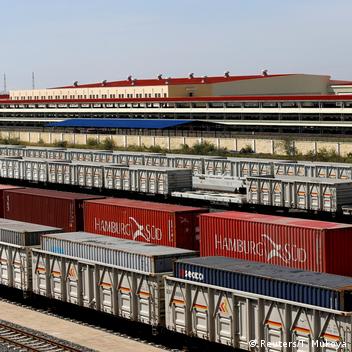
Picha: Reuters/T. Mukoya
MATANGAZO
Kulingana na waziri wa Uchukuzi wa Kenya James Macharia, amri hii inaambatana na agizo la viongozi wa Jumuiya ya Afrika Mashariki la kuzuwia virusi vya corona kusambaa wakati madereva wa malori wanasafirisha bidhaa.
Waziri Macharia anasisitiza kuwa manufaa ni mengi zaidi kwa wafanyabiashara hao kupokea mizigo yao kutokea Naivasa badala ya bandarini Mombasa.
Bandari ya nchi ya kavu ya Naivasha inasadikika kuwa na vifaa vinavyohitajika kama vilivyoko Mombasa kurahisisha shughuli ya kusafirisha mizigo.
Kadhalika mbali ya kuwako nafasi ya kutengeza afisi za muda kwa kampuni husika, makasha matupu yatasafirishwa moja kwa moja hadi Mombasa bila malipo ya ziada.
Kimsingi hakuna malipo ya ziada baada ya kupokea mizigo kwenye bandari ya nchi kavu ya Naivasha na kwa sasa wafanyabishara hawatozwi chochote kuhifadhi makasha yao kwenye mabohari hayo.
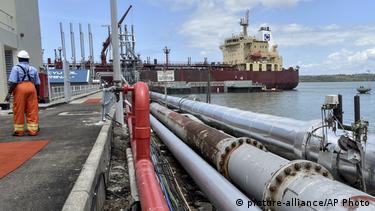
Bandari ya MombasaPicha: picture-alliance/AP Photo
Wadau wataka wateja wapewe chaguo
Hata hivyo wafanyabishara wa kusafirisha mizigo kwa malori ya safari ndefu wana mtazamo tofauti. Dennis Ombok, Afisa mkuu mtendaji wa chama cha wafanyabiashara wa kusafirisha mizigo nchini Kenya, anasema SGR ni njia moja ya usafiri na barabara ni nyengine.
"Tunachokiomba kwa serikali ni kuwe na usawa na haki ili mteja aweze kuamua mfumo wa usafiri anaoutaka."
Takwimu za Wizara ya Uchukuzi ya Kenya, zinaashiria kuwa mfanyabiashara atahitaji kati ya dola 1,930 na 2180 kusafirisha kasha la futi 20 na 40. Waziri wa uchukuzi anashikilia kuwa ipo mipango ya kuifufua reli inayoziunganisha Mombasa na Malaba iliyoko mpakani.
Hata hivyo hatua hii imepingwa na washika dau wa eneo la Afrika Mashariki.
Wiki iliyopita Uganda iliirai Kenya kulitathmini upya agizo la kupokea makasha kutokea Naivasha bila mafanikio.
Msimamo wa Uganda unaungwa mkono na washika dau wa Kongo, Rwanda,na Sudan Kusini.
Viongozi wa pwani wana hisia mseto na kusisitiza kuwa wakazi watapoteza nafasi muhimu ya kuchuma pato la kila siku.
"Hali ya uchumi au hali ya biashara katika kaunti ya Mombasa imekuwa mbaya sana. Na tegemeo kubwa kabisa la watu wa pwani ni port (bandari).Na ikiwa mizigo haitachukuliwa na magari pale port italeta shida sana," amsema Issa Boy Juma, seneta wa Kaunti ya Kwale.
Hii leo Waziri wa Uchukuzi wa Kenya James Macharia anatazamiwa kufika bungeni kuelezea hatua hii mpya ambayo imezua mitizamo tofauti. Ili kufanikisha mipango hii, shehena ya kwanza ya makasha 200 ya futi 20 ilihamishwa kutokea Mombasa hadi Naivasha kwa reli tarehe 7 mwezi wa Mei.
"Hali ya uchumi au hali ya biashara katika kaunti ya Mombasa imekuwa mbaya sana. Na tegemeo kubwa kabisa la watu wa pwani ni port (bandari).Na ikiwa mizigo haitachukuliwa na magari pale port italeta shida sana," amsema Issa Boy Juma, seneta wa Kaunti ya Kwale
Wenye maono ya miaka mingi mbele Dubai DP World na Kigali DPWK wameona mbali sana kuliko bunge la chama kimoja lililopitisha sheria / mkataba, Dodoma Tanzania Juni 10, 2023
DP WORLD NA DPWKigali wamemaliza dili matumizi ya bandari, gati na reli bure
HISTORIA INAJIRUDIA TENA TANGANYIKA 2023 BADALA YA DAR ES SALAAM NA KIGOMA SASA ITAKUWA KIGALI
The Kigoma Protocol on 5 August 1924 : Goods to and from the Belgian colonies in Central Africa could pass tax-free via the railway. The Belgian government entrusted the operation to a private company, the Belgian East African Agency, which later became the International Maritime Agency (AMI)...READ MORE: Source : Belbases - Une page oubliée du colonialisme Belge en Afrique
The German colonial government in Tanganyika East Africa decided to connect Dar es Salaam with Kigoma on Lake Tanganyika, and hence with eastern Congo. The railway
reached Kigoma on 1 February 1914. On Tuesday, 30 June 1914, the line was handed over from the construction company to the railway company.
2
On the previous Sunday,
the heir to the Austro-Hungarian throne had been shot in Sarajevo. The subsequent whims of history would inhibit the Germans from using their brand-new railway for what it was meant for: transporting riches from Congo to the Indian Ocean.
3
The First World War was soon exported to the European colonies in Africa. From the
Belgian Congo, which had become a Belgian colony less than six years before the war started, troops under Belgian command invaded German East Africa (Tanganyika) in 1916 and the
town of Kigoma fell in Belgian hands on 28 July of that year (1916). What is now known as the Kigoma urban area has been the main hub connecting the lands and people around Lake Tanganyika with the Indian Ocean and the world economy since around the mid-nineteenth century. First centred in the historical town of Ujiji and linked to Bagamoyo via the central caravan route,
4
later centred in the Bay of Kigoma and linked with Dar es Salaam via the central railway line, the Kigoma urban area as a whole remained the infra-
structural pivot for traffic to and from East-Central Africa until this day.
This role as hub for the region explains why the Germans chose this place as railhead for their iron road to the riches of the Congo. However, this regional and historical importance does not mean that the global commercial and strategic importance of the region continued unabatedly.
Long-distance trade activities had seen ups and downs in the nineteenth century and the same is true for the period under scrutiny in this paper. A new boom in the economic and commercial domain was short-lived but nevertheless undeniable for almost a decade that lasted from the mid-1920s until the Great Depression. By then, however, Kigoma was no longer under Belgian control, but, remarkably, its port still was.
In 1921 the Belgians handed over the area under military occupation, including the town of Kigoma, to the British, but they were granted privileges and a concession in Kigoma’s port. This was part of the deal to have the Belgians evacuate the territory they had occu-
pied during the war. This deal, further including a Belgian port in Dar es Salaam on the Indian Ocean shores and a privileged use of the central railway, gave the Belgian Congo and the new Belgian mandate territories of Ruanda-Urundi an all-Belgian outlet to the
Indian Ocean.
Legally, this Anglo-Belgian agreement is quite straightforward; granting
the Belgians some privileges and concessions on the Tanganyika Territory, which had be-come a British mandate territory in the aftermath of the war.
However, the implementa-
tion on the ground opened a window of opportunities for all parties involved. This led to a short-lived boom of the Kigoma-Dar es Salaam connection in the late 1920s and early 1930s. One could expect Kigoma to be the minor one of the two ports, funnelling goods to and from the proper Indian Ocean port at Dar es Salaam, but in fact it was the other way around with Kigoma being the place where the formalities, transactions, logistics,
shipping, and handling were primarily taken care of, hence being the actual command centre of the Belgian bases (also referred to as Belbases).
In this paper, the focus is on the heydays of Kigoma’s role as an inland Indian Ocean port in the 1920s and early 1930s. The success was made possible by both stretching and not
insisting too much on the legal rights of the Belgians in the port of Kigoma, which de
facto meant that on the one hand all port activities took place in the Belgian-run port,
and on the other hand the Belgians did not make use of prerogatives which would have required a distinction between Belgian and British port activities.
Thus, not only could the agreement as such be seen as an exception to a territorial order in the narrow sense, but also locally, within the port of Kigoma, the spatial organization and the operation of the port was kept ambivalent.
Kigoma’s long tradition of connecting worlds, its infrastructural connectivity, and the institutional peculiarities of the “Belgian” port, which is at the heart of this article, make the town a fine example of what Matthias Middell and Katja Naumann described as
portals of globalization, namely “places that have been centres of world trade or global communication, have served as entrance points for cultural transfer, and where institutions and practices for dealing with global connectedness have been developed.”
5
Thispaper in particular focuses on the institutional and informal construction of the lake port of Kigoma as a Belgian Indian Ocean port on British territory. The story starts with the Belgian occupation during and immediately after the First World War, followed by
privileged presence guaranteed by a British-Belgian treaty, and reaching a decisive turning point in the early 1930s. Primarily highlighting the interwar period, I reveal how
territorial ambiguity and improvised pragmatism defied the lines of sovereignty and territoriality in the colonial period, both on the local and the international level.
As such, this paper can be seen as an exercise in colonial history after the spatial turn.
First World War: Settling European Scores (1914–1921)
During the First World War, troops under Belgian command conquered parts of German East Africa as far east as Morogoro, less than 200 km from the Indian Ocean coast.
However, only in the westernmost part of the colony, including Kigoma and its port, did they install an occupation government, leaving the rest of the territory to the British.
6
By the end of the war, though, it became clear that the Belgians would not be allowed to maintain their control in the area. As a matter of fact, the northwestern part of the
former German East Africa (Tanganyika) had never been Belgium’s first priority; they had hoped to use
these territories as diplomatic currency in order to obtain land close to the mouth of the Congo or to loosen the free trade obligations placed on the Belgian Congo.
7
In the end, however, the Paris Peace Conference would result in Belgium getting the mandate over Rwanda and Burundi, as well as a perpetual lease, for one Belgian franc per year, of the port sites in Dar es Salaam and Kigoma, allowing Belgian transit to and from the Belgian
Congo, Rwanda, and Burundi, free of dues, fees, deposits, or guarantees of any description.
In one way or another, the port of Kigoma would stay under Belgian management
for almost 80 years, despite British rule and Tanzanian independence.
8
The extraterritorial Belgian privileges in the British mandate territory of Tanganyika that was about to be founded were the result of an often neglected chapter of the 1919 Paris peace negotiations, which dealt with the parts of German East Africa (Tanganyika) the Belgian-led troops had conquered and still occupied at the time.
The Belgian-Congolese troops had already given up Tabora but still occupied the western part of the former German East Africa, from Karema in the south to the Ugandan border in the north, including 250 km of the railway, and still having access to Lake Victoria.
Against this background, the
Belgian and British negotiators, Pierre Orts and Lord Alfred Milner, started their negotiations. They both had a strictly territorial agenda.
The outcome of their negotiations also fitted nicely within the legal framework of imperial territoriality. The British got
the whole of Lake Victoria and almost all of Lake Tanganyika’s eastern shore, including the railhead at Kigoma. Belgium got the mandate over Rwanda and Burundi, two semi - autonomous districts in the northwest of the former colony.
9
Territorially the Belgians
got just over five per cent of German East Africa’s (Tanganyika) total surface, but demographically this
represented over 40 per cent of the population.
10
Up until this point, Orts and Milner practised business as usual, carving up the colonial cake amongst European colonizers,
thereby respecting the power relations between them. The devil, however, is in the details. The compromise Orts and Milner struck about Kigoma and Belgian access to the Indian Ocean met both the territorial strategic desires
of the British and the economic strategic desires of the Belgians. Roughly speaking, the Belgians relinquished the land, but could do what they wanted on from then on British territory.
This led to a port of Kigoma – as well as a section of the port of Dar es Salaam Tanganyika that was nominally British but Belgian in its operations. The outcome was an extraterritorial Belgian Indian Ocean port more than 1000 km from that ocean.
11
The Orts-Milner Agreement was an agreement of principle, which was signed on 30 May 1919 and accepted by the Paris Peace Conference. The most important part of the
agreement was undoubtedly the Belgian mandate over Ruanda-Urundi, which became part of the 1923 mandate agreements of the League of Nations.
In the context of this research, however, we are more interested in the deal on Belgian traffic through East Africa, including concessions in Kigoma and Dar es Salaam.
This part of the agreement
was turned into the Convention between Great Britain and Belgium with a View to Facilitate Belgian Traffic through the Territories of East Africa on 15 March 1921.
12
The convention consists of a preamble and 12 articles. In the preamble, the contract-
ing parties declare that the convention, which gives effect to the agreement of principle mentioned above, is an outcome of the joint efforts in Africa during the First World War and is meant to give access to the sea to portions of the Belgian Congo as well as to the
mandate territories of Ruanda-Urundi.
The central article of the convention was Article 2, which specified the underlying principle of freedom of transit to and from the Belgian Congo and Ruanda-Urundi across
East Africa. Additionally, it stated that there shall be no distinction with how British
persons, mail, goods, ships, railway carriages, and trucks were to be treated. Traffic to and from the Belgian Congo and Ruanda-Urundi was exempt from all customs duty or other similar duties, except for a charge of 25 cents per parcel.
However, if the transit
passed through the Belgian concession ports of Kigoma and Dar es Salaam, even this 25 cents charge was not due. Article 5 stipulated the perpetual lease of suitable sites in the ports of Kigoma and Dar es Salaam for an annual rent of 1 Belgian franc.
Apart from compliance with British law and order, the Belgians were free to do as they consider suitable within the limits of these sites, and had the right to entrust the workings of the sites to concessionaires for dura-
tions of up to 25 years (Article 6).
Article 9 freed the Belgian sites from any interference from the British customs authorities for goods in transit to or from the Belgian Congo and Ruanda-Urundi. Moreover, Belgian-sealed trucks or wagons on the Kigoma–Dar es Salaam railway were also exempt
from all British customs formalities (Article 10).
This meant that the Belgians could act independently from British interference as far as transit to and from Belgian colonial
territories through the concession sites and using the central railway was concerned. The British merely had the right to be present at all times.
The convention was signed in London on 15 March 1921. One week later, the Belgians
ended their occupation that had lasted for five years, and handed over the District of
Kigoma to the governor of Tanganyika.
14
Upon return from Kigoma, the governor-general of the Belgian Congo wrote to the minister of colonies: “Les Anglais se rendent compte que Kigoma n’a d’intérêt que pour nous” (The English are aware that Kigoma is only of interest to us).
15 What he omitted, though, is that the Belgian interest in Kigoma was also limited only to the port and railway.
Territorial Ambivalence and Improvised Globalization
in the Golden Decade of the Belgian Bases Pierre Ryckmans, who would become the most influential governor-general and chief
ideologist of Belgian colonialism in the decades to come,16 stayed in Kigoma in 1918.
Congolese troops returned from the military operation of Mahenge Morogoro Tanganyika with meningitis,
which led to a forced quarantine during which Ryckmans kept himself busy with investigations into the history of the region under German occupation. His focus was on Burundi, not on Kigoma.
17
Kigoma was a suitable place from where to look into areas of interest, but did not attract much attention itself. Similarly, it would become a pivotal place through which to connect areas of interest, but was not seen as a place of interest for its own sake or put otherwise, its interest lay in its capacity to connect and dispatch, and it is precisely this attribute that became or remained Belgian. Although it did not
lead to genuine Belgian interest in the local affairs and populations of Kigoma, the crucial function in linking eastern Congo with the Indian Ocean via the lake and the railway was soon recognized by this advocate of Belgian colonialism. In a letter to the minister
of colonies in the summer of 1921, Ryckmans – by then resident and acting royal commissioner in Ruanda-Urundi, and in this capacity responsible for the administration of the Belgian bases in Kigoma and Dar es Salaam 18 made a strong plea to make maximal use of the Belgian connection to the Indian Ocean via Kigoma, Dar es Salaam, and the central railway. He considered Kigoma and Dar es Salaam to be the most “Belgian” connection between Belgium and the Belgian Congo, second only to Matadi (“la plus belge
de toutes sauf Matadi”)
Source :
The Belgian Base at Kigoma’s Rail-head (1920s-1930s). Territorial Ambivalence in an Inland Indian Ocean Port by Geert Castryck
References :
Bodleian Library of Commonwealth and African Studies at Rhodes House, Oxford (RHO), MSS. Afr. s. 900 (1),
History of Central Railway by C. Gillman.
Chrétien, Jean-Pierre, “Le «désenclavement» de la région des Grands Lacs dans les projets économiques alle-mands au début du XXe siècle”, in: Département d’histoire de l’Université du Burundi (eds.), Histoire sociale de l’Afrique de l’Est (XIXe-XXe siècle): actes du colloque de Bujumbura (17-24 octobre 1989), Paris 1991, p. 342-343.
For more information on the nineteenth-century history of the area, see:
Norman R. Bennett, Arab Versus European: Diplomacy and War in Nineteenth-Century East Central Africa, New York 1986, and
Beverly B. Brown, Ujiji: The History of a Lakeside Town, Boston University 1973 (PhD Thesis).
$7BN unajua? hiyo ni GDP ya nchi kama Burundi Rwanda Bokinafaso.....Ethiopia ni 7 B dollar
Skudu makudubela
JF-Expert Member
- May 20, 2023
- 561
- 1,112
Around 2.5B USD SIO 7Ethiopia ni 7 B dollar

Bams
JF-Expert Member
- Oct 19, 2010
- 19,362
- 48,879
Hajauza bali amewapa. Kinachouzwa si utaambiwa na bei? Waarabu wamepewa bila ya kulipa chochote.Maza ameshauza tayari
Source? Otherwise ni stories za kijiweniDP World siyo watu wa mchezo mchezo, vyanzo vyao vya habari vinasema kwa kuanzia tu wanawekeza Dollar za Kimerekani million 500. Piga mwenyewe hesabu kwa 1fedha za kwetu.
Wataanza kwa kuhakikisha wanaweka mfumo wa kisasa wa TEHAMA unaosomana na na idara zingine zinazohusika papo kwa papo. Mfumo utawezesha kung'amua mizigo imepakiwa wapi, saa ngapi, ipo wapi na lini itafika bandari ya Dar. Pia mteja mwenye mzigo ataweza kuufatilia mzigo wske toka anspoukabidhi kusafirishwa, ulipo na mpaka unamfikia.
Ni mabadiliko makubwa sana na ya jisasa ya kiuendeshaji wa kazi za bandari na tuliyonayo sasa.
Mfumo huo zautaweza kuibua mapungufu ya idara zote zingine zinazozembea.
Mfumo utakuwa na "hot backups" wakati wote, Inamaanisha tusahau bandarini kuambiwa mtandao haufanyi kazi.
Mama anaupiga mwingi kweli kweli.