Tanzania imeagukia mikononi mwa Ukoloni mamboleo ?
Imekubatia mabeberu na madalali wa ukoloni mambo leo wa nchi za ulaya, Russia, Mashariki ya Kati, Nchi za ghuba na Asia bila kujiuliza kwa kina kwa hoja tunduizi njama kubwa za mabeberu na makuadi wao.
Wasomi maprofesa wa kiTanzania UDSM, Mzumbe University n.k kimyaaa... hawafanyi wala kujitokeza majukwaa kutumia elimu yao ya juu kabisa kudadavua njama hizi kuu
26 April 2026
Port imperialism, Sudan, Israel and the gulf states - Mohamad Hassan
View: https://m.youtube.com/watch?v=QxAtxBfg8Oc
Comrade Professor Mohammad Hassan, former Ethiopian diplomat, veteran communist and a friend of Eritrean independence speaks at our Southall Seminar on Sudan.
Professor Hassan gives a weekly TV political education class and current affairs program that is broadcast to the entire Horn of Africa.
He gives a background to the geopolitics of Sudan, talks about its rich resources and history and notes that it has all the resources to be a prosperous country: land, water, oil, gold, people!
It was the biggest country in Africa. The people were prosperous before it was colonised. It could feed the world - Why should they suffer?
Above all, leadership and vision decide everything! The crime of Khruschevite revisionism limited the scope of action and vision of the Sudanese and Middle Eastern communist movement.
They lost the will and ability to fight for independence and to take the wealth and organise society for our liberation.
Comrade Hassan notes also the role of French imperialism in slaughtering 10,000 Arabic teachers in order to make the “Pygmi” language of French the lingua franca of their African Empire. Which it remains to this day.
The Abraham accords are only signed by Bahrain and the Emirates. Those tiny states are sectarian extensions of imperialism, and along with Israel are designed to police the entire region.
To that end they have embarked on a program of “port” imperialism, to control the strategic waterway of the Red Sea and its African and Arabian coastline. In this way they can dominate not only the key trading routes of the world, but the adjoining nations access to those key waterways - it is this that is responsible for the ills of the region
Source : Proletarian TV
10 May 2025
Profile Q & A – “My Struggle for Eritrea and Africa”: Decoding President Afwerki’s Vision with Professor Mohammed Hassen
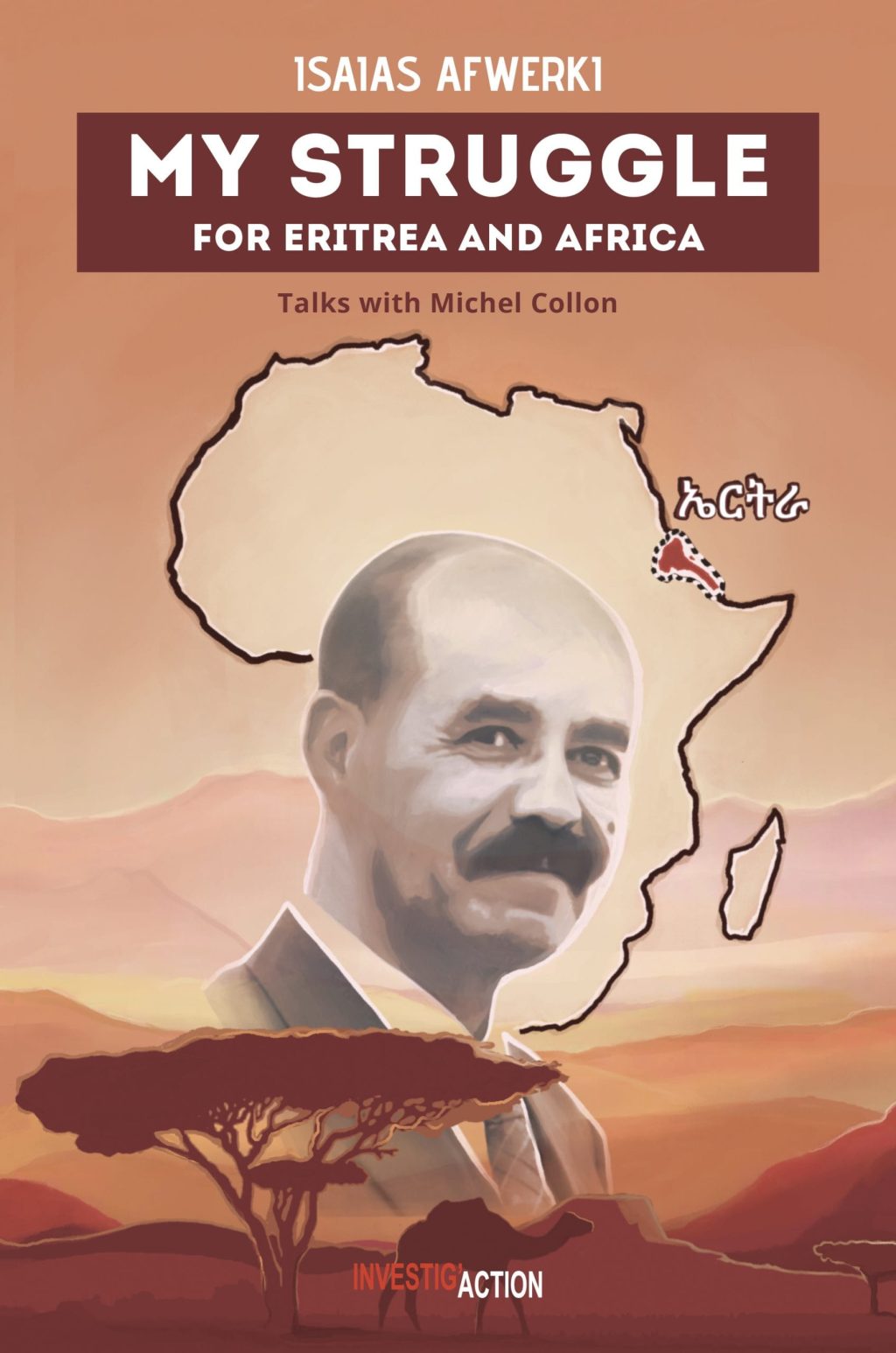
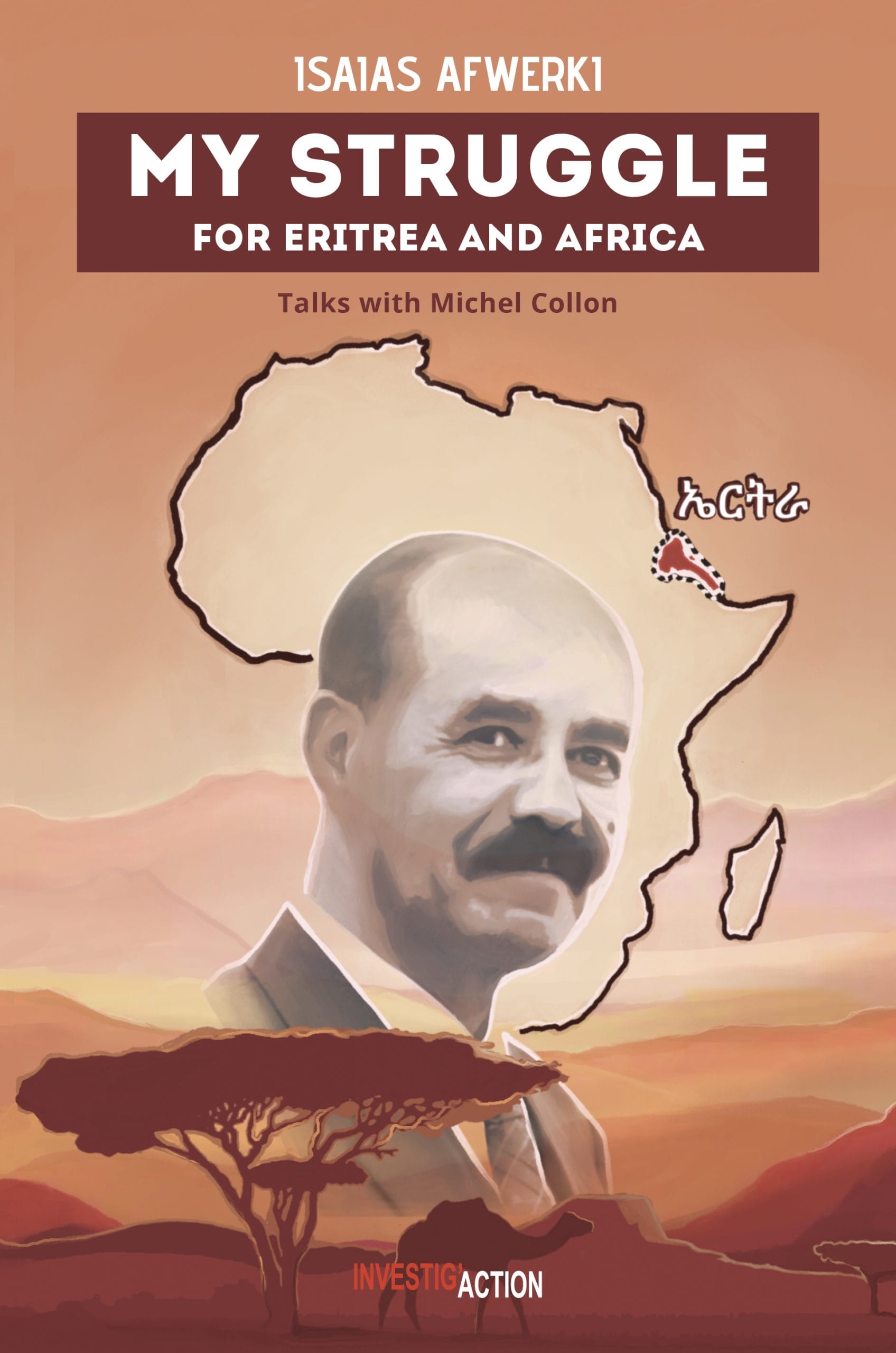
Distinguished Ethiopian historian and scholar of Ethiopian Studies, Professor Mohammed Hassen, brings his critical lens to the Horn of Africa’s history and politics. His analysis, shaped by his background and diplomatic experience, challenges dominant narratives and explores marginalized perspectives. As a contributor to the upcoming book “My Struggle for Eritrea and Africa,” Professor Hassen offers insight into President Isaias Afwerki’s vision for Eritrea, the continent, and the world, emphasizing the crucial role of historical awareness for the younger generation’s understanding of Eritrea’s path to success. Excerpts of the interview Professor Hassen conducted with Eritrea Profile and Eri-TV follows.
* * *
1: Professor Hassen, given your emphasis on deconstructing dominant narratives, what specific aspects of President Isaias Afwerki’s perspective, as presented in “My Struggle for Eritrea and Africa,” do you find particularly compelling or challenging to existing interpretations of Eritrean and regional history?
For over two decades, a persistent negative media campaign has targeted Eritrea. As a resident of Belgium and a member of the Labor Party, I witnessed firsthand how these distorted narratives portrayed Eritrea, its Head of State and Government in pejorative terms.
Major media outlets, both large and mid-sized, disseminated this image without critical analysis, driven by an agenda focused on “regime change”. This prompted discussions with colleagues, including media expert Michel Collon. In January 2010, I visited Eritrea, already familiar with its liberation struggle but eager to experience the reality firsthand.
My interview with President Isaias Afwerki profoundly impacted my understanding. Shortly after my return, renewed media attacks on Eritrea surfaced. Encouraged by my experience, Michel also visited the country. His first trip to sub-Saharan Africa, too, left him impressed. We engaged with various individuals and produced the documentary “Eritrea: Come and See,” borrowing President Isaias’s phrase. Released in 2014, in French and English, the film reached millions, offering an Eritrean perspective rarely seen in mainstream media. Following the documentary’s success, we formed a solidarity committee to foster people-to-people engagement.
We brought approximately 300 individuals from Europe—Belgium, Italy, Spain, and the Netherlands—to Eritrea, encouraging firsthand understanding over filtered narratives. Despite lacking the resources of major media outlets, our grassroots efforts gradually countered the dominant discourse.
We translated Eritrean documents into Spanish, Dutch, French, English, and Russian, and launched a website to support global awareness. We began to question the nature of the propaganda itself.
The first step, we observed, was the dehumanization of leadership, particularly President Isaias. Our interviews revealed the necessity to document and share his long-term vision, especially with younger generations across Africa. His concept of “a good neighborhood,” for instance, challenges the divisive framing of regional relations.
Contrary to portrayals of perpetual conflict between Eritrea, Ethiopia, and Sudan, his approach emphasizes cooperation among neighboring states. This vision threatens external interests benefiting from disunity, leading to efforts to isolate Eritrea and suppress such ideas.
“My Struggle for Eritrea and Africa” stems from our extended interviews with President Isaias. It explores not just his political life, but his pan-African vision, advocacy for sovereignty, and role in Africa’s longest liberation struggle.
Our goal was to present his perspective, particularly to younger readers across the continent. Currently available in English and French, it will soon be translated into Somali and Arabic, with plans for Amharic for Ethiopian audiences. It’s imperative that Africa’s youth understand the legacy, ideas, and strategic thinking of one of the continent’s most experienced leaders.
- The book highlights President Afwerki’s vision for Africa’s “awakening.” How does this vision align with—or challenge—your own understanding of the historical and contemporary challenges facing the Horn of Africa, especially regarding self-determination and regional cooperation?
In 2013 or 2014, we published a three-part article, “What You Are Not Supposed to Know About Eritrea,” a strategic journalistic piece aimed at revealing overlooked truths. It received significant attention on major platforms in the U.S., Canada, and elsewhere. With Ruth Simon’s assistance, we translated and integrated it into a broader initiative to explore Eritrea’s regional role.
Central to this was President Isaias Afwerki’s worldview, whose leadership and commitment to Eritrea’s independence merit deeper reflection. His role in Eritrea’s liberation, arguably Africa’s longest armed struggle, occurred in a geopolitically complex environment, with superpowers and regional actors opposing the Eritrean cause. Despite this, Eritrea prevailed.
Post-independence, the Eritrean leadership cooperated closely with the transitional Ethiopian government, where I served as a diplomat. This cooperation, the “honeymoon period,” lasted seven years until external forces undermined it, fearing strong regional alliances. In 2018, the peace agreement between Prime Minister Abiy Ahmed and President Isaias rekindled hope, but was challenged by external players who exploited internal weaknesses, particularly in Ethiopia, to reverse progress.
Despite Eritrea’s critical role in preventing broader regional destabilization, attempts were made to distort its intentions and marginalize its contributions. We believe Tigray’s educated and youth populations—and the region at large—deserve to hear directly from President Isaias.
A central theme in “My Struggle for Eritrea and Africa” is the interconnectedness of Eritrean independence with regional stability. The president consistently emphasizes that Eritrea’s liberation is inseparable from the broader African context. He advocates for regional integration built on mutual respect and cooperation, countering the narrative of African disunity.
This threatens foreign interests that have long profited from division and conflict. Unlike movements that have succumbed to regime change, Eritrea has remained resilient, largely due to its leadership’s strategic depth and vision.
Our interviews also explored topics like gender equality in the armed struggle, where women comprised nearly half the combatants, a fact unmatched even by revolutionary icons like Vietnam. This book was created not just for Eritreans, but for the African public, especially young people, who are under constant ideological attack and require historical knowledge and political clarity. Our aim is to introduce them to the vision of a leader advocating for African sovereignty, unity, and strategic self-reliance.
- As someone who has engaged with the Eritrean Ministry of Justice and presented at the International Conference on Eritrean Studies, how do you see the book contributing to a more nuanced understanding of Eritrea’s role in the Horn of Africa, beyond prevailing narratives?
While the EPLF published numerous documents during the liberation struggle, this book stands out by presenting not only the movement’s perspective, but also President Isaias Afwerki’s personal vision.
To reach broader audiences, both within Africa and beyond, this vision must be translated into accessible language and communicated effectively. Though we are not confrontational, we believe raising political consciousness requires strategic communication and outreach.
The book has already attracted interest from unexpected quarters; young people from Serbia, for instance, are keen to read it. They are curious about Eritrea’s experience building a unified state in a multi-ethnic, multi-religious society, especially as their country grapples with identity politics.
The book offers insights into how Eritrea has navigated ethnic and cultural differences without succumbing to division. The Ministry of Justice’s conference, and the International Conference on Eritrean Studies, were designed to showcase this underrepresented Eritrean narrative.
They provided a space for international scholars to engage with the reality of a nation often misunderstood or misrepresented. The Ministry highlighted not only the formal legal system, but also how Eritrean society organically resolves disputes and administers justice at a community level. The experience shared through the book reveals this “hidden Eritrea,” grounded in resilience, innovation, and indigenous problem-solving.
- You have consistently advocated for the importance of addressing “falsified history.” In your assessment, does the book effectively challenge historical distortions related to Eritrea’s liberation struggle and its subsequent political trajectory?
Yes, I believe it does. The distortion of Eritrean history was confronted and corrected, at least in part, through the 1993 referendum, where Eritreans overwhelmingly affirmed their independence. That vote was not just political, but a rectification of historical falsehoods.
However, correcting history doesn’t end there. The next step is nation-building. This book explores how Eritrea has pursued a unique model of state formation in a multilingual, multi-faith society. It offers valuable lessons, especially in contrast to Ethiopia’s approach, which institutionalized ethnic divisions and brought the country to the brink of collapse.
Eritrea, on the other hand, has fostered a policy of peaceful coexistence, a “good neighborhood” principle, despite political differences. The idea is simple: work together, respect differences, and understand that there is no natural contradiction or hatred between peoples.
- Given your focus on marginalized groups, what insights does the book offer—if any—into the perspectives and experiences of diverse segments of Eritrean society under President Afwerki’s leadership?
Eritrea, once an Italian colony, developed a strong industrial base, second only to South Africa on the continent.
However, when the British defeated the Italians, they dismantled nearly ninety percent of that capacity, driven by geopolitical interests. Later, distant powers sought to use Eritrea as a strategic military outpost due to its extensive coastline. The U.S., supporting a feudal Ethiopian regime, orchestrated a forced union between Eritrea and Ethiopia under the guise of federalism, despite Ethiopia lacking a constitution.
This deception sparked a prolonged struggle in Eritrea, centered on self-determination through a referendum. But beyond that, there was a deeper vision: what kind of nation-state should Eritrea become? What economic foundation would support it? How could it build a harmonized society rooted in equality?
In Eritrea today, all languages are considered national and treated with equal respect, reinforcing a diverse yet unified national identity. Programs like Sawa, often misrepresented and disparaged, serve as crucial nation-building tools, bringing together youth from all backgrounds to forge a shared identity. Those attacking Sawa aim to weaken Eritrea by undermining its unity and removing its youth. By targeting the Head of State through propaganda, they obscure the tools that hold the nation together.
But these narratives are weakening, and the Eritrean experience, rooted in resilience and a clear vision, has kept the country on a steady course.
- The book presents President Afwerki’s perspectives on peace and prosperity in the Horn of Africa. How do you reconcile these perspectives with the region’s ongoing challenges, and what role does Eritrea play in fostering stability?
The book is primarily aimed at youth in the region. Growing up in Ethiopia, I was exposed to decades of false propaganda about Eritrea. But that narrative is crumbling. Four years ago, Eritrea showed its true face—one of solidarity—when it supported Ethiopia in a time of crisis. Today, the propaganda machinery in Ethiopia is weak. Despite efforts by external powers and some local actors with financial backing to portray Eritrea negatively, public perception is shifting.
Young people are beginning to question why Eritrea is succeeding while Ethiopia appears on the brink of collapse. I often engage in discussions with fellow Ethiopians, using this book to stimulate awareness and reflection. President Isaias Afwerki’s vision is grounded, coherent, and forward-looking. Unlike other nations in the region, Eritrea operates with a long-term vision despite its smaller size. Those countries gained independence earlier and maintain large armies, yet lack the clarity and consistency of purpose reflected in this book. It is not a personal biography, but a presentation of a national vision that invites comparison and inspires rethinking of governance and leadership.
- As a scholar who has studied state-formation processes, what observations can you make about President Afwerki’s approach to state-building in Eritrea, as reflected in the book, and how does it compare to other regional models?
State formation is inherently difficult. Eritrea, only 34 years into its independence, has made significant strides that many older African states have yet to achieve. A foundational milestone is the establishment of a shared national identity.
In Eritrea, people don’t primarily identify by ethnicity—Saho, Tigrigna, or otherwise—but as Eritreans. This sense of unity remains elusive in many parts of Africa. Failing to build that base opens the door to division and foreign interference. While diversity is a strength, it can also be exploited if not managed wisely.
Even in countries with relative homogeneity—where a common language and religion exist—conflict still persists, proving that unity requires more than surface-level similarities. Eritrea’s state-building efforts, though young, are notable for their emphasis on inclusivity, cohesion, and a clearly articulated national vision.