Rais Joe Biden awaalika Viongozi wa Africa kwa majadiliano Washington
Our Community
Regional Communities
Navigation
Install the app
How to install the app on iOS
Follow along with the video below to see how to install our site as a web app on your home screen.
Note: This feature may not be available in some browsers.
More options
Style variation
You are using an out of date browser. It may not display this or other websites correctly.
You should upgrade or use an alternative browser.
You should upgrade or use an alternative browser.
Rais Joe Biden awaalika Viongozi wa Africa kwa majadiliano Washington
- Thread starter bagamoyo
- Start date


4by94
JF-Expert Member
- Oct 1, 2019
- 9,214
- 8,306
hahaa mfumo wa maisha wa wachina hawawez kudumu Afrika maana wao wanataka kuja kbs huku huku imagine Wapo wachina wanapiga debe bongo huku wengine walianza kuuza mahindi hahahaa , ss kwa urafik huu hatuez dumu lazima tuwatimue tu anytime maana hawana faida , Wazung huez wakwepa maana wanakuja na fursa zinazowalenga wananchi direct , jana nmekutana na mdada wa kiarabu anasema anafanya kaz ubaloz wa USA hapa Tz na yupo kitengo cha Youth Foundation anasema lengo lao mojawapo ni kuwawezesha watoto wasiojiweza au walio mazingira magumu just imagine after 15 yrs kizaz km hiki utakiambia nn juu ya Wazungu kikuelewe ? so west wana long term plan ila hawa wachina ni njaa tuHiyo ndiyo sababu kuu. Lengo la USA ni kuziwekea uzio Russia na China zisipate urafiki na kuungwa mkono Africa. It's too little too late, hata wao na ukoloni wao hawajafanya chochote cha maana. Wote wanatafuta kujinufaisha na raslimali za Africa tu.
4by94
JF-Expert Member
- Oct 1, 2019
- 9,214
- 8,306
hahahaaaHapo mama ni kama tarehe haifiki lazima azamie
4by94
JF-Expert Member
- Oct 1, 2019
- 9,214
- 8,306
hahahaaaa kuwa hawavutiiHawavutii tena
4by94
JF-Expert Member
- Oct 1, 2019
- 9,214
- 8,306
mfumo wa utawala wa warusi hauez dumu baran Afrika maana waafrika wanataka ela za dezo Putin atazitoa wap na yy anahitaj kutupiga ilivyo na hapo ndo tutashindwana , ila west wanajua madhaifu yetuAsante Russia kwa kutueshimisha leo hii tunaalikwa sio shit hole tena USA ameona ameanza kupoteza ushawishi wake duniani ndio mahana anawaalika kabla ya Russia kufanya alichofanya ukraine ilikuwa inapigwa simu tu tena siyo na rais wa marekani bali waziri wa mambo ya nje unapewa order then una follow ukikataa wanakukatia misaada putin amewafundisha nchi nyingi kuwa west awapo kama vile walivyokuwa wanatukalilishwa yaani watu smart,grnius etc. baada ya kuona Russia amepania kuja kuwekeza na kuleta tech yake africa na wao ndio wanaamka uzuri wa sisi tanzania atufungamani na upande wowote akija Russia sawa akija USA na yeye sawa ..

zimmerman
JF-Expert Member
- Feb 17, 2011
- 1,644
- 3,176
Aidha hauna taaarifa sahihi au maksudi hutaki kukubali kuwa mazingira yaliyopelekea hivyo viwanda kufa ni mazingira yaliyowekwa kimkakati na hao hao wapanga mifumo ya uchumi wa dunia ili viwanda hivyo kwa vyovyote vile vife.Hivyo viwanda unavyoviongelea vingi viliachwa na wakoloni au vilijengwa kwa msaada baada ya uhuru na vilikuwa vinaendeshwa kwa hasara. Kama viwanda vingekuwa ni vinaendeshwa vizuri wala tusingetegemea misaada ya Wamarekani yenye masharti mengi.
Sioni tofauti kati ya "Power Africa" ya Biden na SAPs za miaka ile. Ni mifumo ile ile ya kibeberu ya kutaka daima Africa libaki kuwa soko la magharibi. Kwani ufumbuzi wa tatizo la umeme halijulikani? Maliza bwawa la Nyerere siyo kujikusanya kama mazombi Washington.
Kwamba hivyo viwanda walivijenga wakoloni au viliachwa na wakoloni hilo ntakujibu baadae.

Bukyanagandi
JF-Expert Member
- Jun 24, 2009
- 11,061
- 16,753
Wasiwafanye Waafrika wajinga mbona miaka yote tangu mataifa yaUSAID
POWER AFRICA DEVELOPMENT PARTNERS
Power Africa has established formal partnerships with key stakeholders, including multilateral organizations, government and development finance institutions as well as technical agencies, working in Africa’s energy sector. Through joint Memoranda of Understanding (MOU), Power Africa is working creatively and collaboratively with these partners to leverage collective technical expertise, financial resources, and tools to overcome Africa’s significant energy deficit, increase productive uses and economic opportunity and ultimately reduce poverty for tens of millions of citizens in sub-Saharan Africa
Specifically, Power Africa aims to spur additional public and private sector investment, improve energy generation and transmission capacity, and improve enabling environments to ensure sustainable electricity access for years to come.
If you are interested in joining Power Africa as a development partner, please contact powerafrica@usaid.gov.
zimmerman
JF-Expert Member
- Feb 17, 2011
- 1,644
- 3,176
Upo sahihi, Africa hana uncle wala aunt kokote huko duniani: si mmarekani, si mchina, si mrusi. Tofauti ya mchina na mrusi na mmarekani ni namna wanavyofanya biashara zao. Mchina atakwambia straight kwamba mi siyo uncle ako wala aunt yako hapa tunafanya biashara nipe hiki nikupe hiki. Kwangu mimi mchina ni mtu simple kudeal naye na hana viajenda ajenda. Mrusi hajawekeza sana Afrika na sioni interest ya Urusi Afrika miaka ya hivi karibuni zaidi ya kuuza Kalashnikovs zake. Sasa njoo kwa marekani na washirika wake. Yaani tab tupu. Marekani anataka akutawale kuanzia unavyofikiri, unavyovaa hadi unavyokula kupitia slogans zake za uhuru, demokrasia na utawala bora. Shida ya msingi niliyonayo kwa Mmarekani ni vile vimifumo vyake vya kuitawala Afrika na dunia visivyoacha nafasi ya waafrika kujitambua na kujitegemea kwa ajili ya vizazi vyetu vijavyo. Ilifikia wakati kuna kizazi cha Tanzania kiliibuka na kuanza kujichukia na kuimba eti bongo bahati mbaya. Na anapotokea kiongozi wa Afrika anayejitambua atapigwa vita hadi ikiwezekana auawe kama ilivyokuwa kwa Patrice Lumumba, Sonkor, Ghadafi na hapa kwetu hivi karibuni Magufuli. Wanawapenda sana viongozi wa Afrika mazombi.sio marekan tu hata warusi walipambana iwe hivyo lengo wapate soko la viwanda vyao na ajira kwa watoto , ni kituko mtu kupoint USA as if kuna upande mwema kwetu waafrika , its too funny , lzm tuamke na kimufight kiume haya mambo ya kujibebisha tutachukua miaka kupiga hatua
- Thread starter
- #70
22 July 2022
SASA JUMUIYA YA AFRIKA MASHARIKI KUIPIKU UKRAINE NA RUSSIA KTK UZALISHAJI NAFAKA DUNIANI
Wakuu wa nchi za Jumuiya ya Afrika Mashariki wakubaliana kuipuku Ukraine na Russia ktk uzalishaji nafaka duniani, kwa maana hiyo ukanda huu wa Afrika uwe eneo linalotegemewa kuilisha dunia kwa kiwango kikubwa kupita nchi hizo mbili za ulaya ya Mashariki.
Maziwa makuu ya Kivu, Tanganyika, Victoria, Rukwa pia mito ya maji mikubwa kama Kagera, Rufiji, Tana, Nile kwa kuitaja kwa uchache ipo ukanda huu wa Afrika bila kusahau ardhi yenye rutuba inayosubiri tu ukulima wa kisasa, uwekezaji mkubwa ktk sekta ya kilimo, uzalishaji mbolea na miundo-mbinu ya reli, barabara na bandari.
Uwepo wa wadau wengi wa maendeleo toka nje ya Jumuiya hii ktk kikao hicho cha 22 cha wakuu ni kuwa dunia imeona eneo hili la ukanda wa Afrika litakuwa ni 'mwokozi' wa usalama wa chakula / food security kwa dunia maana vita inayoendelea ya Ukraine na Russia imeistua dunia kuachana na kutegemea eneo moja la dunia liwe ndiyo mzalishaji mkuu wa chakula na inapelekea uwezekano wa njaa kutokea kwa sababu mojawapo(vita, vikwazo) na wala si uzalishaji / food insecurity : EAC Leaders Brainstorm on Modern Railroads, Food Security, Industrialisation and Vast Markets to Spur Growth
Source : Summit of EAC Heads of State commit to revitalize the bloc's Common Market
More info :
27 April, 2022
By Marina Leiva
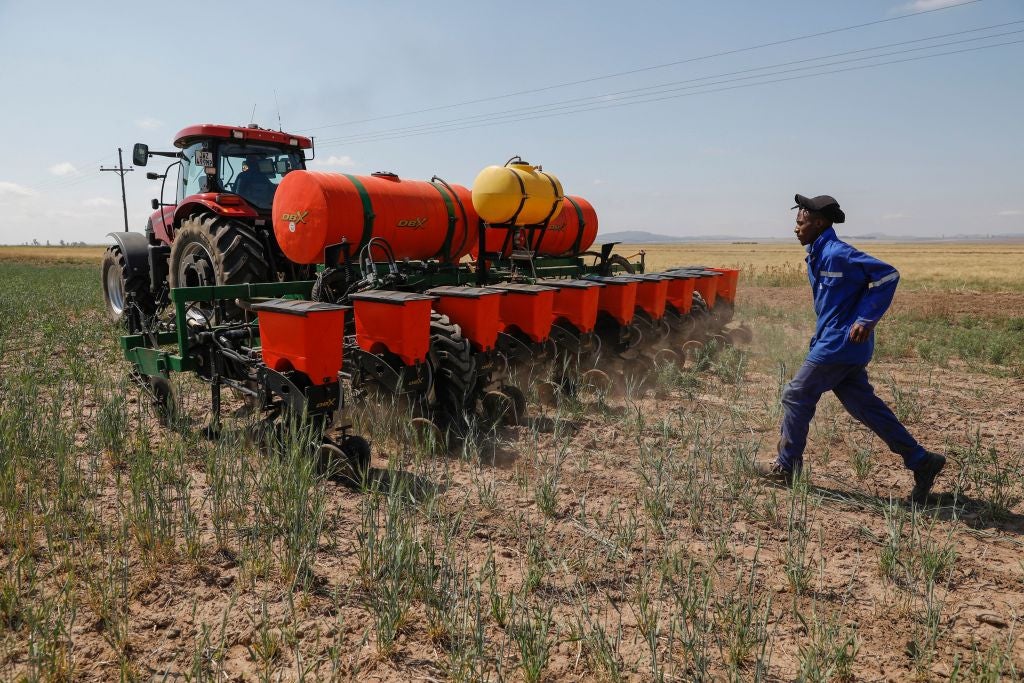 Africa has the potential to be a breadbasket for the whole world, but poor infrastructure and land grabs are holding the continent back from reaching its potential. (Photo by Phill Magakoe/AFP via Getty Images)
From an agribusiness perspective, the recent invasion of Ukraine by Russia brought to light the fragility of agricultural value chains and the reliance on so-called ‘breadbaskets’ for food imports.
For a particular region to be referred to as a breadbasket, the requirements are straightforward: produce a surplus of a particular crop or agricultural goods that are then exported across the world to countries that do not produce enough of this food to satisfy their domestic demand.
So where does Africa fit into this chain? Right now, it is all about the continent’s potential, according to Virginie Ticha, president of the International Federation of Consular Chambers for Africa.
The development of national agribusiness sectors across the continent is needed, but for this to happen countries must focus on their industrialisation processes, which are largely in a state of weakness, she says.
Improving infrastructure and hastening the industrialisation process are essential to agribusiness in Africa reaching its potential. For this to happen, Ticha says robust, high-quality value chains are vital if the continent is to move from plain agriculture to value-added agribusiness opportunities.
However, this is not something that a business investor can achieve on their own, according to Ticha. Working with the government and local communities or authorities offers the best chance of success.
Agriculture as a sector can greatly engage communities, according to Ticha, who points to France as an example, where farmers have organised themselves into cooperatives and seen their business grow rapidly.
However, the number of new foreign direct investment (FDI) agribusiness ventures in Africa has not been particularly high over the past few years. In 2019, according to our FDI Projects Database, there were 1,093 agribusiness FDI projects across the globe, but only 22 on the African continent (a 2.01% market share). In 2020, numbers went down both globally (to 976) and in Africa (to 14, a 1.43% market share) due to the effects of the Covid-19 pandemic.
Speaking to Investment Monitor, Margaret A Rugadya of the non-governmental organisation (NGO) Landesa explains that across Africa the predominant type of agriculture is smallholder production, with outputs linked to local demand and household needs, based more on subsistence than being oriented to any wider markets.
Things are starting to change, however, and as urbanisation spreads, smallholder farmers are beginning to look at these markets, according to Rugadya. In addition to this, many countries – in both Africa and the wider world – are focusing on boosting their food security, leading to them thinking about food production both domestically and beyond their national borders.
This is where foreign investors and large-scale land investments come in, says Rugadya. Smallholder farmers are not the target for large food exports, but they hold the land, which is often the first point of friction between investors and farmers. This is why land regulation is of great importance, and organisations such as Landesa are at the heart of ensuring that smallholder farmers are not at the losing end of agricultural transactions, given the work the NGO does with governments and local communities.
Landesa specialises in cases where there is no specific regulatory framework, and where investors are looking for large pieces of land, but the mechanisms for acquiring this land are not enshrined in law. It is in such cases that Landesa becomes involved to arrange a fair outcome. Rugadya cites Ghana and Kenya as countries where there has been substantial development in these areas.
Small-scale farmers sometimes have land that may look idle, may be under fallow, or that is being used for grazing, explains Rugadya, and these are sometimes grabbed by large-scale land investments. This has created widespread resentment among farmers and “a lot of fear around every other project that is announced in agriculture [in Africa], [as they are] seen as an opportunities for land grabs”, she says.
Another problem that tends to crop up is when communities “attempt to get organised and join such arrangements for large-scale production”, she adds, in which cases the farmers tend to raise financing with their land as collateral but then do not often see this reflected in the production profits later on.
These problems even exist in countries such as South Africa, which has developed a strong agriculture sector that in 2020 contributed to approximately 10% of the country’s total export earnings (with citrus fruits, wine, table grapes, corn and apples accounting for the largest exports by value). However, more positively, Rugadya says that even though land grab issues continue to pose problems throughout Africa, cases are increasingly being taken to court, which is leading to land rights being re-established, and sometimes even prompting proper land negotiations at a later stage.
“It is very possible to make Africa the largest food producer in the world,” says Rugadya, but she adds that large-scale land investments are not necessarily the way to achieve this target in a sustainable way.
Smallholders already own the land, explains Rugadya, so she believes that in order to develop the agriculture sector they are the key but need the support of governments to access wider markets, ideally as a result of gaining access to better infrastructure.
“Infrastructure that supports a farmer's access to market is usually the missing link,” she adds. In this vein, technology can help bridge some of the gaps and also motivate younger generations to seek a career in the agriculture sector.
“I have seen in Kenya groups of young people join the agriculture sector [through using their] smartphones," says Rugadya. "They have access to the markets using it. They use online platforms for their products. They have delivery systems that are coordinated on land.”
Such examples are promising signs for the future of agriculture in Africa, and indeed the wider agribusiness sector.
They also offer genuine hope that turning the continent into a global breadbasket is possible, and show that there are myriad opportunities for foreign investors in making this happen. However, foreign investors would be well advised to work with, not against, smallholder farmers, for whom it is not just their livelihoods that are at stake, but their ability to feed their families.
Source : Is Africa the next global breadbasket?
SASA JUMUIYA YA AFRIKA MASHARIKI KUIPIKU UKRAINE NA RUSSIA KTK UZALISHAJI NAFAKA DUNIANI
Wakuu wa nchi za Jumuiya ya Afrika Mashariki wakubaliana kuipuku Ukraine na Russia ktk uzalishaji nafaka duniani, kwa maana hiyo ukanda huu wa Afrika uwe eneo linalotegemewa kuilisha dunia kwa kiwango kikubwa kupita nchi hizo mbili za ulaya ya Mashariki.
Maziwa makuu ya Kivu, Tanganyika, Victoria, Rukwa pia mito ya maji mikubwa kama Kagera, Rufiji, Tana, Nile kwa kuitaja kwa uchache ipo ukanda huu wa Afrika bila kusahau ardhi yenye rutuba inayosubiri tu ukulima wa kisasa, uwekezaji mkubwa ktk sekta ya kilimo, uzalishaji mbolea na miundo-mbinu ya reli, barabara na bandari.
Uwepo wa wadau wengi wa maendeleo toka nje ya Jumuiya hii ktk kikao hicho cha 22 cha wakuu ni kuwa dunia imeona eneo hili la ukanda wa Afrika litakuwa ni 'mwokozi' wa usalama wa chakula / food security kwa dunia maana vita inayoendelea ya Ukraine na Russia imeistua dunia kuachana na kutegemea eneo moja la dunia liwe ndiyo mzalishaji mkuu wa chakula na inapelekea uwezekano wa njaa kutokea kwa sababu mojawapo(vita, vikwazo) na wala si uzalishaji / food insecurity : EAC Leaders Brainstorm on Modern Railroads, Food Security, Industrialisation and Vast Markets to Spur Growth
Source : Summit of EAC Heads of State commit to revitalize the bloc's Common Market
21 July 2022 Arusha, Tanzania.
The EAC Chairperson said that the massive infrastructure development including modern railroads on both the Northern and Central Transport Corridors was meant to reduce the cost of movement of people and goods across the region.
President Kenyatta said that if the region is not interlinked through infrastructure, it would remain a market for other nations and blocs, not a producer of commodities for sale.
He said that by exporting minerals and raw materials, the region would essentially be exporting jobs as is now the case, adding that value addition to national products was key.
President Kenyatta said that EAC had a vast opportunity to grow with its ever-expanding market and therefore reduced economic dependence on the developed world. READ MORE : source : Summit of EAC Heads of State commit to revitalize the bloc's Common Market
21 July 2022 Arusha, Tanzania . The Summit, whose theme is ‘EAC: Deepening Integration, Widening Cooperation’, will be preceded by a high-level retreat on the EAC Common Market where the East African leaders will take stock of the progress of implementation of the EAC Common Market Protocol. READ MORE : https://www.president.go.ke/2022/07/21/president-kenyatta-arrives-in-arusha-for-eac-summit/
More info :
27 April, 2022
Is Africa the next global breadbasket?
The vast African continent is rich in arable land, but turning it into a global breadbasket comes with myriad challenges.By Marina Leiva
From an agribusiness perspective, the recent invasion of Ukraine by Russia brought to light the fragility of agricultural value chains and the reliance on so-called ‘breadbaskets’ for food imports.
For a particular region to be referred to as a breadbasket, the requirements are straightforward: produce a surplus of a particular crop or agricultural goods that are then exported across the world to countries that do not produce enough of this food to satisfy their domestic demand.
So where does Africa fit into this chain? Right now, it is all about the continent’s potential, according to Virginie Ticha, president of the International Federation of Consular Chambers for Africa.
The development of national agribusiness sectors across the continent is needed, but for this to happen countries must focus on their industrialisation processes, which are largely in a state of weakness, she says.
Improving infrastructure and hastening the industrialisation process are essential to agribusiness in Africa reaching its potential. For this to happen, Ticha says robust, high-quality value chains are vital if the continent is to move from plain agriculture to value-added agribusiness opportunities.
However, this is not something that a business investor can achieve on their own, according to Ticha. Working with the government and local communities or authorities offers the best chance of success.
Agriculture as a sector can greatly engage communities, according to Ticha, who points to France as an example, where farmers have organised themselves into cooperatives and seen their business grow rapidly.
However, the number of new foreign direct investment (FDI) agribusiness ventures in Africa has not been particularly high over the past few years. In 2019, according to our FDI Projects Database, there were 1,093 agribusiness FDI projects across the globe, but only 22 on the African continent (a 2.01% market share). In 2020, numbers went down both globally (to 976) and in Africa (to 14, a 1.43% market share) due to the effects of the Covid-19 pandemic.
Risks of developing large-scale agriculture in Africa
Numbers show that in the agribusiness FDI sphere, there is a wealth of potential across the African continent, but these types of ventures can come with risks.Speaking to Investment Monitor, Margaret A Rugadya of the non-governmental organisation (NGO) Landesa explains that across Africa the predominant type of agriculture is smallholder production, with outputs linked to local demand and household needs, based more on subsistence than being oriented to any wider markets.
Things are starting to change, however, and as urbanisation spreads, smallholder farmers are beginning to look at these markets, according to Rugadya. In addition to this, many countries – in both Africa and the wider world – are focusing on boosting their food security, leading to them thinking about food production both domestically and beyond their national borders.
This is where foreign investors and large-scale land investments come in, says Rugadya. Smallholder farmers are not the target for large food exports, but they hold the land, which is often the first point of friction between investors and farmers. This is why land regulation is of great importance, and organisations such as Landesa are at the heart of ensuring that smallholder farmers are not at the losing end of agricultural transactions, given the work the NGO does with governments and local communities.
Landesa specialises in cases where there is no specific regulatory framework, and where investors are looking for large pieces of land, but the mechanisms for acquiring this land are not enshrined in law. It is in such cases that Landesa becomes involved to arrange a fair outcome. Rugadya cites Ghana and Kenya as countries where there has been substantial development in these areas.
Small-scale farmers sometimes have land that may look idle, may be under fallow, or that is being used for grazing, explains Rugadya, and these are sometimes grabbed by large-scale land investments. This has created widespread resentment among farmers and “a lot of fear around every other project that is announced in agriculture [in Africa], [as they are] seen as an opportunities for land grabs”, she says.
Another problem that tends to crop up is when communities “attempt to get organised and join such arrangements for large-scale production”, she adds, in which cases the farmers tend to raise financing with their land as collateral but then do not often see this reflected in the production profits later on.
These problems even exist in countries such as South Africa, which has developed a strong agriculture sector that in 2020 contributed to approximately 10% of the country’s total export earnings (with citrus fruits, wine, table grapes, corn and apples accounting for the largest exports by value). However, more positively, Rugadya says that even though land grab issues continue to pose problems throughout Africa, cases are increasingly being taken to court, which is leading to land rights being re-established, and sometimes even prompting proper land negotiations at a later stage.
Opportunities for Africa to become a breadbasket are still there
The problem with land grabbing shows that developing a robust, productive agriculture sector across the African continent is beset by problems, but it is by no means impossible for the continent to realise its potential and become the world's breadbasket.“It is very possible to make Africa the largest food producer in the world,” says Rugadya, but she adds that large-scale land investments are not necessarily the way to achieve this target in a sustainable way.
Smallholders already own the land, explains Rugadya, so she believes that in order to develop the agriculture sector they are the key but need the support of governments to access wider markets, ideally as a result of gaining access to better infrastructure.
“Infrastructure that supports a farmer's access to market is usually the missing link,” she adds. In this vein, technology can help bridge some of the gaps and also motivate younger generations to seek a career in the agriculture sector.
“I have seen in Kenya groups of young people join the agriculture sector [through using their] smartphones," says Rugadya. "They have access to the markets using it. They use online platforms for their products. They have delivery systems that are coordinated on land.”
Such examples are promising signs for the future of agriculture in Africa, and indeed the wider agribusiness sector.
They also offer genuine hope that turning the continent into a global breadbasket is possible, and show that there are myriad opportunities for foreign investors in making this happen. However, foreign investors would be well advised to work with, not against, smallholder farmers, for whom it is not just their livelihoods that are at stake, but their ability to feed their families.
Source : Is Africa the next global breadbasket?

James Comey
JF-Expert Member
- May 14, 2017
- 8,759
- 14,831
Umekaa wapi?asipoenda mniite UMBWA..
James Comey
JF-Expert Member
- May 14, 2017
- 8,759
- 14,831
HahaaaaaaaaaaHangaya ataenda kabla ya muda
- Thread starter
- #73
Sioni tofauti kati ya "Power Africa" ya Biden na SAPs za miaka ile. Ni mifumo ile ile ya kibeberu ya kutaka daima Africa libaki kuwa soko la magharibi.
Naona mjadala unazidi kukolea, hii ndiyo JamiiForums kwa wanaJF kuchambua kila kipengele kwa umakini mkubwa bila kupotezewa focus na maneno mazito mazito kama Power Africa n.k
- Thread starter
- #74
Wasiwafanye Waafrika wajinga mbona miaka yote tangu mataifa ya
Kina Palamagambaz (the palamagambas) walipoona maneno Development Partners wakaingia kichwa kichwa huku wakitohoa neno Development Partners kwa kiSwahili ni Wadau wa Maendeleo na kuanza kutuhubiria uzuri wa Wadau wa Maendeleo kuwa hawa ni tofauti na wengine.
Bukyanagandi
JF-Expert Member
- Jun 24, 2009
- 11,061
- 16,753
Wasiwafanye Waafrika wajinga mbona miaka yote tangu mataifa ya Afrika kujinyakulia uhuru atukuwahi kusikia Merikani ikiweka mikakati kabambe ya kuiinua Afrika kiuchumi au kusaidia katika ujenzi wa miundo mbinu - Hakuna!! Walicho kuwa wanafanya ni kuwatetea: Makaburu, Wareno, Ian Smith na CIA kuwapatia makaburu taarifa za siri walizo tumia kufanikisha kumkamata Nelson Mandela.USAID
POWER AFRICA DEVELOPMENT PARTNERS
Power Africa has established formal partnerships with key stakeholders, including multilateral organizations, government and development finance institutions as well as technical agencies, working in Africa’s energy sector. Through joint Memoranda of Understanding (MOU), Power Africa is working creatively and collaboratively with these partners to leverage collective technical expertise, financial resources, and tools to overcome Africa’s significant energy deficit, increase productive uses and economic opportunity and ultimately reduce poverty for tens of millions of citizens in sub-Saharan Africa
Specifically, Power Africa aims to spur additional public and private sector investment, improve energy generation and transmission capacity, and improve enabling environments to ensure sustainable electricity access for years to come.
If you are interested in joining Power Africa as a development partner, please contact powerafrica@usaid.gov.
Hii kitu ya Merikani suddenly kuanza kulichukulia bara la Afrika kuwa ni muhimu kwake,hii kitu inatia shaka sana sana, kuna kitu wanalenga.
Ninacho hisi mimi, hawa jamaa wana hidden ajenda tatu, ya kwanza na ambayo wanaichukulia seriously ni ujio wa Wachina barani Afrika, hii kitu inawakosesha usingizi kweli kweli , si kwa Marekani pekee bali hata mataifa ya bara la Ulaya, tumeshuhudia jinsi media zao zinavyo wakandia sana Wachina kwa kuwasingizia mambo chungu mzima yasio kuwa na ukweli wowote - Viongozi/Serikali za magharibi na media zao zilivyo za ajabu hawa zungumzii chochote kuhusu jinsi China ilivyo saidia African Nations to help themselves in terms of ujenzi wa Barbara, reli,Umeme,Mawasiliano kwa njia ya simu, Shule,Vyuo vya Ufundi, Viwanda, Hosptali nk.
Hapa swali ni: Hivi mataifa ya magharibi specifically Merikani inapozunguka Dunia nzima wakitangaza ubaya wa ujio wa Wachina barani Afrika na kwingineko hapo US wanakuwa wana na lengo gani zaidi ya Geopolitical reasons za kutaka kui-contain China kiuchumi na kijeshi, hivi US inataka bara la Afrika nalo lijiingize kwenye rivalry zao za kijinga na hatarishi.

innosaint gerald
Member
- Jan 2, 2017
- 30
- 32
Ipo wazi kuwa bara la afrika limepoteza imani kwa marekani na ulaya mpaka sasa urussi na uchina wameimarisha sana mahusiano na mataifa mengi ya afrika, hili jambo linamkosesha mzungu usingizi. Mpaka sasa ulaya na marekani wapo dilema hawajui chakufanya tena wamebaki wakiweka vikwazo ambavyo urussi anavipangua. Juzi saudi arabia kanunua tani za mafuta kutoka urussi, serikali ya mali nayo imeungana na urussi na wamekubaliana kushirikiana ktk nyanja mbali mbali ikiwemo kupambana na ugaidi hii ni dhahiri ufaransa amepoteza ushawishi nchini mali, china amejenga jengo la bunge kwenye moja wapo za nchi za kusini mwa afrika na kulikabidhi kule ulaya wanajadili namna ya kutoa pesa kwa nchi za afrika kupambana na umaskini. Binafsi naamini kuwa hata vita inayoendelea huko ukraine ni mkakati kabambe kwa mataifa ya ulaya na marekani20 July 2022
Vice President Kamala Harris Delivers Remarks on Behalf of US Delegation to CCA Summit
Via Recorded Video
Greetings from Washington, D.C.
I want to thank the Corporate Council on Africa, the Kingdom of Morocco, and His Majesty King Mohammed for hosting the 2022 U.S.-Africa Business Summit. I am honored to participate in this opening ceremony.
President Joe Biden and I recognize the critical importance of strengthening our relationship with countries across Africa.
To that end, I will start with some very important news.
President Biden and I are looking forward to welcoming leaders from across the African continent to Washington, D.C. from December 13th through the 15th, for the United States-Africa Leaders Summit.
This Summit will demonstrate America’s enduring commitment to our African partners, and it will be based on principles of mutual respect and shared interests and values.
And a critical part of this Summit will be to bolster our economic relationship, which brings me to the importance of this gathering of public and private sector leaders in Marrakech.
I believe in the power of public-private —partnerships that bring together the experience and the expertise of the private sector with the mission of government to act for the public good and with the public trust, and the reach and capacity that governments can give, uniquely, to any endeavor.
By working together, we can unleash growth and opportunity that far exceeds what either the public or private sector can achieve on its own.
And, as everyone here knows, there is so much opportunity for economic growth –in Africa and, of course, the United States—when we all collaborate and coordinate.
Africa is the world’s fastest-growing continent. By 2030, the continent will have 1.7 billion people, home to one-fifth of the world’s population. The continent is also increasingly young, urban and connected.
There is a growing demand for food, healthcare, education, technology, and infrastructure.
Yet, barriers remain: limited access to capital, the high cost of financing, and legal and regulatory bottlenecks. This is on top of the global challenges that I know are felt acutely in Africa, including recovery from the COVID-19 pandemic, the climate crisis, and food insecurity.
The Biden-Harris Administration is committed to working with all of you to address these issues, in furtherance of the African Union’s Agenda 2063.
With regard to food insecurity, we are focused on the urgent need to increase food production and exports with and within Africa, a challenge made worse by Putin’s war in Ukraine.
To this end, since last October, the United States has pledged more than $7 billion in humanitarian and food security assistance across Africa.
More broadly, our Administration’s goal is to promote inclusive and sustainable economic growth and development across the continent, to expand capital flows, and to promote the vibrant spirit of entrepreneurship and innovation that is so prevalent across Africa.
I am pleased to see the advances made in implementing the African Continental Free Trade Area and we will work with you to ensure its success.
The United States is committed to bring to bear all the tools at our disposal, including, development financing, grants and technical assistance, and support for legal and regulatory reforms—all to help our African partners thrive.
As part of this, our signature investment initiative in Africa—Prosper Africa—has convened a delegation to be with you in Marrakech. Led by Millennium Challenge Corporation CEO Alice Albright, it includes officials from 10 U.S. government departments and agencies. It also includes a group of investors who collectively manage more than a trillion dollars in assets.
Over the coming days, our delegation will discuss with you a range of issues. This includes work to advance our new global infrastructure initiative, and our work to mobilize hundreds of billions of dollars for high-quality, sustainable infrastructure investment.
It also includes our effort to expand Power Africa, one of our largest public-private partnerships in the world—this work will increase access to electricity, support a just energy transition, and more.
This week’s convening is very important. When everyone is at the table, we are better able to collaborate, coordinate, and identify new opportunities. So, I wish you a productive Summit in Marrakech.
This work will benefit United States-African business ties and diplomatic ties. And most importantly, it will benefit both the people of Africa and the people of the United States.
Thank you.
The White House
1600 Pennsylvania Ave NW
Washington, DC 20500
Source : Remarks by Vice President Harris to the 2022 U.S.-Africa Business Summit | The White House WH.gov

Bepari2020
JF-Expert Member
- Nov 7, 2020
- 2,072
- 2,453
Aidha hauna taaarifa sahihi au maksudi hutaki kukubali kuwa mazingira yaliyopelekea hivyo viwanda kufa ni mazingira yaliyowekwa kimkakati na hao hao wapanga mifumo ya uchumi wa dunia ili viwanda hivyo kwa vyovyote vile vife.
Sioni tofauti kati ya "Power Africa" ya Biden na SAPs za miaka ile. Ni mifumo ile ile ya kibeberu ya kutaka daima Africa libaki kuwa soko la magharibi. Kwani ufumbuzi wa tatizo la umeme halijulikani? Maliza bwawa la Nyerere siyo kujikusanya kama mazombi Washington.
Kwamba hivyo viwanda walivijenga wakoloni au viliachwa na wakoloni hilo ntakujibu baadae.
Acha vichekesho, hao magharibi wanatuuzia nini? Magari tunaagiza yaliyotumika Japan, bidhaa nyingi tunatoa China, dawa zinatoka India, sasa sisi ni soko gani la magharibi?

Bwana Utam
JF-Expert Member
- Feb 15, 2016
- 19,559
- 36,514
Ukweli mtupuTurudie tena kuwaambia hawa mazuzu ya kiafrika yatakayojikusanya Washington: sisi raia wa kawaida wa Afrika tushashtuka kitambo. Madhara ya structural adustment programmes (SAPs) ya miaka ya 1980 -1990 tuliyobambikiziwa na hao hao wamarekani tunaanza kuyaona leo. Leo hii vijana wetu wanagraduate mechanical engineering, electronics na Bcom lakini wanaishia kuendesha bajaji na kufungua vibanda vya mpesa kwa sababu viwanda vyetu vya nguo, matairi, betri, vibiriti, generies zetu za pamba, vililazimishwa kufa kwa sababu ya SAPs. Uwezo wetu wa kutengeneza ajira ndani za watoto wetu na vizazi vyetu vijavyo haupo kabisa na tumeishia kuomba omba na kufanya biashara za uchuuzi kwa bidhaa za kuimport.
Kama kuna viongozi wa Afrika wasioweza wasiong'amua tatizo la msingi kuhusu Afrika ni viongozi wajinga tu ndio wataenda kumsikiliza Biden.
Sent using Jamii Forums mobile app
Bwana Utam
JF-Expert Member
- Feb 15, 2016
- 19,559
- 36,514
Ukweli mtupuAidha hauna taaarifa sahihi au maksudi hutaki kukubali kuwa mazingira yaliyopelekea hivyo viwanda kufa ni mazingira yaliyowekwa kimkakati na hao hao wapanga mifumo ya uchumi wa dunia ili viwanda hivyo kwa vyovyote vile vife.
Sioni tofauti kati ya "Power Africa" ya Biden na SAPs za miaka ile. Ni mifumo ile ile ya kibeberu ya kutaka daima Africa libaki kuwa soko la magharibi. Kwani ufumbuzi wa tatizo la umeme halijulikani? Maliza bwawa la Nyerere siyo kujikusanya kama mazombi Washington.
Kwamba hivyo viwanda walivijenga wakoloni au viliachwa na wakoloni hilo ntakujibu baadae.
Sent using Jamii Forums mobile app
Bwana Utam
JF-Expert Member
- Feb 15, 2016
- 19,559
- 36,514
Ukweli mtupuUpo sahihi, Africa hana uncle wala aunt kokote huko duniani: si mmarekani, si mchina, si mrusi. Tofauti ya mchina na mrusi na mmarekani ni namna wanavyofanya biashara zao. Mchina atakwambia straight kwamba mi siyo uncle ako wala aunt yako hapa tunafanya biashara nipe hiki nikupe hiki. Kwangu mimi mchina ni mtu simple kudeal naye na hana viajenda ajenda. Mrusi hajawekeza sana Afrika na sioni interest ya Urusi Afrika miaka ya hivi karibuni zaidi ya kuuza Kalashnikovs zake. Sasa njoo kwa marekani na washirika wake. Yaani tab tupu. Marekani anataka akutawale kuanzia unavyofikiri, unavyovaa hadi unavyokula kupitia slogans zake za uhuru, demokrasia na utawala bora. Shida ya msingi niliyonayo kwa Mmarekani ni vile vimifumo vyake vya kuitawala Afrika na dunia visivyoacha nafasi ya waafrika kujitambua na kujitegemea kwa ajili ya vizazi vyetu vijavyo. Ilifikia wakati kuna kizazi cha Tanzania kiliibuka na kuanza kujichukia na kuimba eti bongo bahati mbaya. Na anapotokea kiongozi wa Afrika anayejitambua atapigwa vita hadi ikiwezekana auawe kama ilivyokuwa kwa Patrice Lumumba, Sonkor, Ghadafi na hapa kwetu hivi karibuni Magufuli. Wanawapenda sana viongozi wa Afrika mazombi.
Sent using Jamii Forums mobile app